The chip does the talking.
A Shortfield tile is acrylic or wood with an NFC chip sealed inside and your design on the face. A phone held to it opens the address on the chip. That address is yours: a Google review form today, a new menu next year. Change it from your account; on a plan, you build the page too.
What happens when someone taps
-
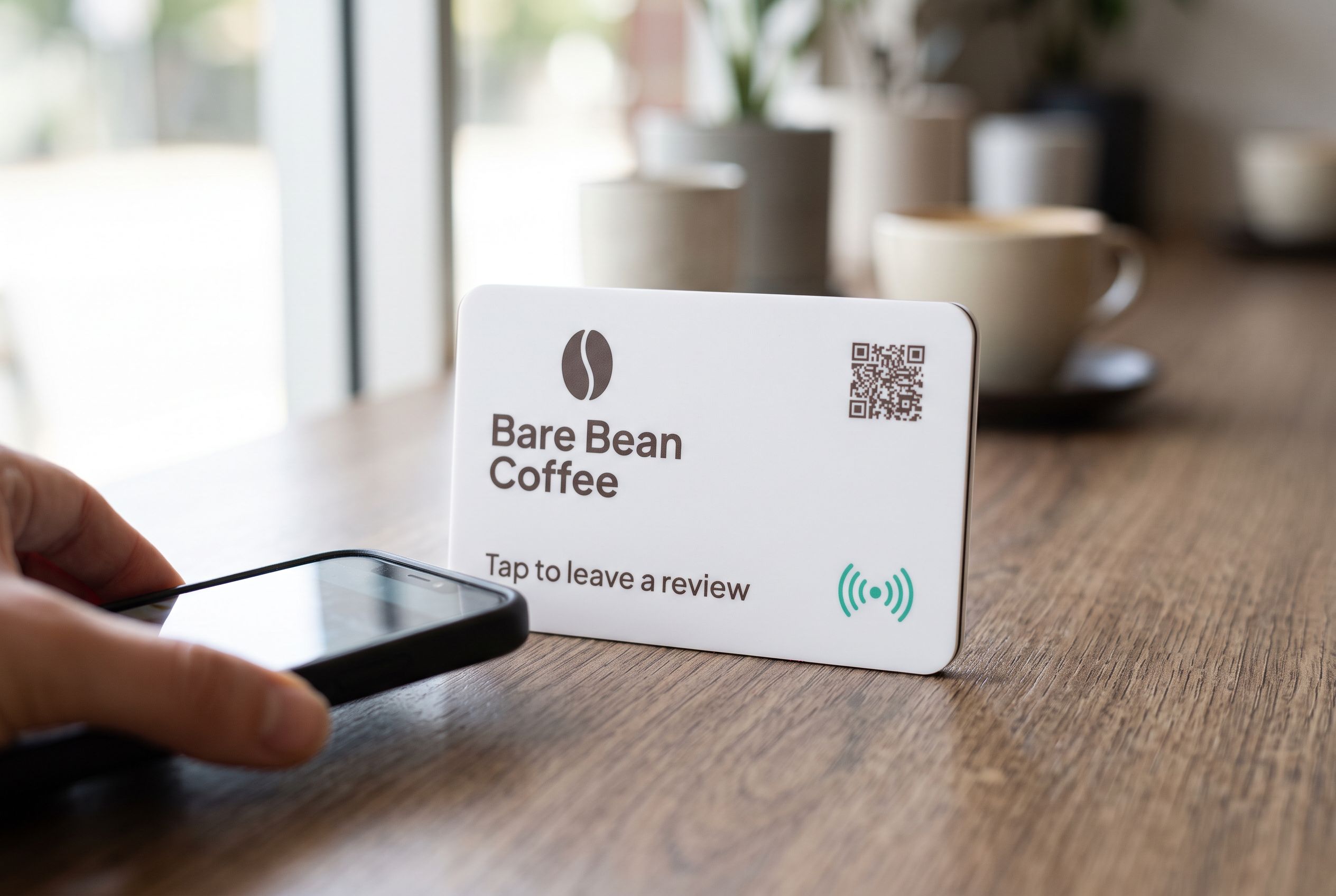
The customer holds their phone to the tile
Top of the phone, a centimetre or two away, case on. The phone powers the chip: no battery, Wi-Fi or setup.
-
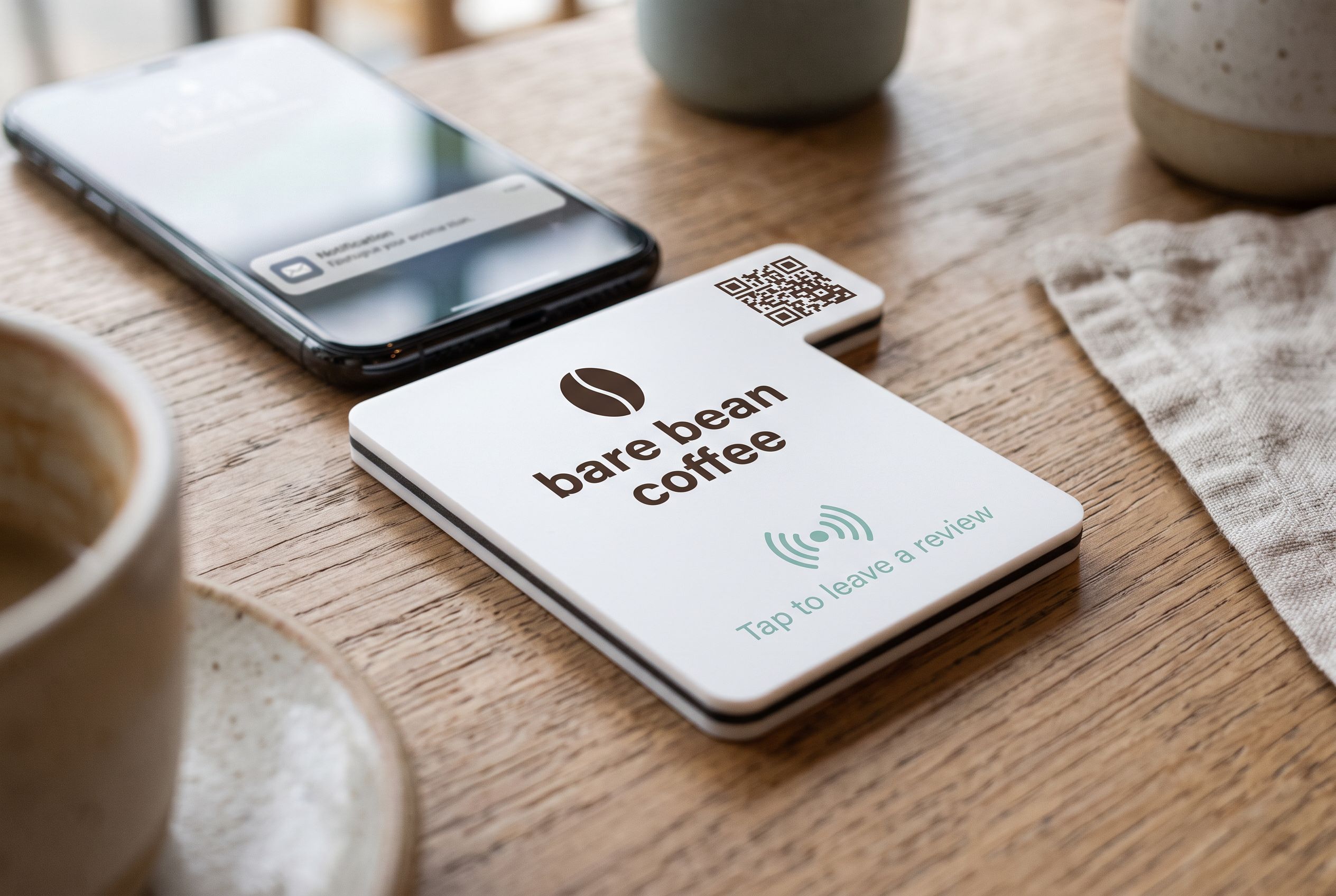
A notification appears
A banner on iPhone; a prompt or the page on Android. No app, nothing opened first. Tap the banner.
-
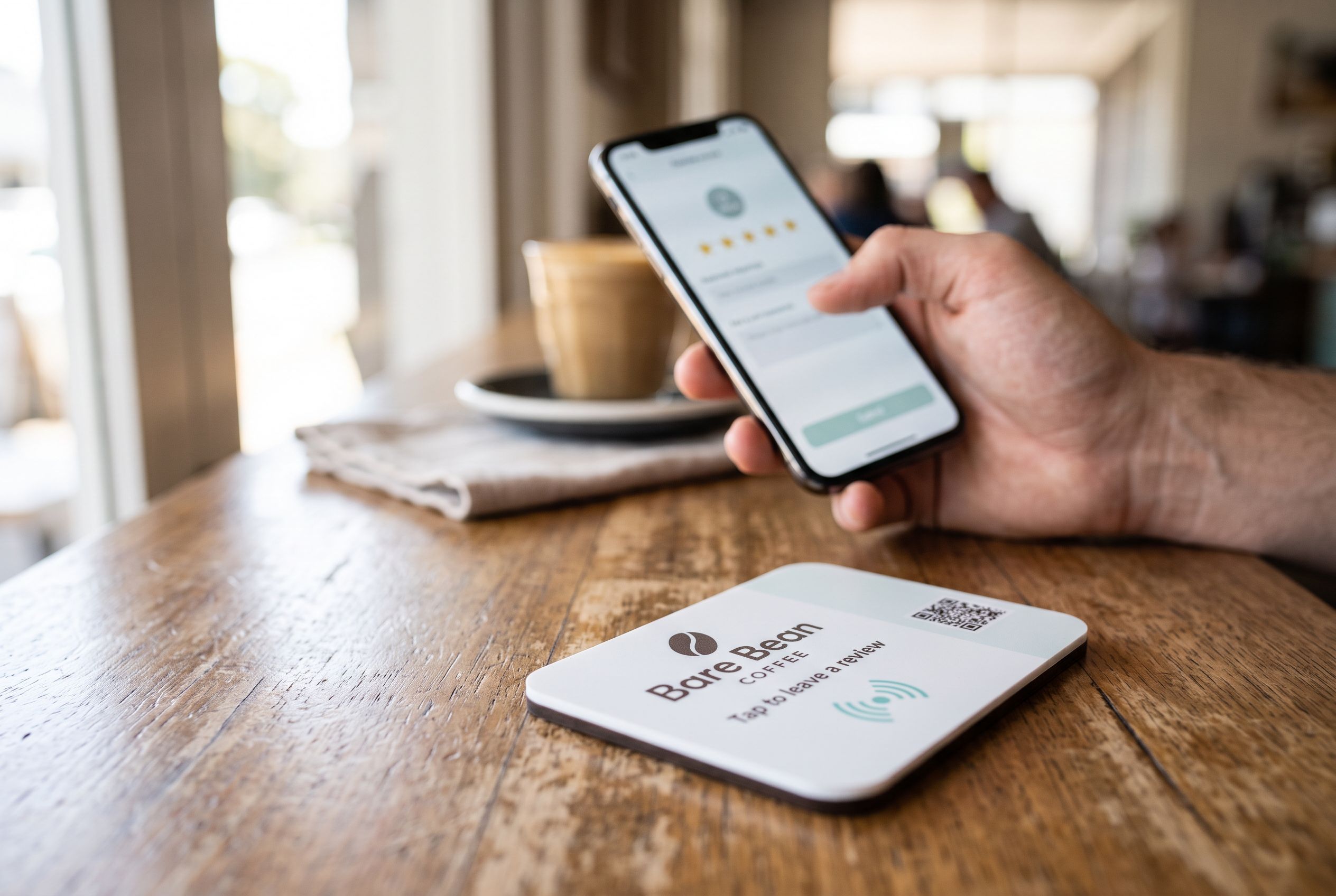
Your page opens
Review form, menu, Wi-Fi details, booking page: whatever the tile points at. About a second.
Tap it, or scan it. Same page.
Every iPhone from the XR onwards and NFC-equipped Android phones tap from the lock screen, no app. The few that cannot scan the QR code on the face instead. What blocks a tap is covered in the phone compatibility guide.
Two layers, one chip, no seam.
The chip is built in, not stuck on. Face and backing are laser-cut and bonded with the NFC card flat between them, so there is no edge to lift. The print sits slightly raised under a clear coat.
Acrylic or wood: which to pick →- The face
- Cast acrylic or hardwood-faced plywood, circle or square, 106 to 237mm, UV-printed with your text, logo or photo. Acrylic finishes: opaque, pastel, mirror, frosted, pearl, glitter.
- The chip
- An NFC card, like a contactless payment card, sealed flat between face and backing. It cannot be seen, scratched or peeled. It holds one thing: the address.
- The backing
- Acrylic that closes the tile and takes the adhesive pad or screws. A wider rim in a second colour gives a two-tone edge.
Three steps, one of them yours.
-
Pick a tile
Circle or square, 106 to 237mm. Acrylic in every finish, or wood. Add your text, logo or a photo.
-
Point it somewhere
Reviews, menu, Wi-Fi, bookings or payments. Paste a link in your account, or build the page there on a plan.
-
Customers tap
The page opens in under a second. No battery, no app, works offline. Change where it goes any time from your account.
Design it on the product page and see it rendered on the real material, at real size, before it is cut. Made to order in Australia, posted to every state and territory, encoded and tested. Stick or screw it where it goes.
Change the link, not the tile.
The chip carries a Shortfield address that forwards wherever you say. New booking system, new Google listing, new menu: edit the destination in your account and every tile follows on its next tap. Tap counts per tile show which one is in the wrong spot.
Common questions
No. The phone powers the chip. Nothing to charge, connect or update; it works wherever the phone has signal.
Every iPhone from the XR (2018) and NFC-equipped Android phones from about then, from the lock screen. Older phones scan the QR code on the face.
Change the link in your Shortfield account. The tile stays as it is; nothing is reprinted.
The link can, like any web link.
Yes. Your account shows tap counts per tile, so a badly placed tile shows up as no taps.
The chip is rated for decades of reads. Acrylic holds its colour outdoors for years; wood is for indoors or under cover.