Acrylic or wood: choosing the material for your tap tile
What acrylic and wood each do well on an NFC tile, how they wear indoors and out, how they take print, and which suits a café, a salon or a garden.
By Shortfield 4 min read
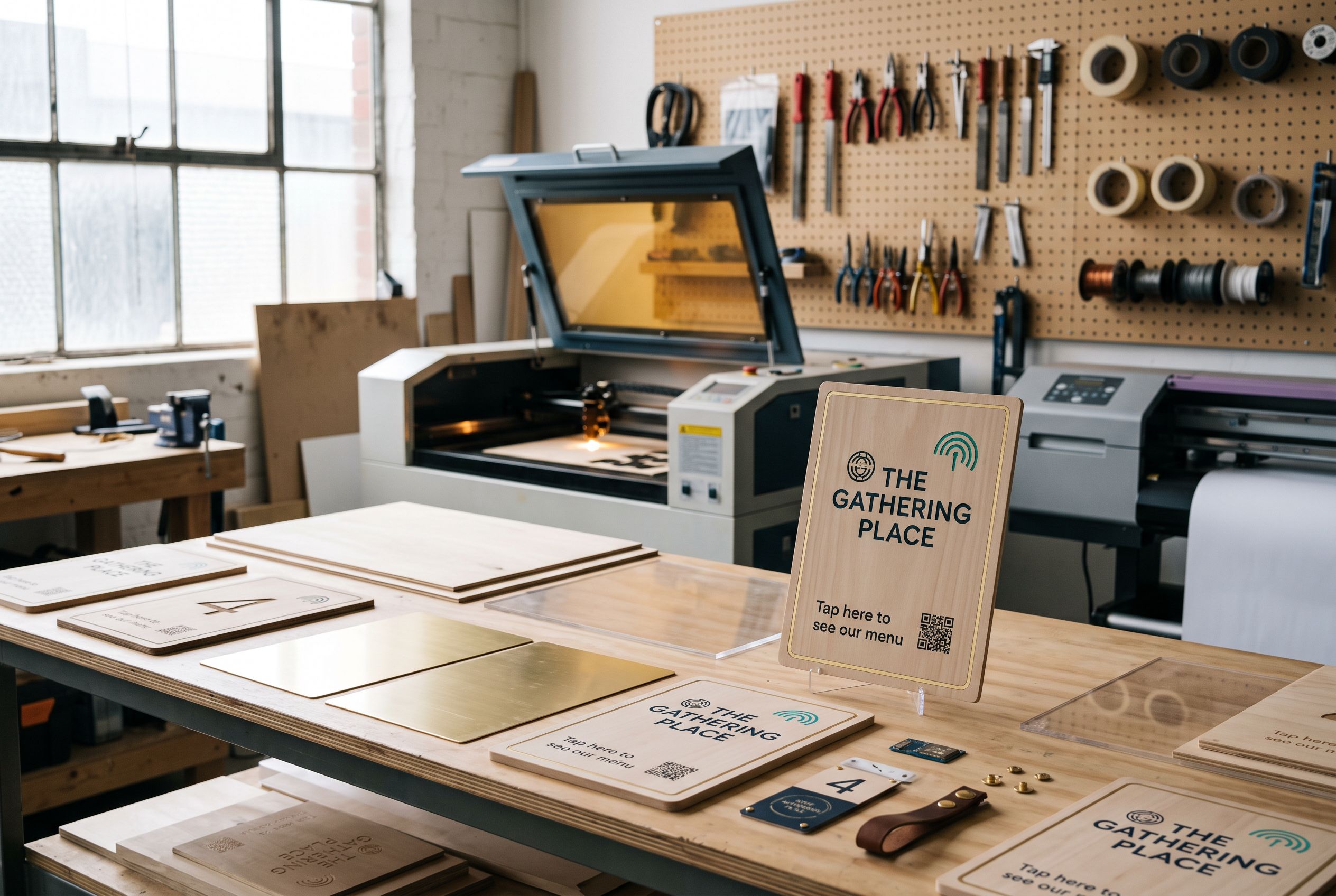
Every Shortfield tile is cut from one of two things: cast acrylic or plywood. The chip and the print are the same either way, so the choice is about how the tile looks, where it lives, and what it costs. Here is how the two compare, and which one we would pick for a given spot.
Acrylic
Cast acrylic is a solid sheet of colour, three to six millimetres thick, cut with a laser and polished on the edge. It comes in more finishes than wood does:
- Opaque: solid colour, gloss both sides. Black and white also come in matte.
- Pastel: soft chalky tones, gloss one side and matte the other.
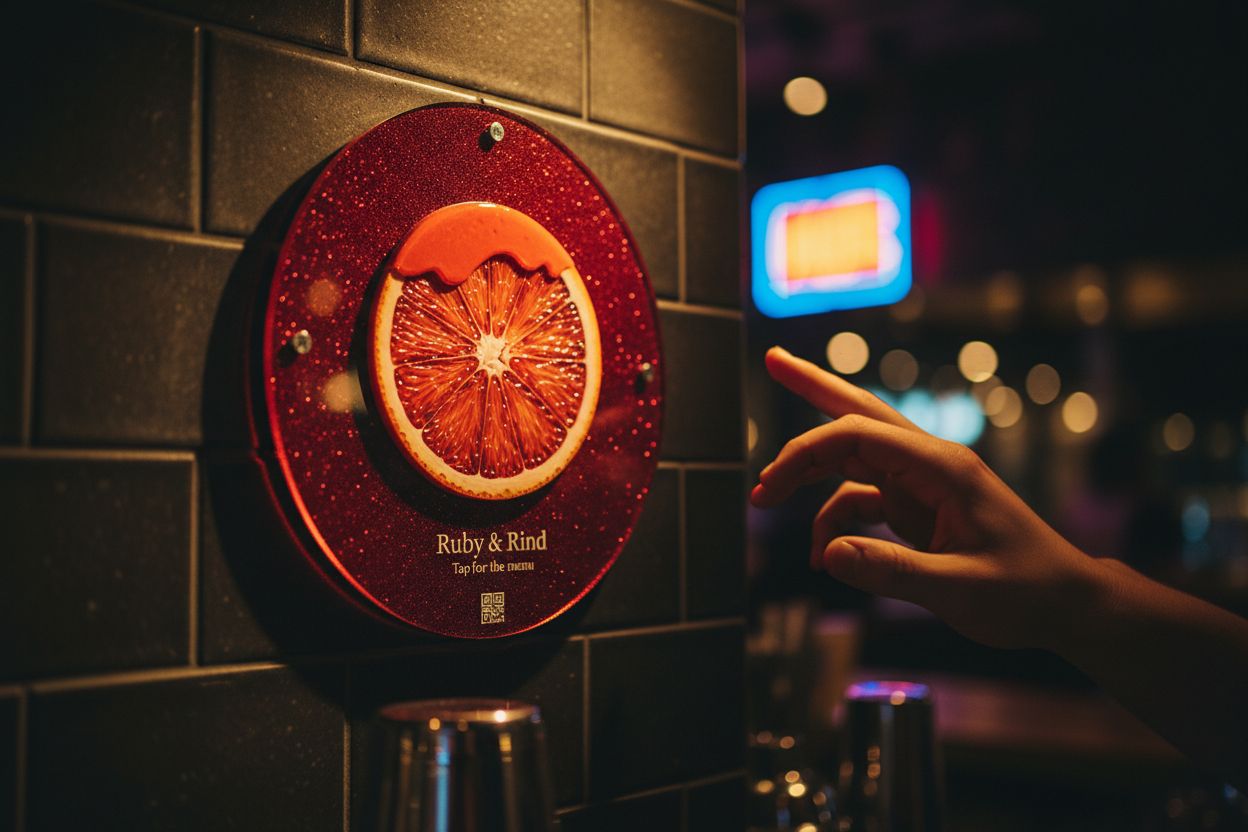
- Mirror: gold, silver, rose gold and a few colours. Reads as metal from a distance.
- Frosted: translucent, takes light from behind.
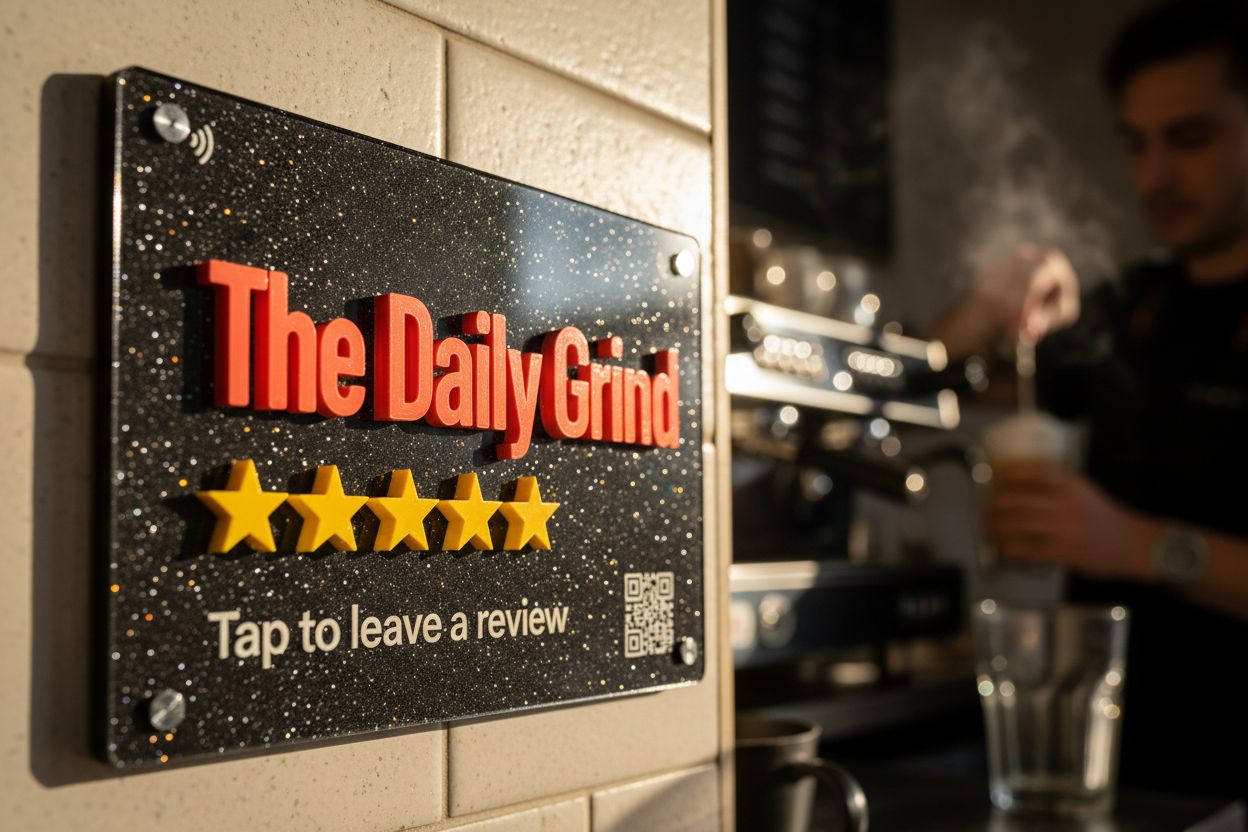
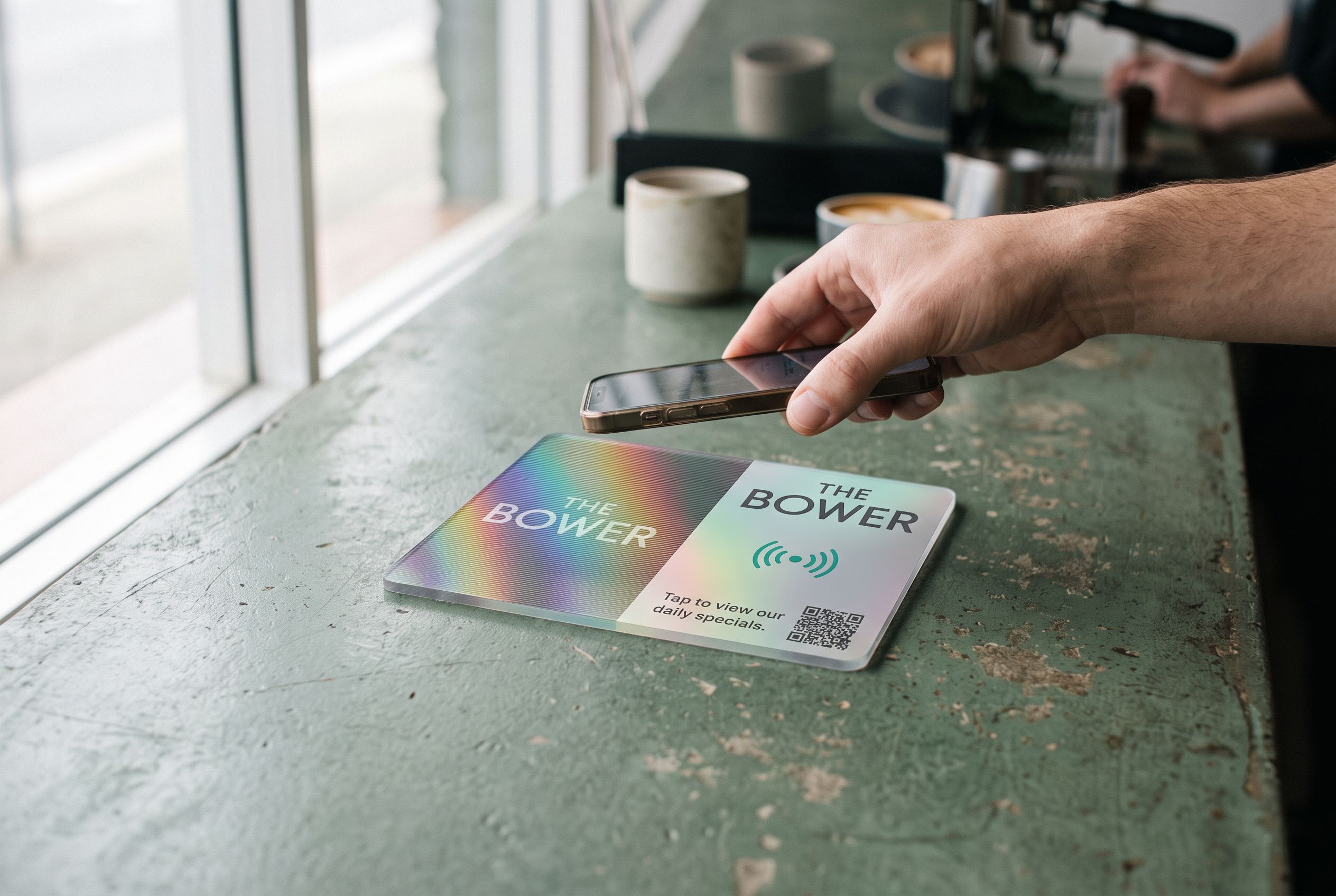
- Pearl, iridescent and glitter: for a face that changes with the angle.
Print sits on top of the colour, so a light design on a dark face needs a white base coat, which is included when the render calls for it. Colours are exact and repeatable: order ten tiles and they match.
Acrylic is UV-stable and does not absorb water. Outdoors it keeps its colour for years. It wipes clean with a damp cloth and survives a spill of anything a café serves. It can scratch if something hard is dragged across it, which is why a tile on a busy counter is often better screwed flat than left loose.
Wood
Our wood tiles are plywood with a hardwood face, cut and lightly charred on the edge by the laser. Each species is priced off its own sheet, and the swatch you pick is the sheet your tile comes from. Grain differs from tile to tile, so no two are identical, which is the point.
Print on wood sits on the grain and takes on its warmth. Dark inks read best; a white or pale design is printed over a base coat and looks like paint on timber. Fine detail holds well, but very thin lines can catch the grain.
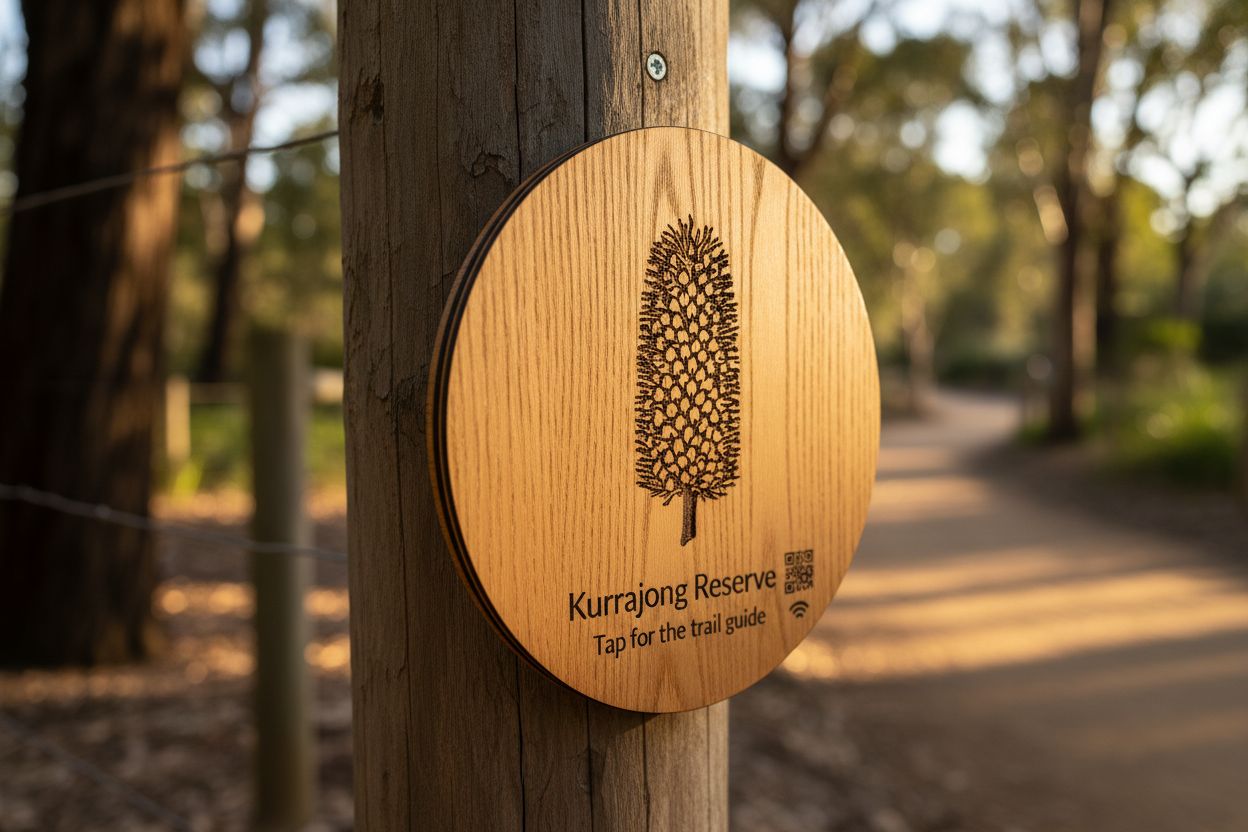
Wood belongs indoors or under cover. It handles a humid kitchen or a bathroom bench, but sun and rain will grey and lift it over a season. Wipe it with a dry or barely damp cloth. Oil or wax it once a year if you want the colour to stay deep.
Side by side
| Acrylic | Wood | |
|---|---|---|
| Finishes | Opaque, pastel, mirror, frosted, pearl, glitter | By species |
| Colour matching | Exact, repeatable | Natural variation |
| Outdoors | Yes, for years | Sheltered only |
| Cleaning | Damp cloth, any cleaner | Dry or barely damp cloth |
| Feel | Cool, smooth, glass-like | Warm, textured |
| Any colour, base coat under light designs | Dark inks best, base coat for light | |
| Price | From the lower end of the range | Depends on species |
Which we would pick
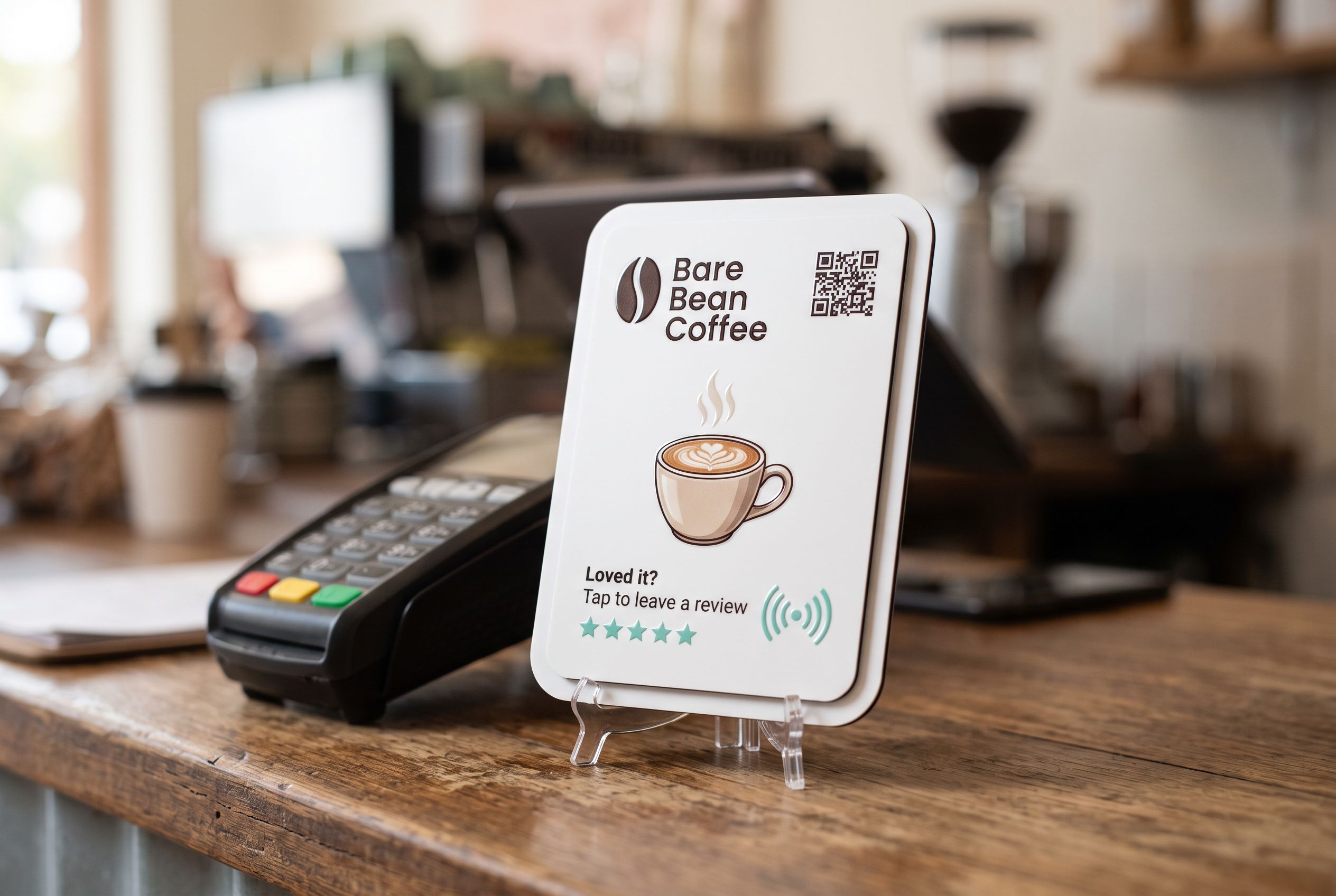
Café counter, review tile. Acrylic, opaque or mirror. It sits beside a card terminal and gets wiped ten times a day. Matte black with white print is the tile we make most often.
Restaurant table, menu or ordering. Acrylic, opaque, in a colour from your branding. Twenty tiles in the same colour need to match, and acrylic does.
Salon or clinic reception. Either. Pastel acrylic suits a bright fit-out. Wood suits a room with timber and plants. Mirror gold works where the fit-out is already gold.
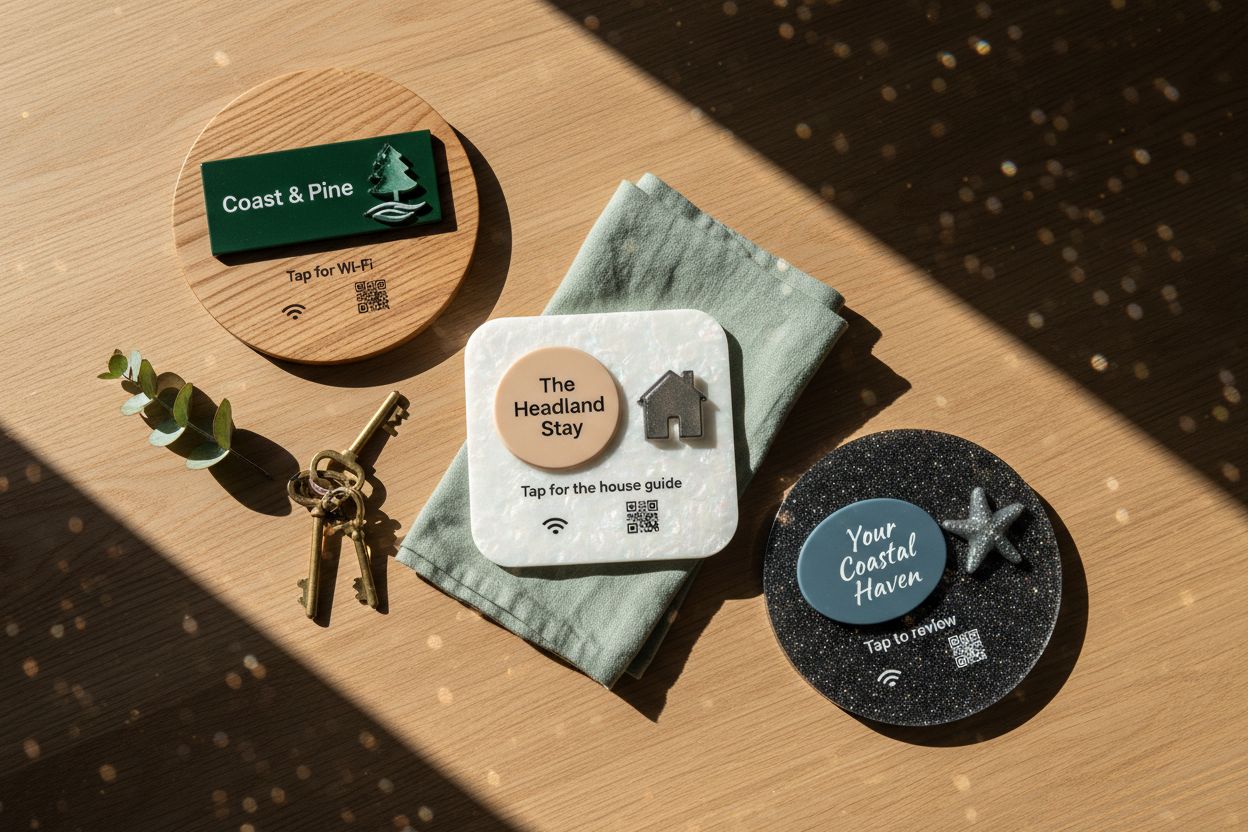
Airbnb or guesthouse. Wood. It sits on a dresser or a kitchen bench and looks like it belongs there rather than like a sign.
Garden, memorial bench, trail marker. Acrylic, opaque, screwed to a post. Wood is lovely for a season and then it is not. If wood is what the setting calls for, keep it under a roof.
Market stall or food truck. Acrylic, screw-fixed. It gets packed and unpacked every day.
Sizes and shapes
Both materials come in the same cuts: 106, 147, 198 or 237mm, circle or square. A backing rim of a second colour behind the face takes the footprint up to 297mm and gives a two-tone edge. Wood faces pair well with a black or white acrylic backing.
Trying before you buy
The design page renders your tile on the real material, at the size you chose, in the light of a room like the one it is going into. Change the material and the render changes with it. What you approve is what is cut.
Frequently asked
Can you mix a wood face with a coloured rim? Yes. Pick the face material first, then the backing.
Does the chip work the same through wood and acrylic? Yes. Neither blocks NFC. Only metal does, which is why a mirror finish is a coating on acrylic rather than real metal.
Can I have a colour that is not in the swatches? The swatches are the sheets we stock. For a run of thirty or more we can source a specific sheet; ask through bulk orders.