Can NFC tags be reprogrammed? Rewriting, locking and tracking
Most NFC tags can be rewritten until they're locked. How rewriting works, whether a tag can track you, and why a re-pointable link means you never need to.
By Shortfield 5 min read
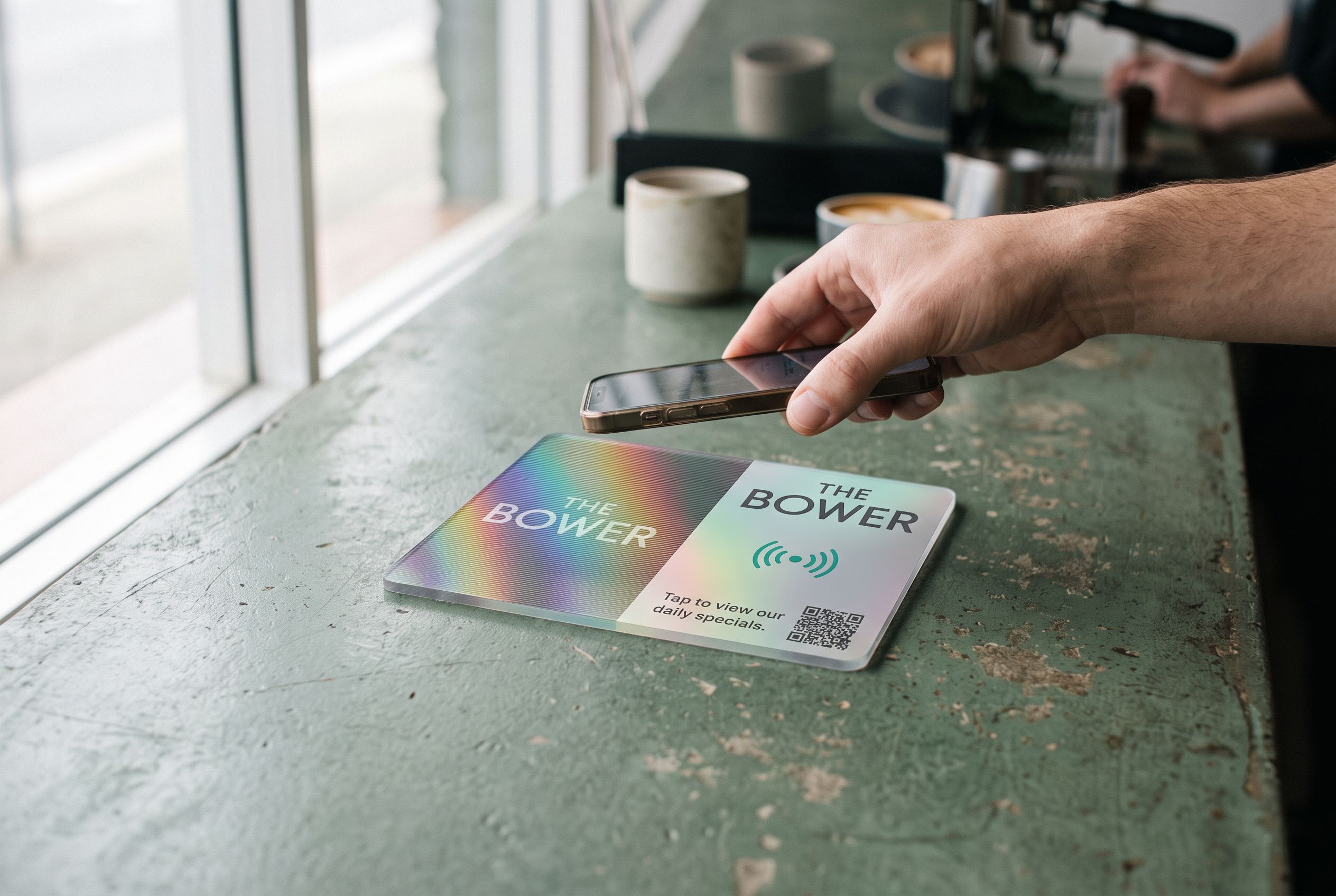
Yes, most NFC tags can be reprogrammed. A standard tag can be rewritten many times with a free NFC writing app on a phone, until someone locks it; once locked, it becomes read-only and cannot be changed again. For a tag in a public place, though, rewriting is usually the wrong fix. The better setup is a tag that holds an address you control, so you change where it leads from a website and never touch the tag at all. That is how a Shortfield tile works.
Below: how rewriting works, what locking does, whether tags can track anyone, and when you would bother.
How do you rewrite an NFC tag?
A blank or unlocked tag stores a small record, usually a web address. To change it:
- Install an NFC writing app. Several free ones exist for iPhone and Android.
- Choose the record type, usually “URL”, and enter the new address.
- Hold the top of the iPhone, or the back of the Android phone, against the tag when the app says to.
- The app writes the new record over the old one. Tap the tag again with the app closed to check it opens the right page.
That is fine for one sticker on your fridge. For forty tiles across a restaurant, it means walking to every table with a phone and hoping none get missed. For tiles already mounted behind glass or up a post, it may not be practical at all.
What does it mean to lock an NFC tag?
Locking sets the tag to read-only, permanently. On common tags there is no unlocking afterwards. The point is to stop anyone else from walking up with a writing app and overwriting your link with theirs.
A tag in public that is left unlocked can, in principle, be rewritten by a stranger. That is why generic tags meant for public use should be locked once written, and why the question “can I change it later?” has an awkward answer with ordinary tags: yes, but only if you left it open to everyone else too.
Can NFC tags be tracked, or track my phone?
A passive NFC tag cannot track a phone. It has no battery, no GPS, no internet connection and no memory of who tapped it. It sits inert until a phone comes within a couple of centimetres, hands over its stored address, and goes quiet again.
What happens next is the same as clicking any link. The phone opens a web page, and that website sees an ordinary visit. With a Shortfield tile, your account shows tap counts for each tile, in aggregate: this tile was tapped this many times. It does not show who tapped, their phone number or their name. There is nothing to identify the person.
The reverse question comes up too: can someone track your tag? A tag can’t be read from across the room. NFC works at a few centimetres, by design.
Why would you want to change what a tag opens?
More often than people expect:
- Your Google review link changes after a listing merge or a move.
- The menu PDF gets replaced every season.
- You switch ordering systems or booking platforms.
- You want the counter tile to point at a Christmas trading page for December.
- The Wi-Fi password changes.
- You sell the business and the new owner keeps the tiles.
With a link written straight onto the chip, each of these means rewriting every tag or replacing it.
How re-pointable tiles make reprogramming unnecessary
Every Shortfield tile points at a Shortfield address. That address is the only thing on the chip. Where it sends people is set in your account, and you can change it any time: paste a new link, save, and every tile pointed there follows immediately. Nothing is reprinted, nothing is rewritten, and you do not need to be standing next to the tile.
The free Basic account comes with any tile and covers any number of tiles, pointing each at any link, tap counts, and pausing a tile. Pausing is handy if a tile goes missing or a promotion ends early. The QR code printed on the face points at the same Shortfield address, so it follows the change too. If you have been burned by printed QR codes that went dead, see dynamic vs static QR codes; it is the same idea.
Because the destination changes in the account and not on the chip, the practical protection is your account login. Keep it to the people who should be making changes.
Should I buy blank tags and program them myself?
Blank NFC stickers are cheap and fine for personal projects: a tag on the bedside table that opens an alarm app, a sticker in the car. For a business, the costs show up elsewhere. You have to lock them to keep them safe, which means you can’t change them later. A bare sticker says nothing to the customer. And it looks like a sticker.
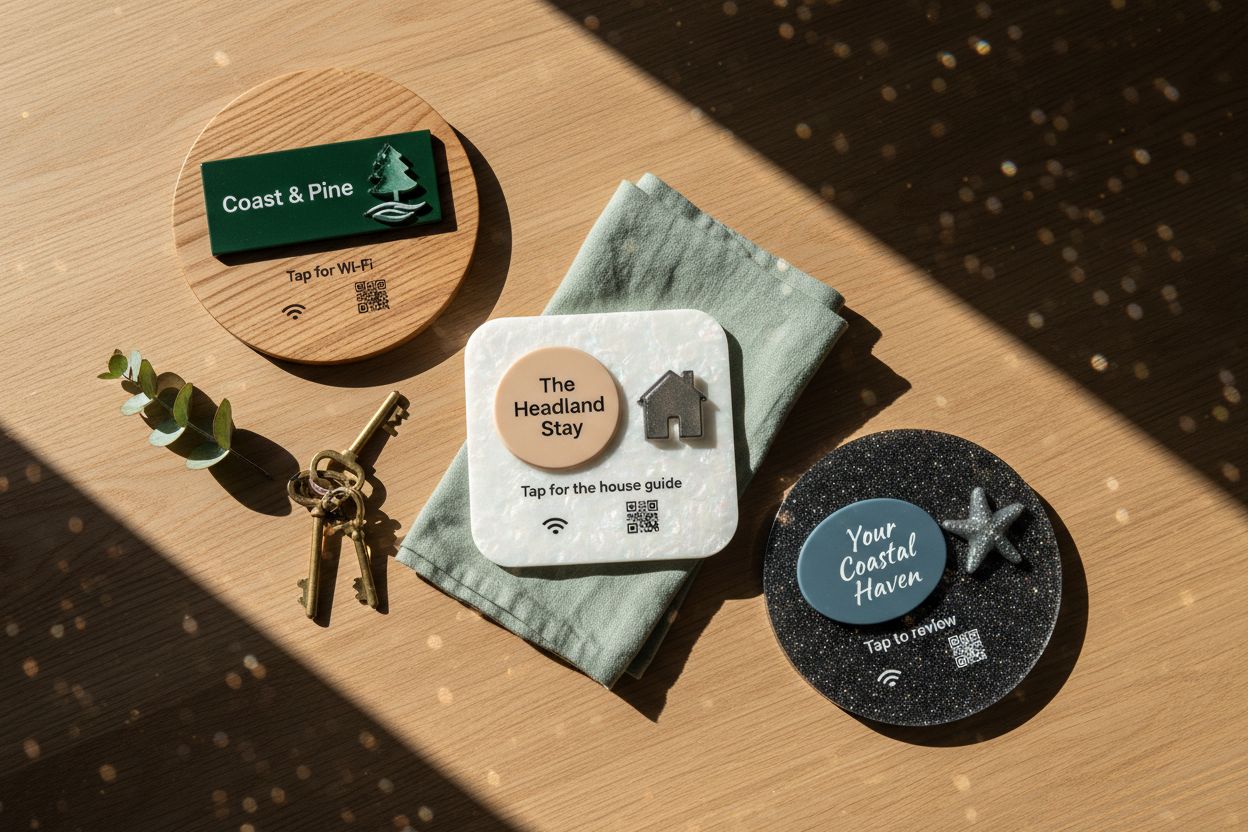
A tile has the chip sealed inside acrylic or wood, your logo and instruction printed on the face, a QR code for phones that can’t tap, and a link you can re-point for as long as you have the tile. If you need a specific shape or run for a project, see custom NFC tags or bulk orders.
Frequently asked
How many times can an NFC tag be rewritten? Chip makers typically rate common tags for many thousands of writes, far more than anyone needs. Reading does not count against that.
Can I reprogram a Shortfield tile myself? You don’t need to. Change the destination from your account and the tile follows. That is the intended way to change it.
Can an NFC tag steal data from my phone? No. A passive tag only offers a record, like a web address, and the phone asks before opening it. The tag cannot read your phone’s contents.
Can I see who tapped my tile? No. You see how many taps each tile gets, which is enough to know whether it is working and well placed.