Dynamic vs static QR codes: which one does your business need?
A static QR code holds the link itself and never changes. A dynamic one points at an editable redirect. The trade-offs, the hidden costs, and which to print.
By Shortfield 4 min read
A static QR code stores the destination directly in the pattern of squares, so it can never be changed, never expires and needs no account. A dynamic QR code stores a short redirect address instead; the destination lives on the provider’s server, so you can change where it goes and count scans, but it only works as long as that redirect service keeps running and, with many providers, as long as you keep paying. For anything printed and fixed in place for years, the destination needs to be editable, and the redirect needs to belong to someone who won’t switch it off.
What is a static QR code?
The code contains the actual data: a web address, a Wi-Fi login, a phone number or plain text. Scan it and the phone reads the address straight off the code.
Good for: one-off print jobs, a link that will never change, Wi-Fi codes on a home fridge, a flyer for a single event.
The downsides:
- You can’t change it. If the link changes, the code is dead and you reprint.
- Long links make dense codes that are harder to scan at small sizes.
- No scan counts.
What is a dynamic QR code?
The code contains a short address belonging to a redirect service. When someone scans it, the service looks up where you’ve told it to send people and forwards them.
Good for: menus, review links, booking pages, anything that might change, anything you want to count.
The upsides:
- Change the destination from your account. The printed code stays.
- Scan counts, so you know whether a sign is working.
- Shorter address, simpler code, scans more easily at small sizes.
The downsides, which QR generator sites tend not to mention up front:
- It depends on the provider. If the company shuts down, is sold, or changes its terms, every code you printed can stop working.
- Subscription lock-in. Many “free” generators make dynamic codes that stop redirecting at the end of a trial or when a subscription lapses. Businesses often discover this when customers tell them the menu code shows an error or an ad page.
- An extra hop. A redirect adds a fraction of a second. Rarely noticeable.
Which should I use for my business?
| Use | Static | Dynamic |
|---|---|---|
| Single event flyer | Fine | Fine |
| Menu that changes seasonally | Reprint each time | Better |
| Google review link | Works until the link changes | Better |
| Wi-Fi that changes password | Reprint each time | Better, via a page |
| Signs fixed in place for years | Risky | Better, if the provider is stable |
| Printed packaging in large runs | Safer if the link is permanent | Only with a provider you trust |
The honest rule: if the thing is expensive to reprint, or bolted to a wall, you want to be able to change where it goes. The question is only whose redirect you trust with it.
What should I check before choosing a dynamic QR provider?
- Does the code keep working if you stop paying, or downgrade to free?
- Can you export your links and scan data?
- Does the redirect show ads or a splash page on the free tier?
- Are there scan limits?
- Who owns the short address: you, or them?
Read the terms. “Free” and “forever” are doing a lot of work on some generator sites.
Where does NFC fit in?
The same logic applies to NFC tags. A tag can hold a link directly (static) or a redirect address (dynamic). Most of what goes wrong with tags in businesses is the static kind: the menu URL changes and every tag on every table opens a dead page. See can NFC tags be reprogrammed.
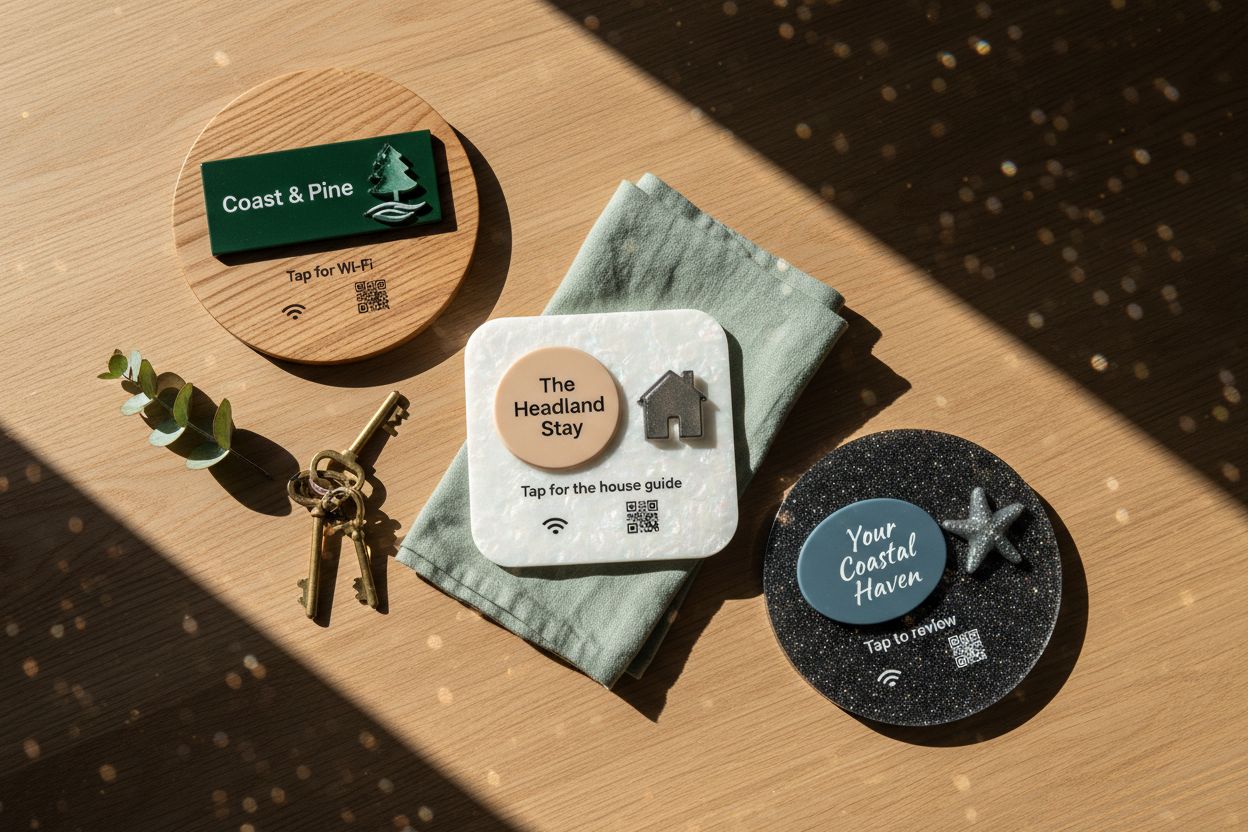
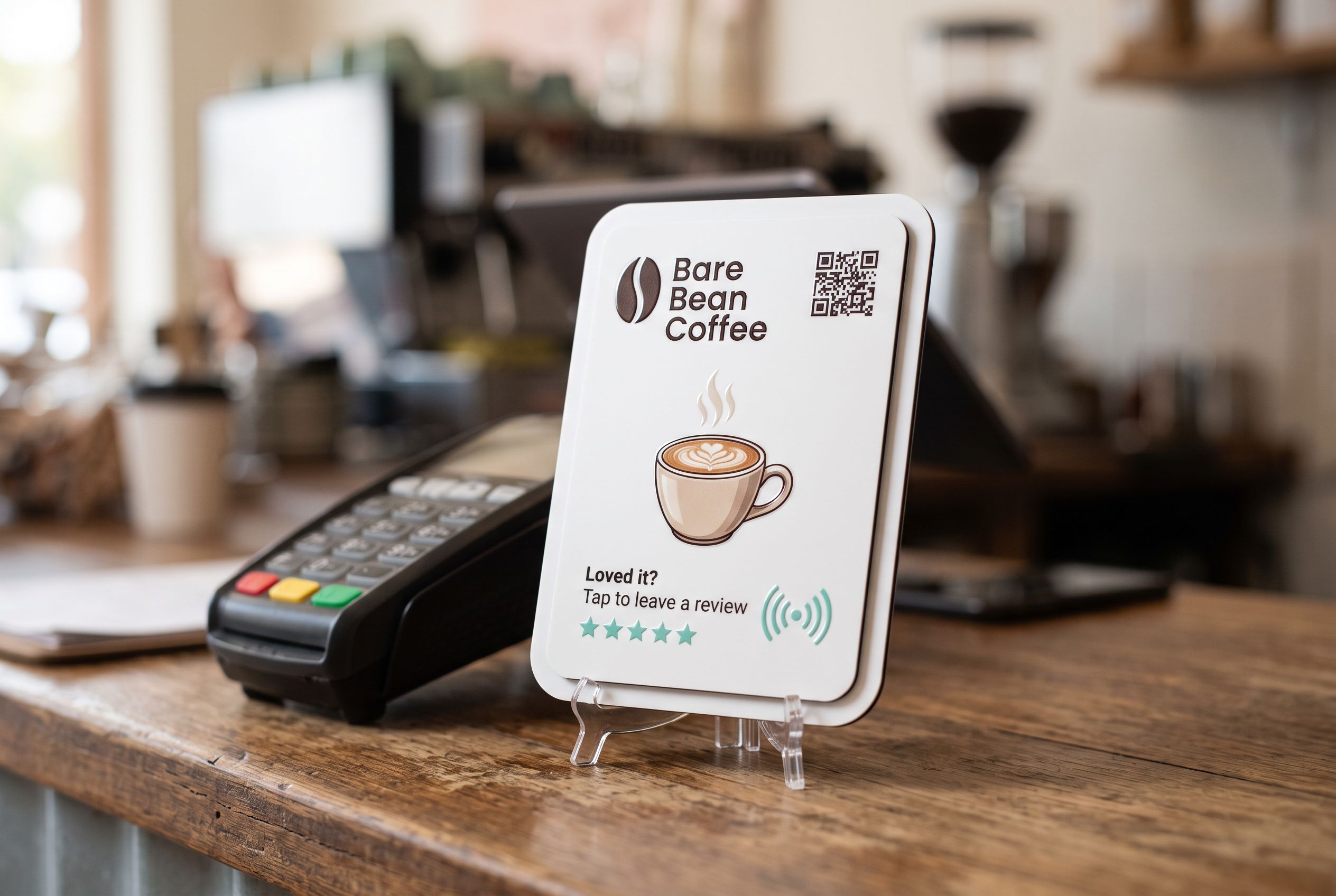
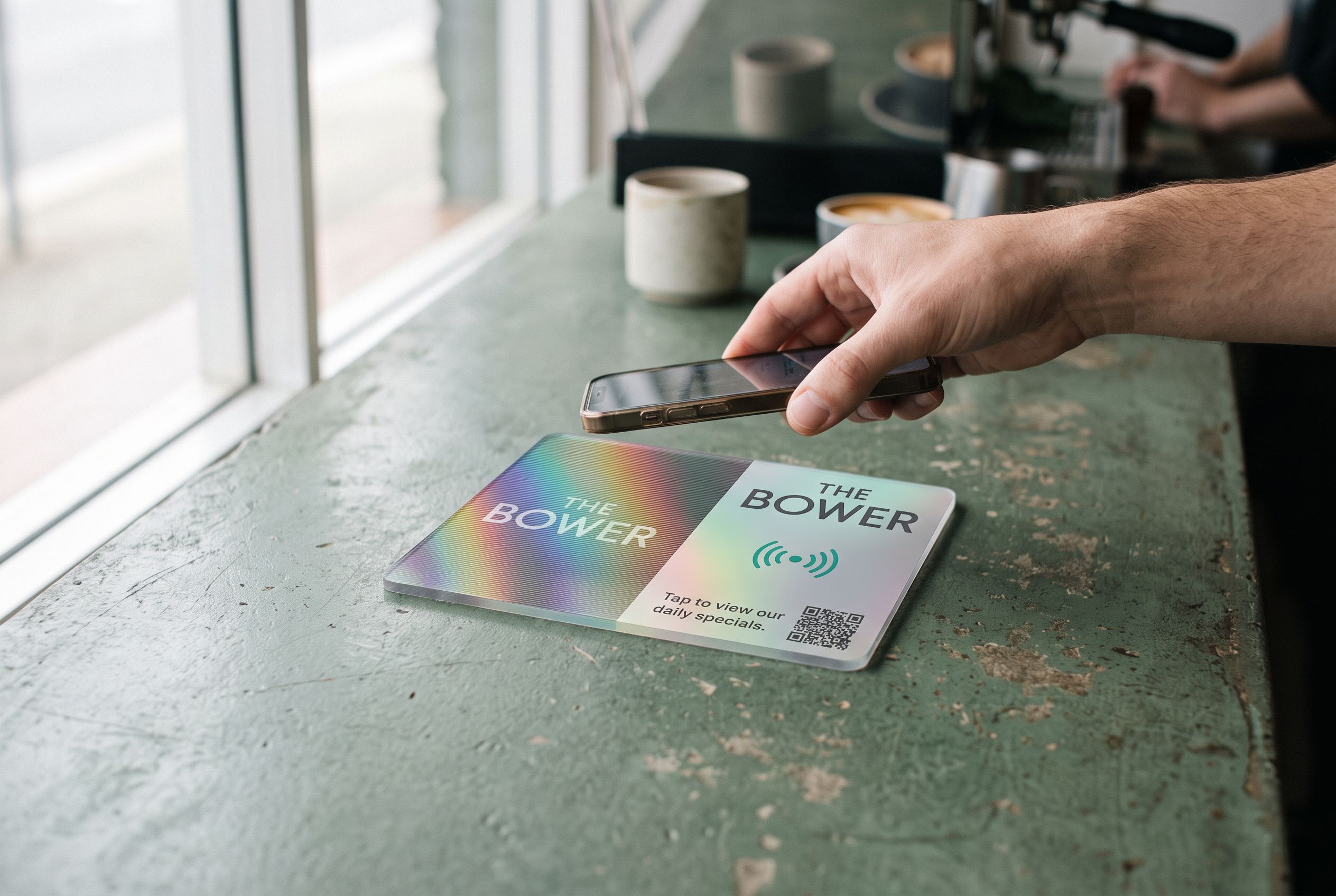
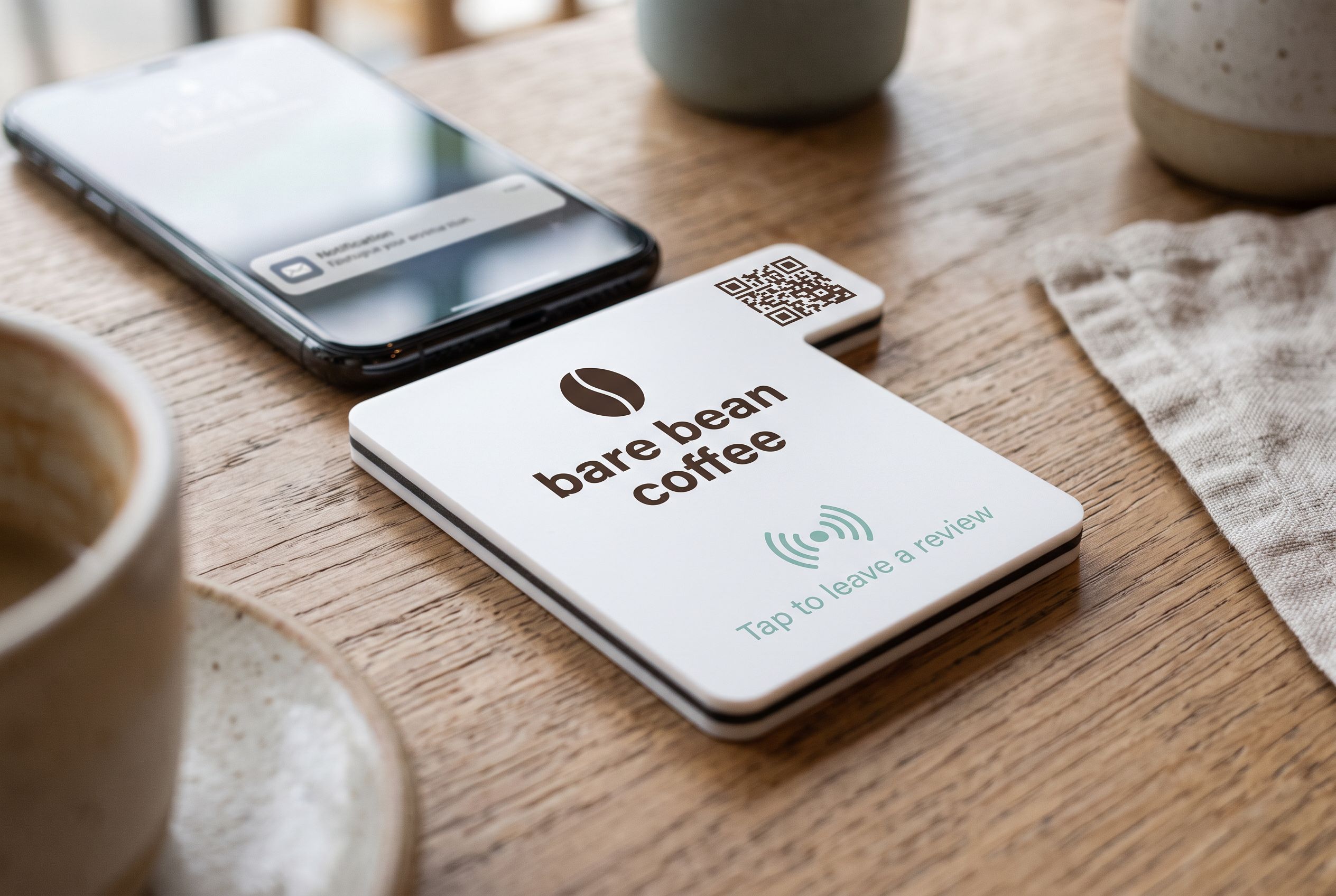
Every Shortfield tile is dynamic by design. The NFC chip and the optional QR code printed on the face both point at a Shortfield address, and your account decides where it goes. Change it any time; every tile follows; nothing is reprinted or reprogrammed. The free Basic account that comes with any tile covers any number of tiles, any link, tap counts and pausing a tile, with no subscription required. The optional plans add hosted pages, but the redirect itself doesn’t depend on them.
That is the combination that matters for a sign fixed on a counter or wall: editable like a dynamic code, and not held hostage to a monthly plan.
Does a QR code alone do the job?
Often. But a QR code needs the customer to open the camera, frame the code and tap the link. A tap is quicker for the customers whose phones support it, and the QR code catches everyone else. For the full comparison see NFC vs QR codes for venues. For printed signs that carry both, see the QR code sign for business and the acrylic QR code stand.
Frequently asked
Do static QR codes expire? No. The code itself never expires. The page it points to might disappear, which has the same effect.
Can I turn a static QR code into a dynamic one? Not the printed one. You’d print a new code pointing at a redirect address.
Are dynamic QR codes less secure? Not inherently. The risk is the provider: whoever controls the redirect controls where your customers land. Use one you trust and keep your account login safe.
Do dynamic QR codes track the person scanning? Typically they count scans and may record rough details like device type. Shortfield shows tap counts per tile, not who tapped.