NFC vs QR codes for cafés, restaurants and salons
Where a tap beats a scan, where a QR code still earns its place, and why the best answer for most venues is a tile that carries both.
By Shortfield 4 min read
QR codes came back in 2020 and never left. Every table got a laminated code, every counter a sticker, and customers learned to point a camera at a square of dots. NFC is the newer habit: hold the phone against something and a page opens, the same gesture as paying with a card. Both get a customer from a physical place to a web page. They fail in different ways, and picking one over the other depends on where it is going and who is tapping.
How each one works
A QR code is a picture. The phone’s camera reads it, decodes a link, and shows a notification asking to open it. It needs light, a steady hand, and a moment to focus. Any phone with a camera can read one.
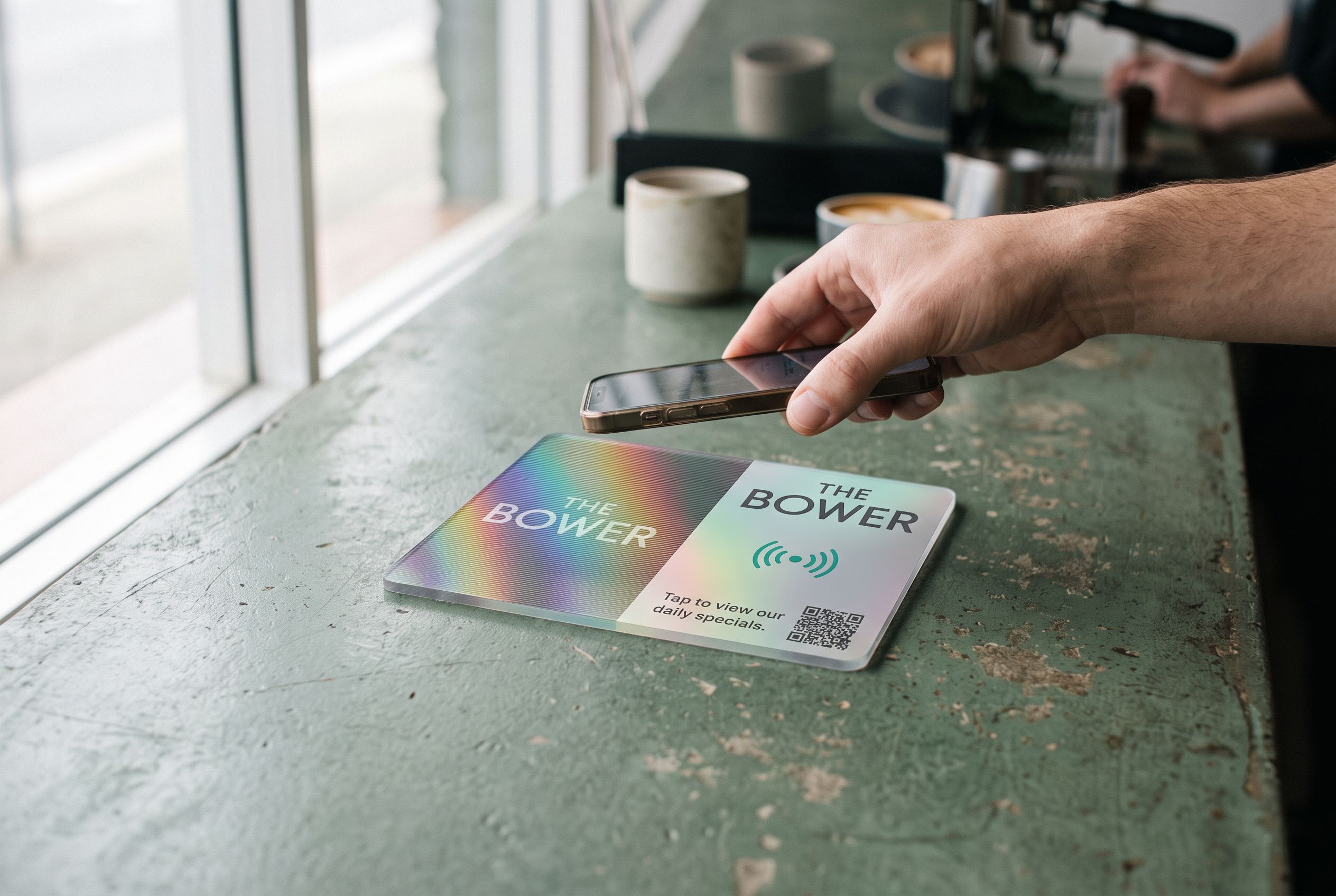
An NFC chip is a small antenna with a little memory; in a Shortfield tile it is a card like a contactless payment card, sealed inside. The phone’s NFC reader powers it from a few centimetres away and reads the link off it. No camera, no focus, no light. iPhones from the XR (2018) onwards read tags from the lock screen without opening anything. Most Android phones from the last several years do the same, though a few need NFC switched on in settings.
Where NFC wins
Speed. A tap is a second. A scan is three or four, plus the time to find the camera. When the customer is at the counter with a queue behind them, that difference is whether they bother.
Low light. Bars, restaurants at dinner service, and anything outdoors after dark are hard on cameras. A tag reads the same in the dark as in daylight.
Durability. A printed QR code fades, scratches and peels. A chip sealed inside acrylic reads the same after years on a table.
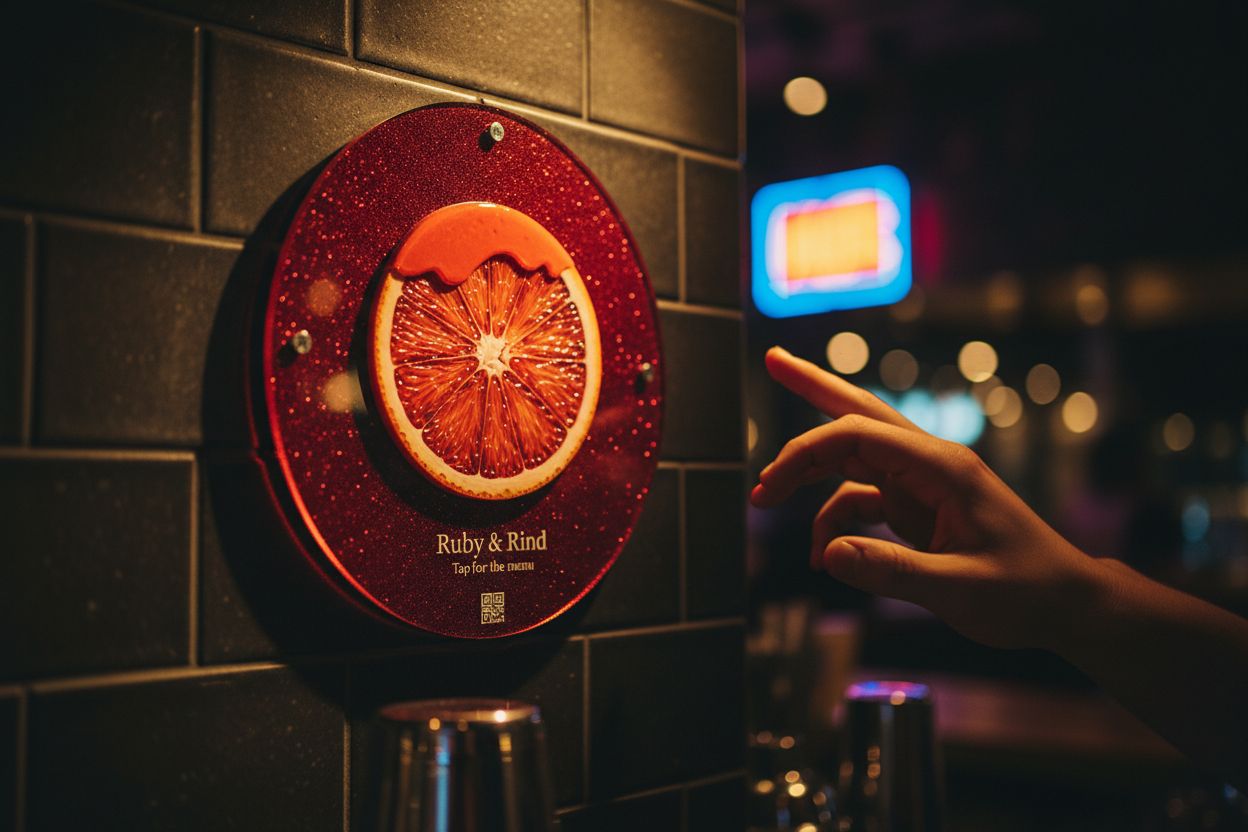
Discretion. A QR code is a black-and-white square that fights with your branding. A tap tile can be all logo and one line of text, with the chip invisible inside.
Changeability. Both can point at a link you control. A tile that points at a Shortfield address lets you change what it opens from your account without touching the tile.
Where QR still earns its place
Older phones. A customer with an iPhone 8 or a budget Android from 2018 cannot tap. They can scan.
Distance. A QR code on a poster works from a metre away. NFC needs the phone against the tile. For a menu board above the counter or a sign across a room, QR is the only option.
Print you already have. A QR code costs nothing to add to a menu, a receipt or a flyer. If the link is going onto paper, it is a QR code.
Screens. A code on a TV or a tablet works. There is no NFC in a display.
The answer for most venues: both, on one tile
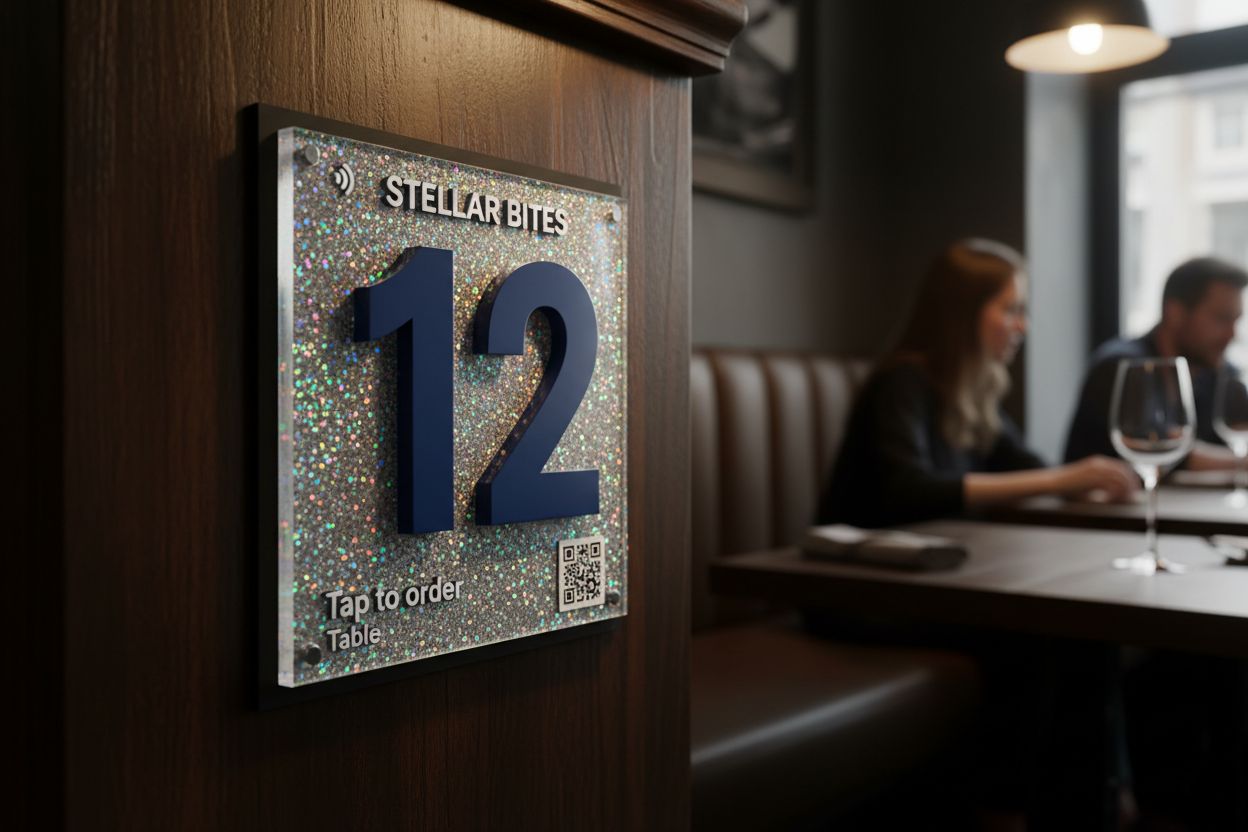
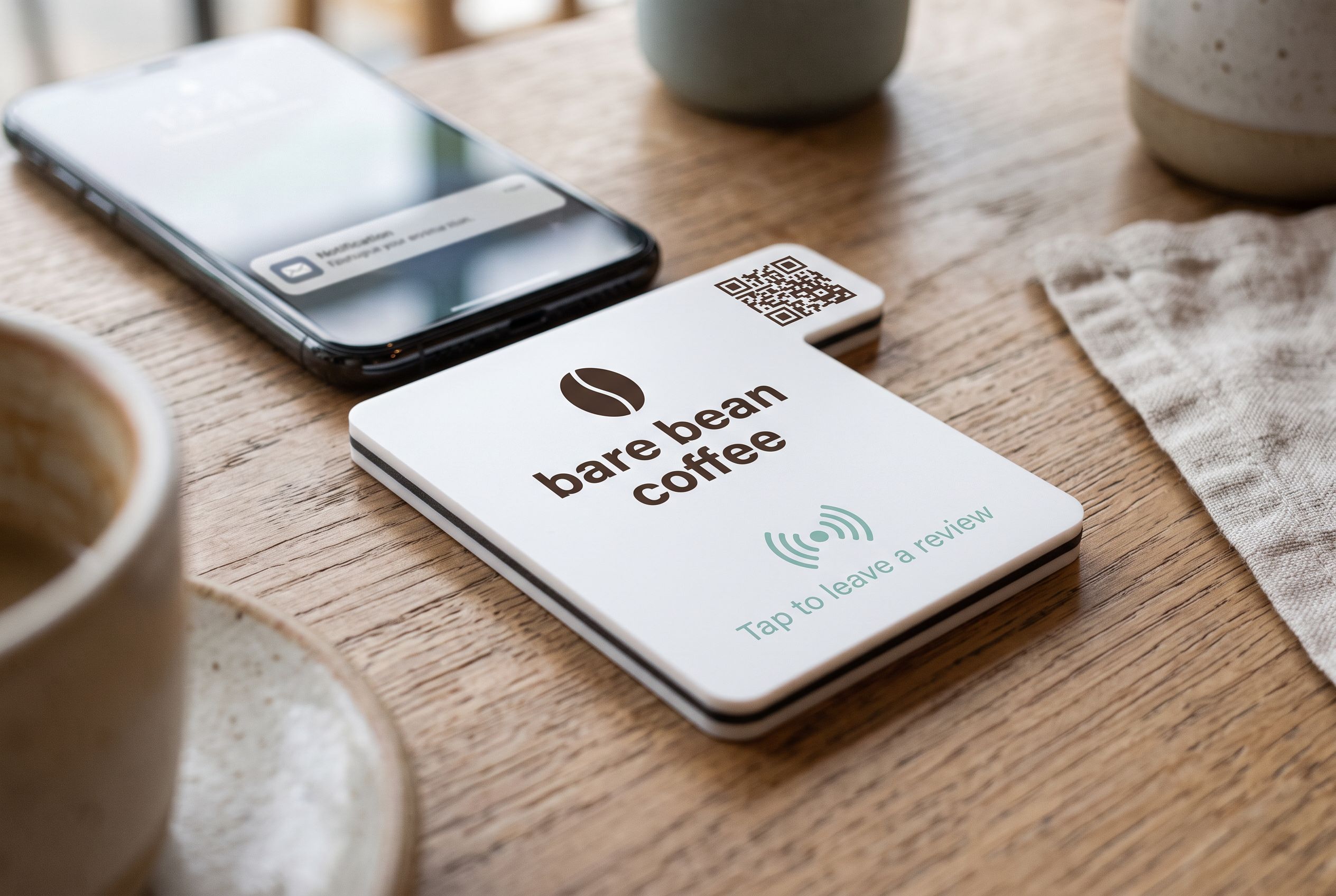
The tile does not have to choose. A QR code printed in the corner of the face points at the same link as the chip. Customers who know to tap, tap. Everyone else scans. Nobody is left out and nobody has to be taught.
This is how every Shortfield tile can be set up. The chip is sealed between the layers; the QR code is printed on the face if you want it. The digital menu tile is the clearest case: a table full of people with different phones, all of whom need the same menu.
A rough guide by use
| Where the link is going | Better choice | Why |
|---|---|---|
| Table, for the menu or ordering | Tile with QR in the corner | Fast for most, works for all |
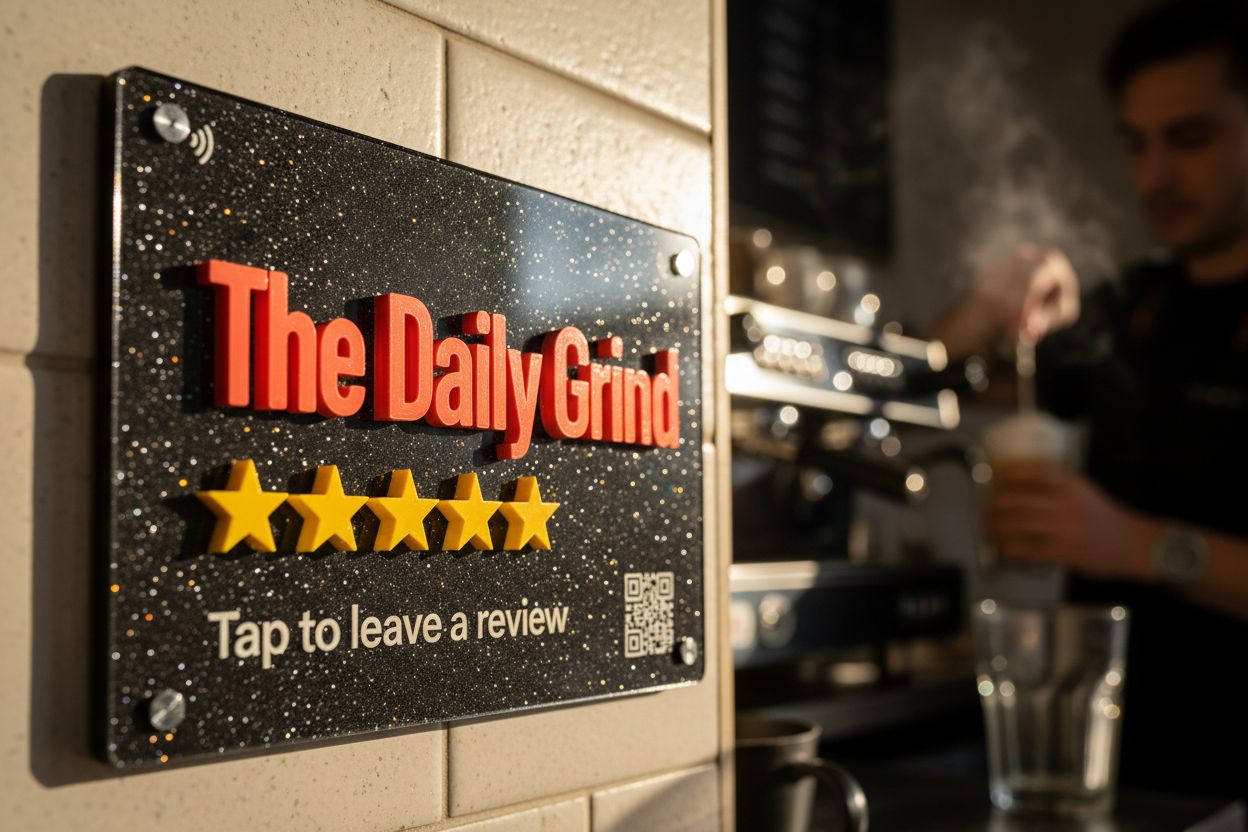
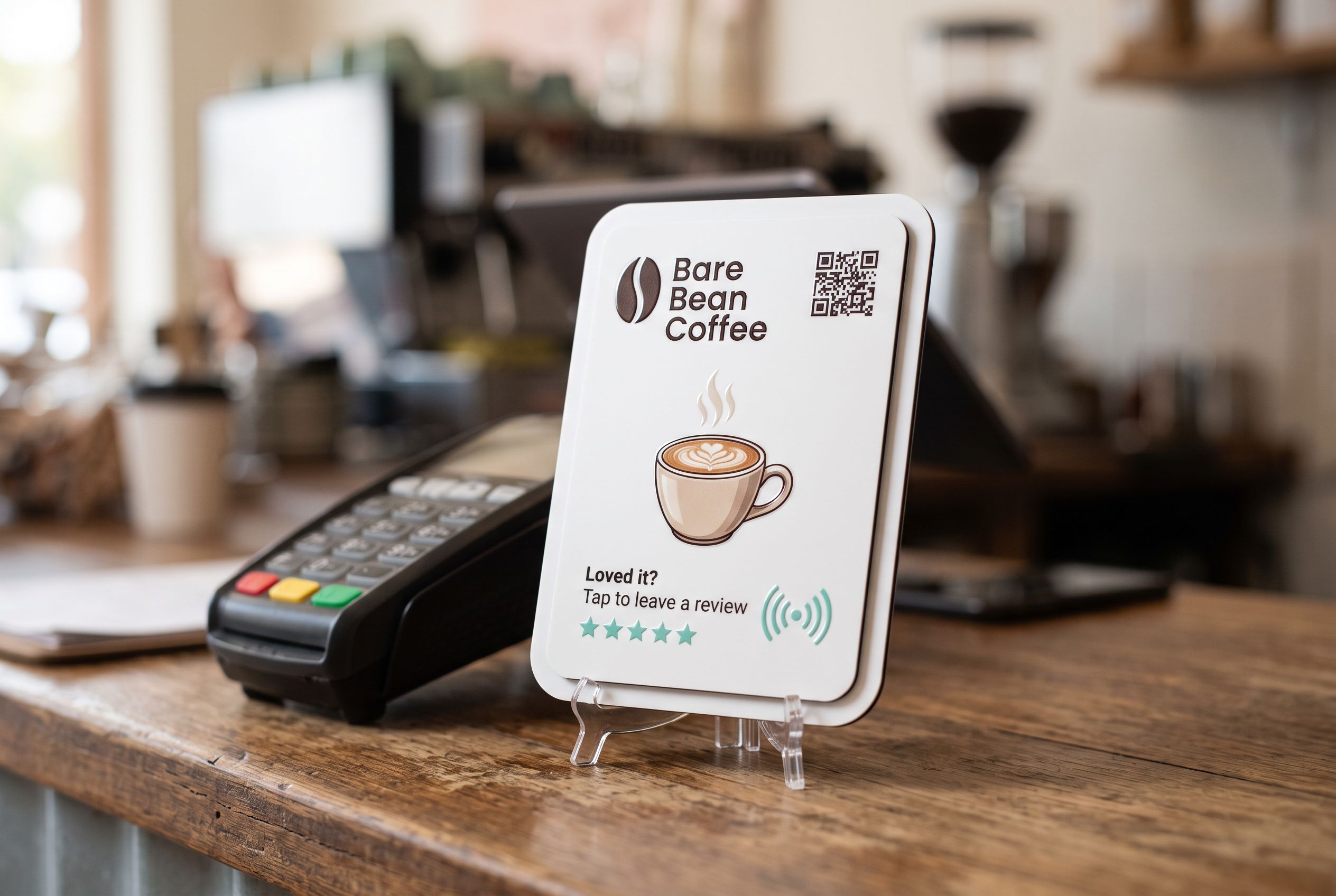
| Counter, for reviews | Tile | The customer is already holding their phone to pay |
| Reception, for booking or Wi-Fi | Tile | Low friction while they wait |
| Poster or window display | QR code | Read from a distance |
| Receipt or flyer | QR code | It is paper |
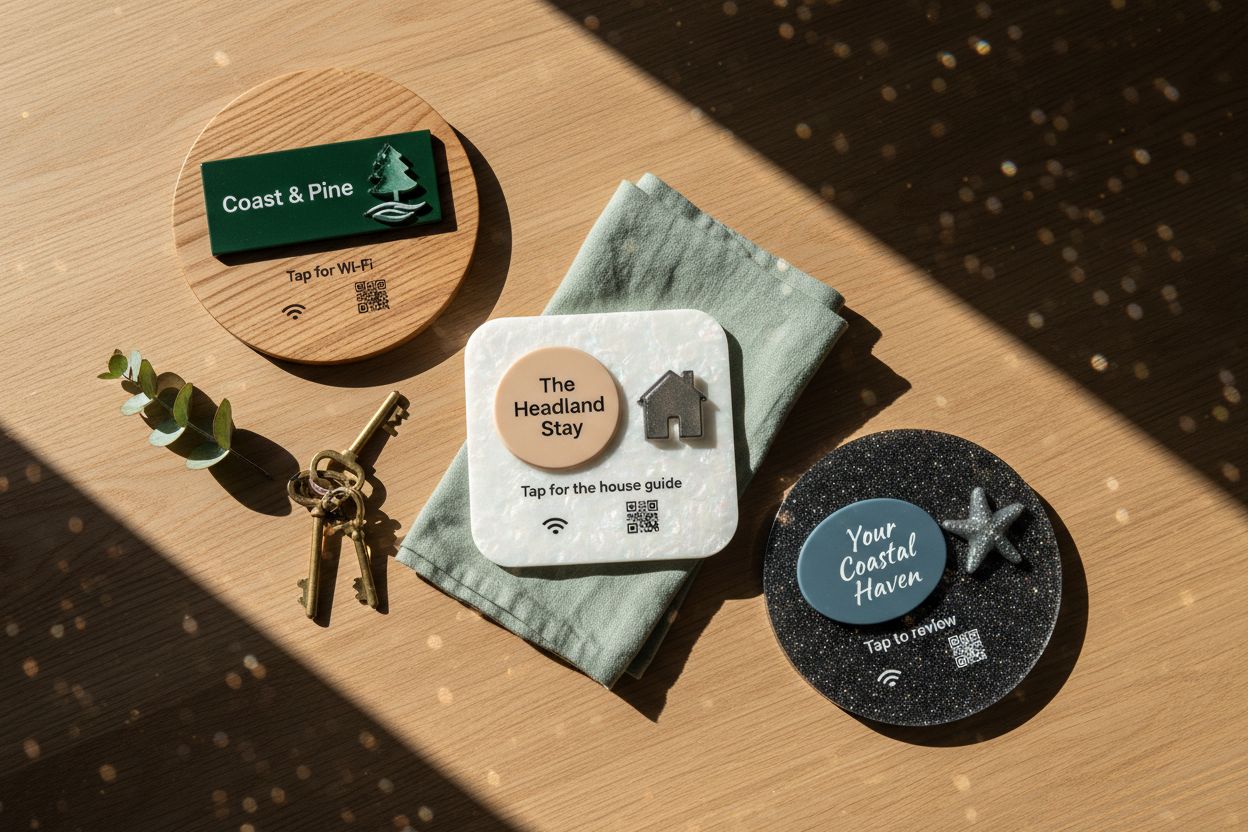
| Airbnb welcome | Tile | Guests tap for Wi-Fi without hunting for a card |
What about cost?
A printed QR code is close to free. A tile is a manufactured object and is priced like one, from about the cost of a round of coffees per tile; see pricing for what moves it. The question is what a faster, more durable, better-looking version of the same link is worth at that spot. On a counter that sees two hundred customers a day, it pays for itself in a week of extra reviews. On a poster in a hallway, it does not, and a QR code is the right call.
Frequently asked
Do customers know to tap? More every year. Anyone who pays with their phone already makes the gesture. A tile that says “Tap to…” on it removes the doubt, and the QR code catches everyone else.
Does NFC work through a phone case? Yes, through any normal case. Very thick wallet cases with metal plates can block it; the customer takes the phone out.
Can a tile be copied? The link can, like any link. The tile itself cannot be cloned in a way that matters for a menu or a review.