A real estate QR code sign for every campaign.
One tile opens the listing on the signboard and the sign-in form at the open home. When the property sells, point it at the next one.
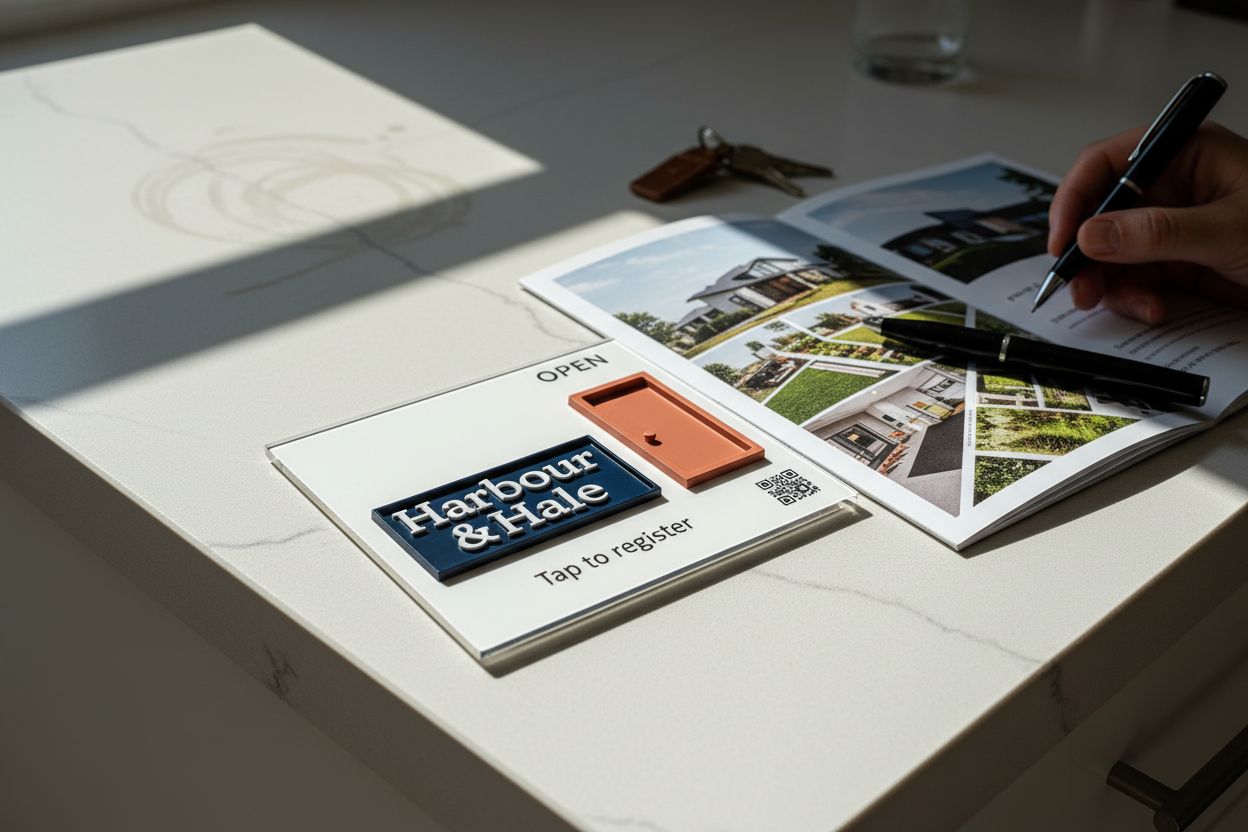
Reused listing to listing
No address printed on the tile. Re-point it from your account when a campaign closes.
Sign-in on their own phone
Buyers register at the open home on their phone, not on a shared clipboard or tablet.
Outdoor-ready acrylic
Cast acrylic is UV-stable and weatherproof, so it holds up on a signboard or front fence.
Your agency's branding
Logo, colours and agent name on the face, rendered before you order.
A QR code printed on a for-sale board is only useful for one property. Once the house sells, the code on the board is wrong, and so is the one on the open home table and on the brochure stand. Most agencies either reprint for each campaign or stop using QR codes. A re-pointable sign fixes that: the same tile opens a different listing each time.
How the sign works
Each sign is a laser-cut tile with an NFC chip sealed inside and a QR code on the face. Both point at a Shortfield address. From your account you set where that address goes: the listing on your agency site or a property portal, a registration form, a video walkthrough, a digital brochure. A buyer holds their phone to the tile, or scans the code, and it opens. No app.
When the property sells, you point the same tile at the next listing. Nothing about the old property is printed on the tile, so nothing needs reprinting.
Sign rider with a QR code
On the signboard, the job is getting a passer-by from the footpath to the listing. Fix a tile to the board or a rider panel with adhesive or screws. Cast acrylic is UV-stable and weatherproof, so it lasts the campaign and the one after. Choose a large size so the QR code scans from a few metres away; the NFC tap is for the buyer who walks up to the board.
Point it at the listing page with photos, price guide and inspection times. Evenings and weekends are when most people walk past, and that’s when there’s nobody to call.
Open home sign
At the open home, the tile sits on the kitchen bench or the entry table in a clear stand, beside the brochures. The first job is sign-in: point the tile at your registration form and buyers fill it in on their own phones as they come through the door. It is quicker than a shared tablet, and there is no clipboard of handwritten names to decipher afterwards. Use the form your agency already uses, so contacts land where they normally do.
Later in the inspection, re-point it at the digital brochure or the contract request form. Our guide to QR codes for open homes covers the order that works best on the day.
Across an agency
Agents change listings every few weeks. A set of tiles per agent, branded to the agency, becomes part of the open home kit like the flags and the brochure stand. Bulk orders start at 10 tiles with 5% off, and our design service handles runs of 30 or more with no design fee. The industry page for agents has more on how agencies use them.
Cost and setup
Tiles cost from $39 to $430 AUD inc. GST, depending on material, size and print. Pointing each tile at a link works on the free Basic account, with tap counts and the ability to pause a tile between campaigns. Start with the open home tile.
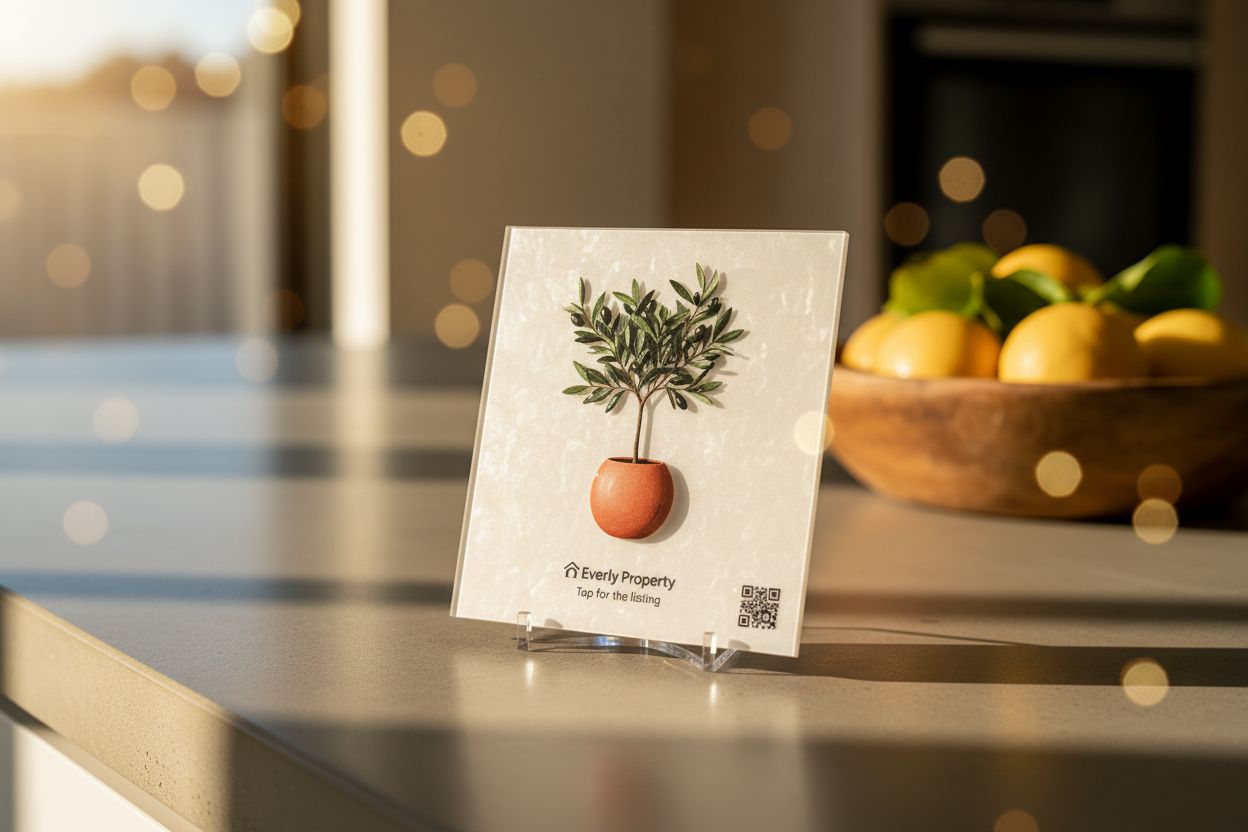
The tiles that fit
Questions, answered.
On the signboard, the listing page with photos and inspection times. At the open home, your registration form. One tile can do either; change it from your account as the campaign moves.
Yes. Point the tile at the registration form your agency already uses, or a simple online form, and buyers fill it in on their own phones as they walk in.
Big enough to scan from the footpath. Choose one of the larger tile sizes, up to 237mm, with a backing rim up to 297mm, and keep the code high-contrast.
Yes. Order from 10 tiles for 5% off, 10% off from 50, with a render of every variant within two business days.
Tap counts per tile show in your account, so you can compare the signboard with the open home table.