QR codes for open homes: registration, listings and follow-up
How agents use QR codes and tap tiles at open homes for buyer registration, listing details and floor plans, with one sign that follows you to every property.
By Shortfield 4 min read
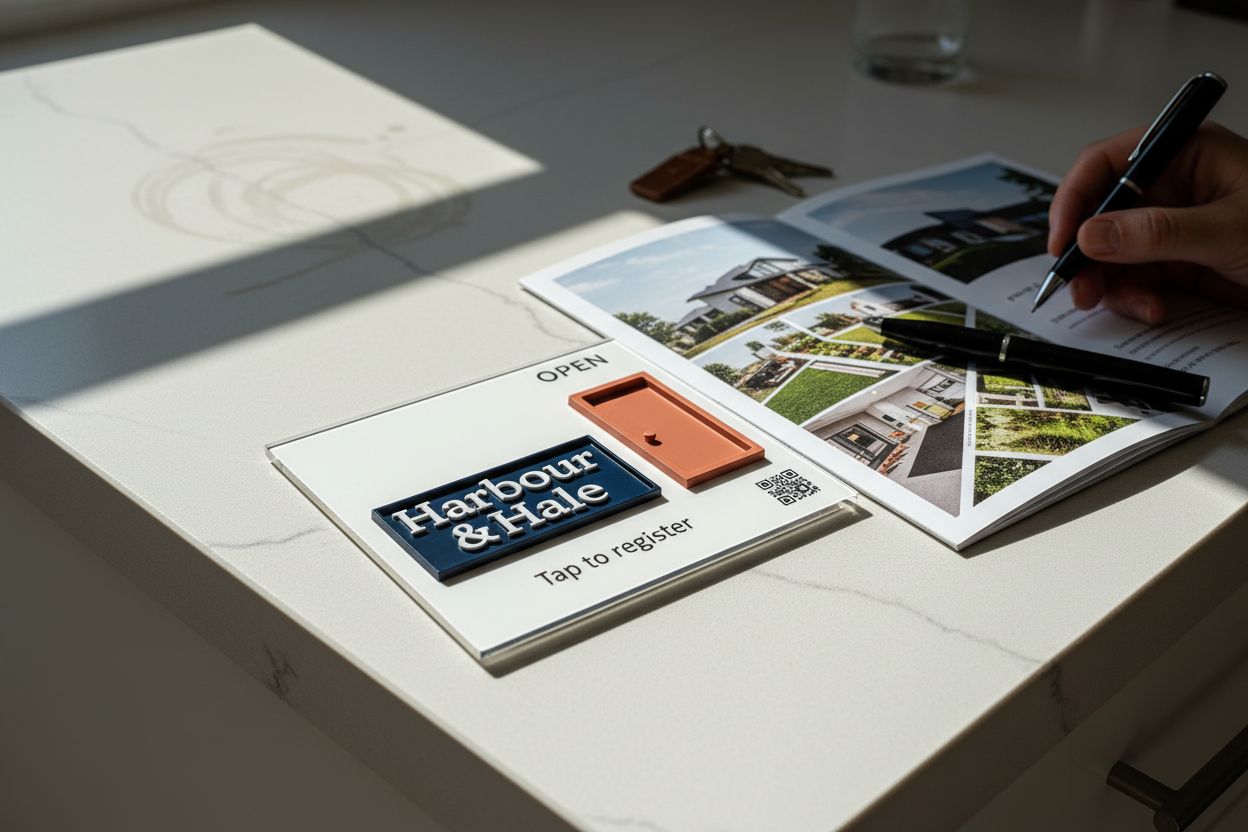
At an open home, a QR code (or a tap tile carrying one) lets buyers register their attendance on their own phone, open the listing with photos and floor plan, and save the agent’s details, without queuing at a clipboard or iPad at the door. Point the code at your registration form or the listing page, put it by the front door and in the kitchen, and change where it points before the next open home. The key is using a code you can re-point, so one sign works at every property instead of printing new ones each weekend.
What should an open home QR code open?
Pick one main job for the code at the door, and a second for inside:
- Registration form. Name, phone, email, whether they have a property to sell, and consent to be contacted. Your CRM or open-home app likely provides a form link; a simple online form works too.
- The listing. Photos, floor plan, price guide, inspection times and your contact details. Your agency website or portal listing.
- Contract and documents. A link to request the contract of sale or a building and pest report.
- Agent profile. Your details, saved to contacts, and your other listings.
At the door: registration. On the kitchen bench: the listing and documents, for people walking through and wanting the floor plan in their hand.
Can buyers register by QR code at an open home?
Yes, and plenty of buyers prefer it. They type their own details, which means fewer illegible names on a paper sheet and fewer typos in phone numbers. It’s also quicker at a busy open home where a queue forms at the door.
Keep a person at the door anyway. Some buyers won’t register unless asked, and the agent’s greeting still matters. The code makes the ask quick.
Check the state or territory rules and your agency’s policy on collecting buyer details. Your form should say what the details are used for, and you should handle the data under your privacy obligations. Don’t collect more than you need.
Why use a tap tile rather than a printed QR code?
A printed code on a flyer works for that property. At the next open home, you need a new flyer, and old flyers left in letterboxes keep pointing at a sold listing.
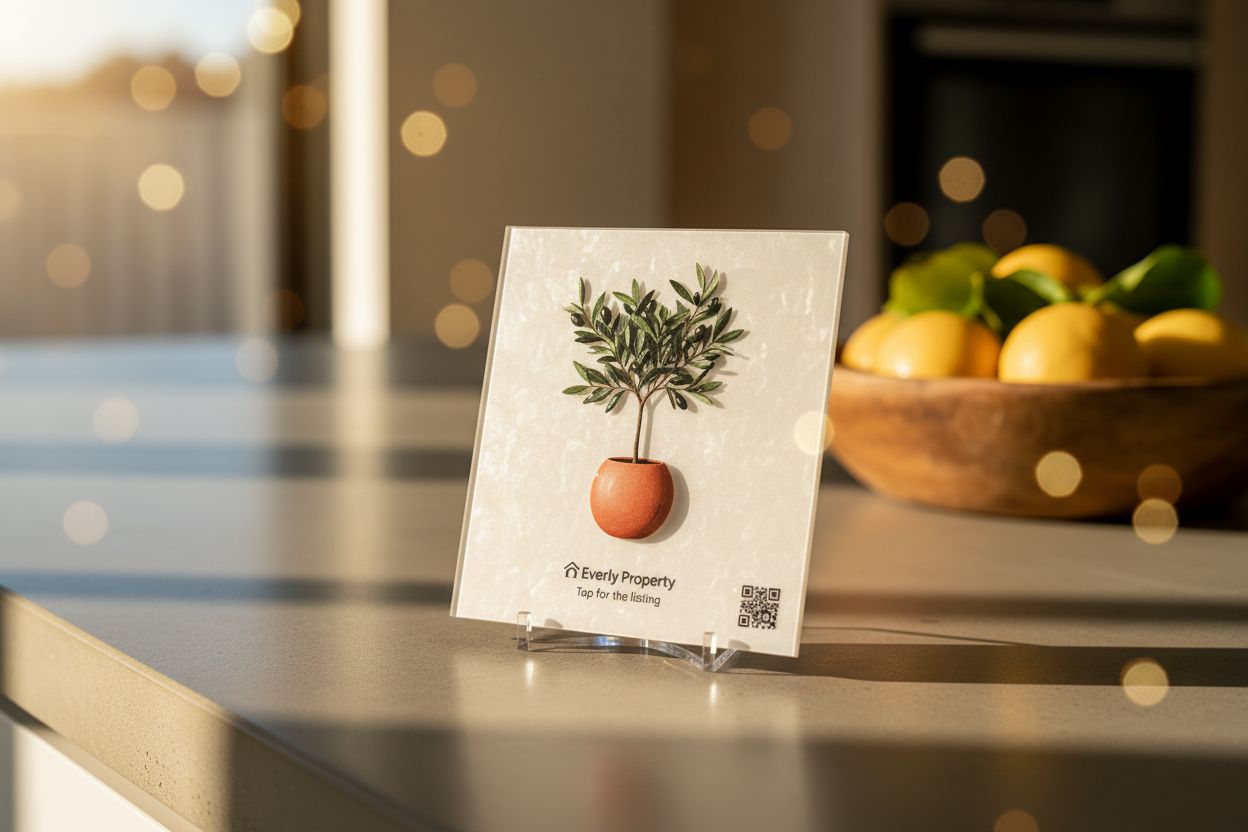
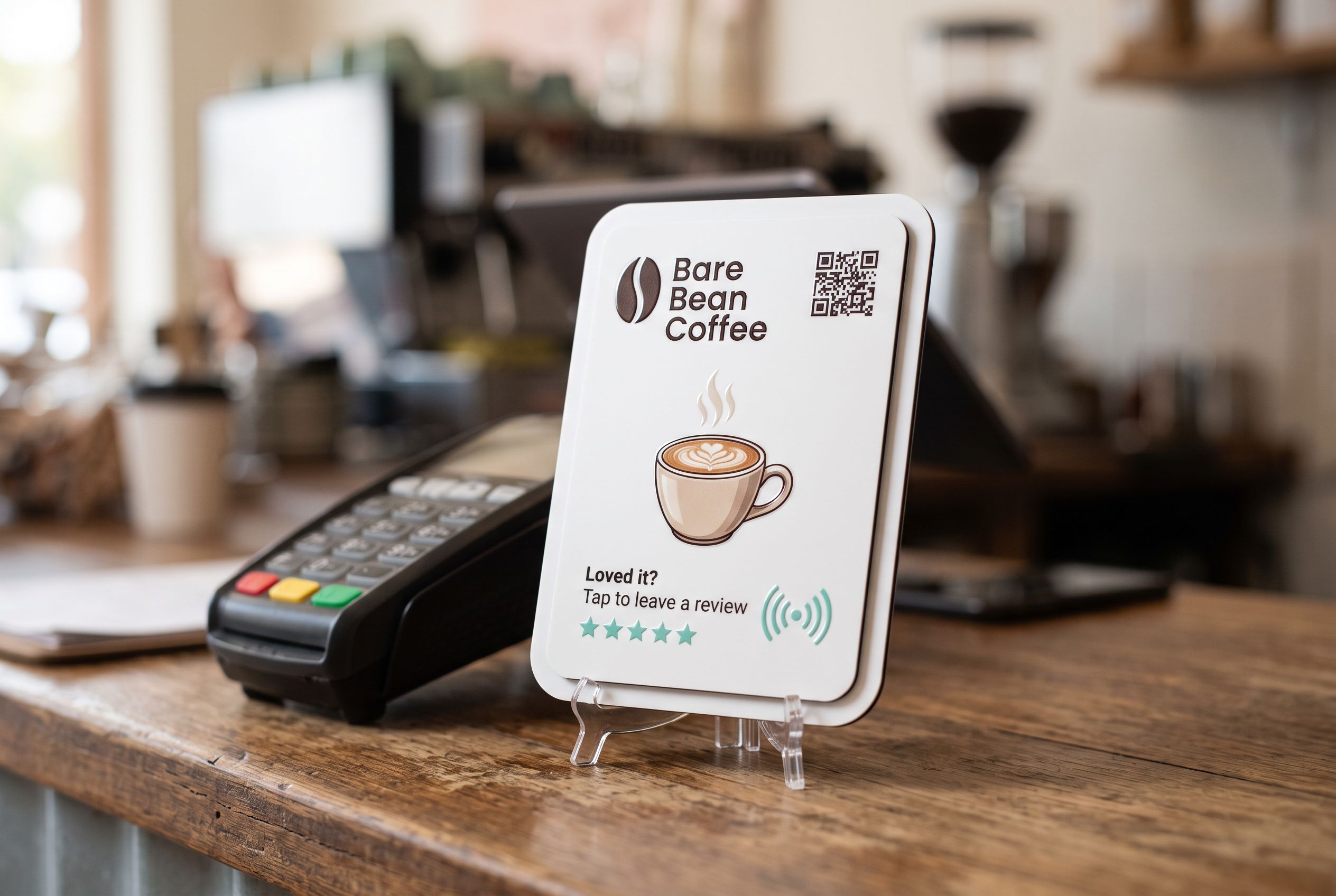
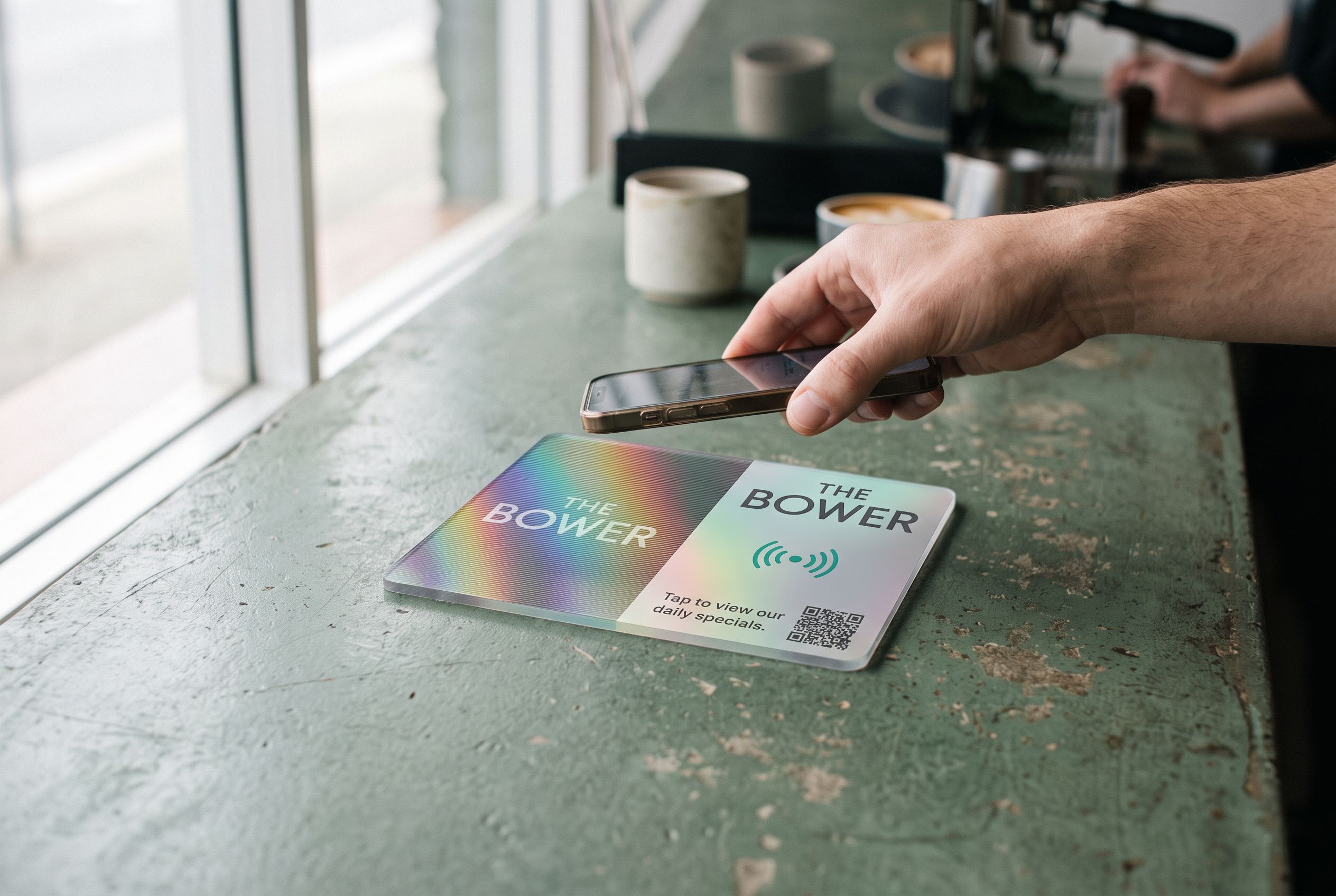
A real estate tile carries a QR code on the face and an NFC chip inside, both pointing at one Shortfield address. Buyers with an iPhone XR or newer, or an NFC-equipped Android phone, tap it from the lock screen with no app; anyone else scans. Before each open home, you change where it points from your account: this Saturday’s listing, next Saturday’s listing. The tile stays in your car kit.
That also means:
- One design, every property. Your agency branding, your photo or logo, “Tap to register” or “Tap for the floor plan”.
- Tap counts. Your account shows how many taps each tile gets, per tile. It’s a rough read on foot traffic, not a list of people.
- Nothing to reprint when a listing changes price or a new floor plan arrives.
The real estate QR code sign page shows stand and wall versions.
Where do you put QR codes at an open home?
- At the front door or gate, with the registration link, in a clear stand on a small table.
- Kitchen bench, with the listing or floor plan. It’s where buyers gather and talk.
- Main bedroom or living room, if the property is large, to remind people to register if they slipped past the door.
- Outside on the signboard, for passers-by outside inspection times. A code on the board can link to the listing and inspection times.
Two or three tiles per property is plenty. More looks cluttered in photos.
What size and material suit open homes?
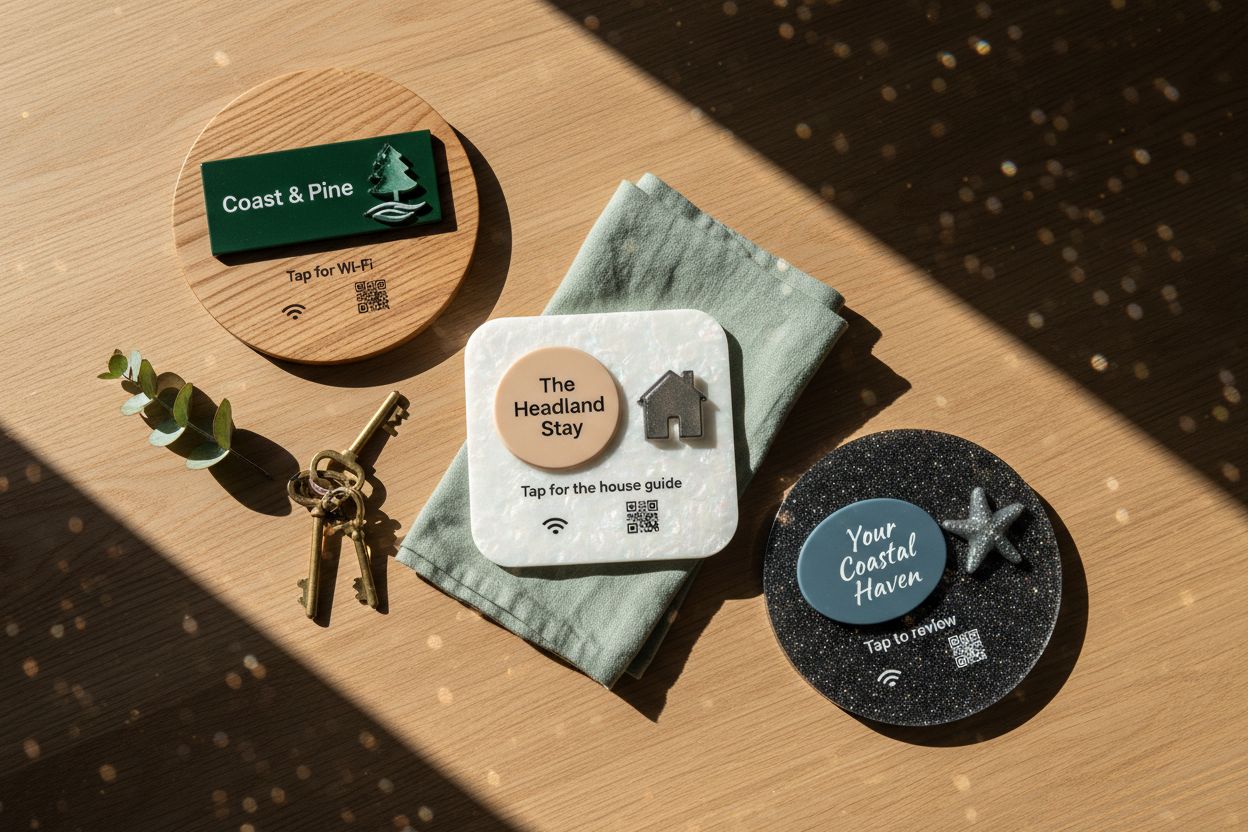
Tiles come in 106, 147, 198 and 237mm, circle or square. A 147mm tile in a stand reads easily on an entry table. Acrylic handles being packed in and out of the car every weekend; wood looks at home in styled properties. See acrylic vs wood NFC tiles.
Agencies ordering for a whole team can use bulk orders: from 10 tiles, with 5% off for 10–49 and 10% off for 50–199, and a render of every variant within two business days. Each agent’s tile can carry their own name and point at their own links, while matching the agency’s branding.
Other uses for agents
- Property management: a tile in rentals for the maintenance request form and tenant information.
- Auction days: registration to bid, if your process allows it online.
- Office window: a tile on the inside of the window opening your current listings. NFC reads through standard shopfront glass, and the QR code works from the footpath after hours.
- Appraisal requests: a tile at the office counter opening your appraisal booking form.
See real estate agents for how agencies use them across the business.
Frequently asked
Do buyers need an app to scan? No. The phone camera reads the QR code, and newer phones read the NFC chip from the lock screen.
Can I use the same tile for two properties on the same day? Yes. Change the destination between inspections from your phone.
What if the listing link changes after I print? Nothing to reprint. Update the destination in your account and the tile follows.
Can I see who tapped? No. You see tap counts per tile. Registration details come from the form buyers fill in.