How long do NFC tags last? Batteries, water, metal and wear
NFC tags have no battery and don't expire; they last as long as the chip stays sealed and undamaged. What wears them out, and where they won't read.
By Shortfield 5 min read
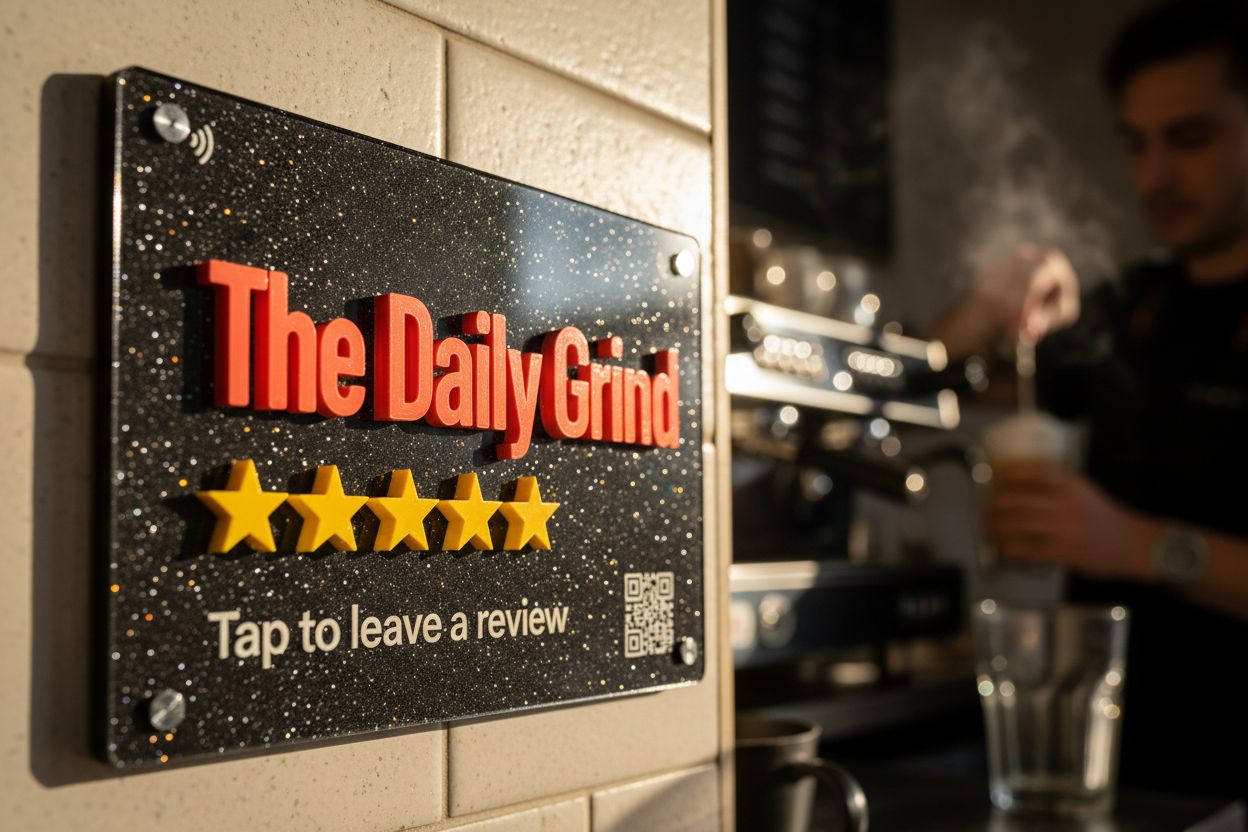
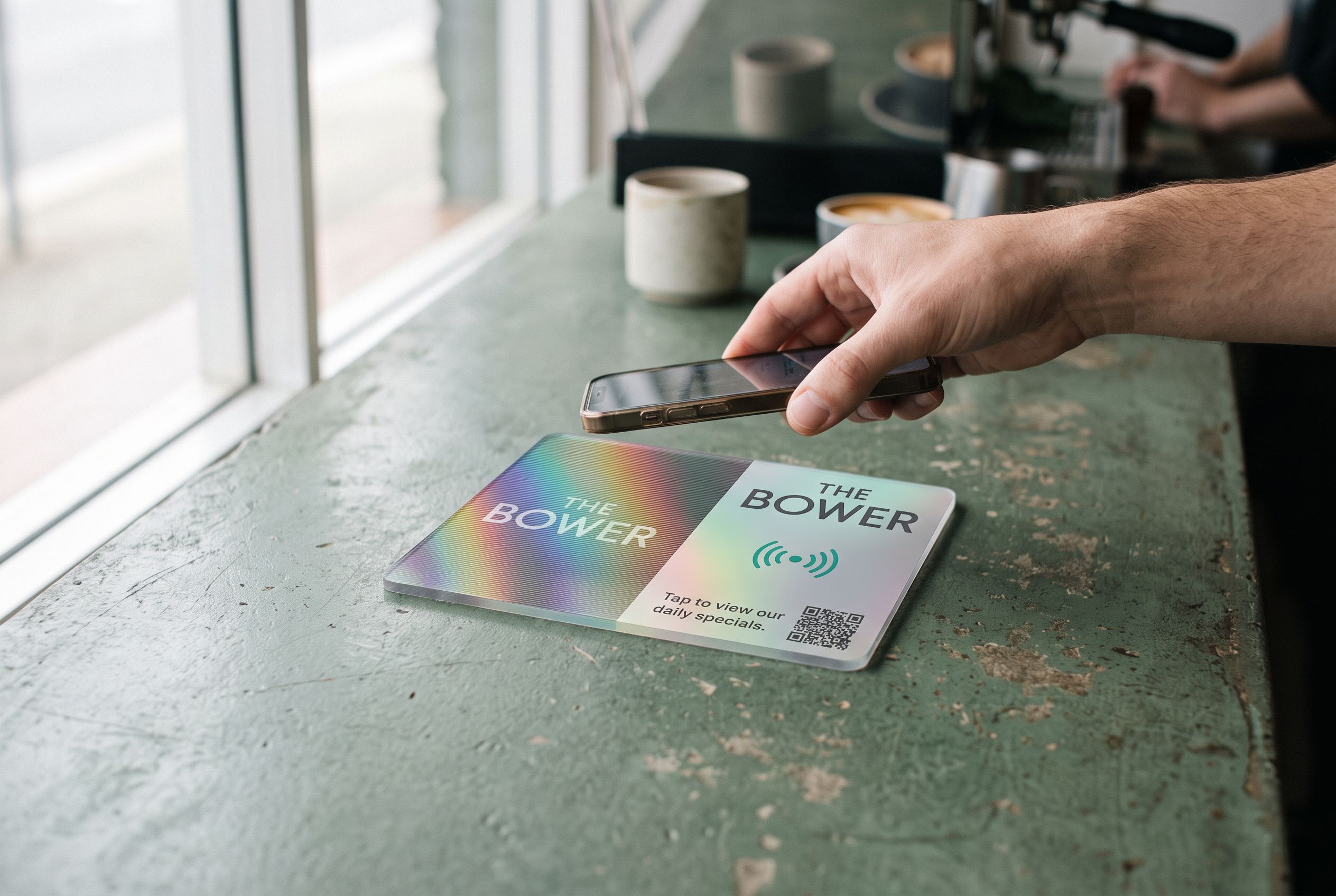
A passive NFC tag has no battery, so it does not run down, and it does not expire. It lasts as long as the chip and its tiny antenna stay physically intact. In practice that means the housing decides the lifespan: a sticker on a table edge might be scraped off in months, while a chip sealed inside a solid acrylic tile can keep working for years indoors or out. What stops a tag working is almost always damage, a lot of metal nearby, or the link it points to going dead, not the tag getting old.
Here is what actually affects a tag’s life, and how to place one so it keeps reading.
Do NFC tags need batteries or power?
No. A passive NFC tag is powered by the phone that reads it. When the phone comes within a centimetre or two, its reader sends out a small radio field; the tag’s antenna picks up enough energy from that field to wake the chip, hand over its data and go quiet again. Between taps the tag uses nothing.
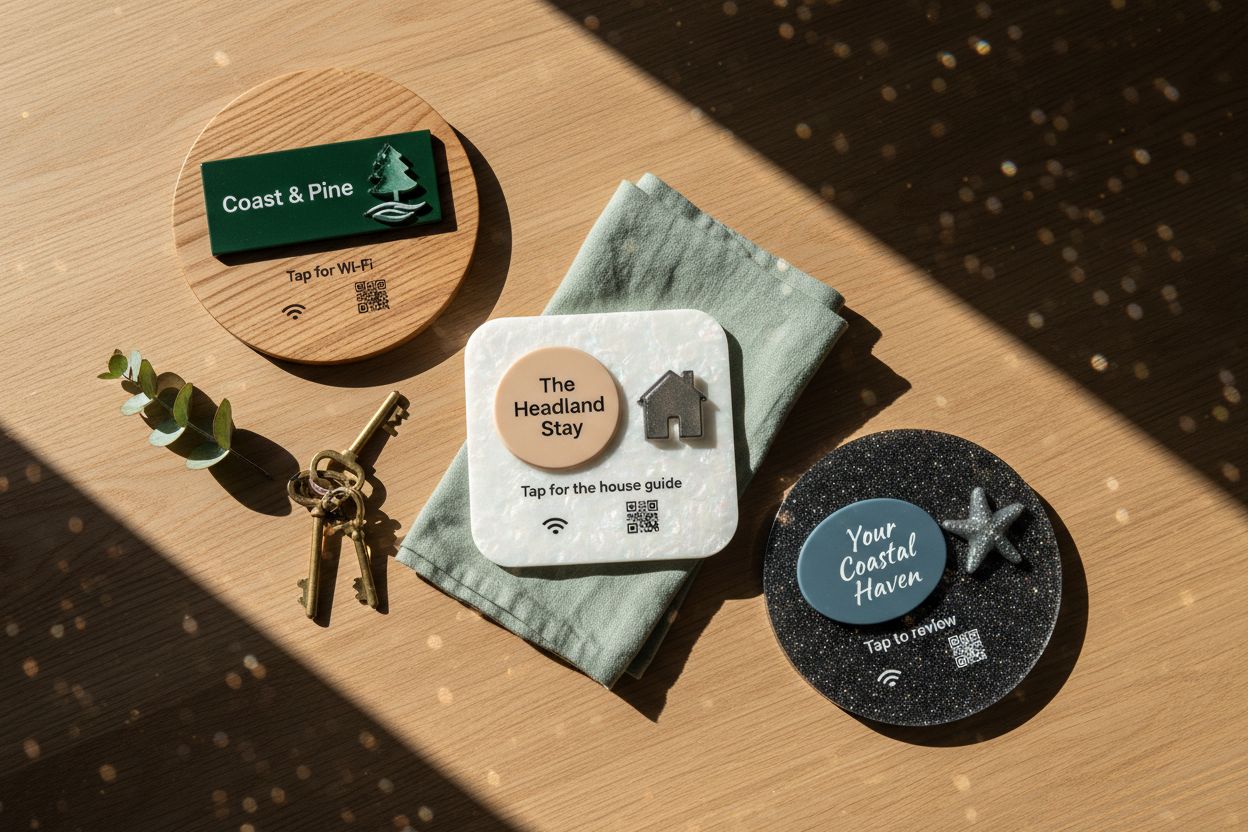
That is why a Shortfield tile has nothing to charge, no cable and no on-off switch. You stick it or screw it in place and leave it.
Do NFC tags expire?
The chip has no expiry date. Chip makers typically quote data retention in years and a rewrite limit in the tens of thousands of cycles, but those limits are about writing new data. Reading is what customers do, and reading does not wear the chip out.
Two things can make a tag “expire” in practice:
- The link dies. If the chip holds a direct link to a menu PDF, a booking page or a QR generator’s redirect, and that page is deleted or the service’s subscription lapses, the tag still reads perfectly but opens an error. This is the most common failure by far.
- The tag is damaged. Bent, cracked through the antenna, peeled off, or exposed to high heat.
A Shortfield tile holds a Shortfield address, and you choose where it points from your account, free with any tile. If the page behind it changes, you change the destination and the tile carries on. More on that in can NFC tags be reprogrammed.
Can NFC tags get wet?
A bare sticker tag tolerates a splash, but water getting under the edge and repeated wiping will lift it. A sealed tag is a different story. In a Shortfield tile the chip is sealed inside the material, so rain, spills and a wipe-down reach the face, not the chip.
The material then matters:
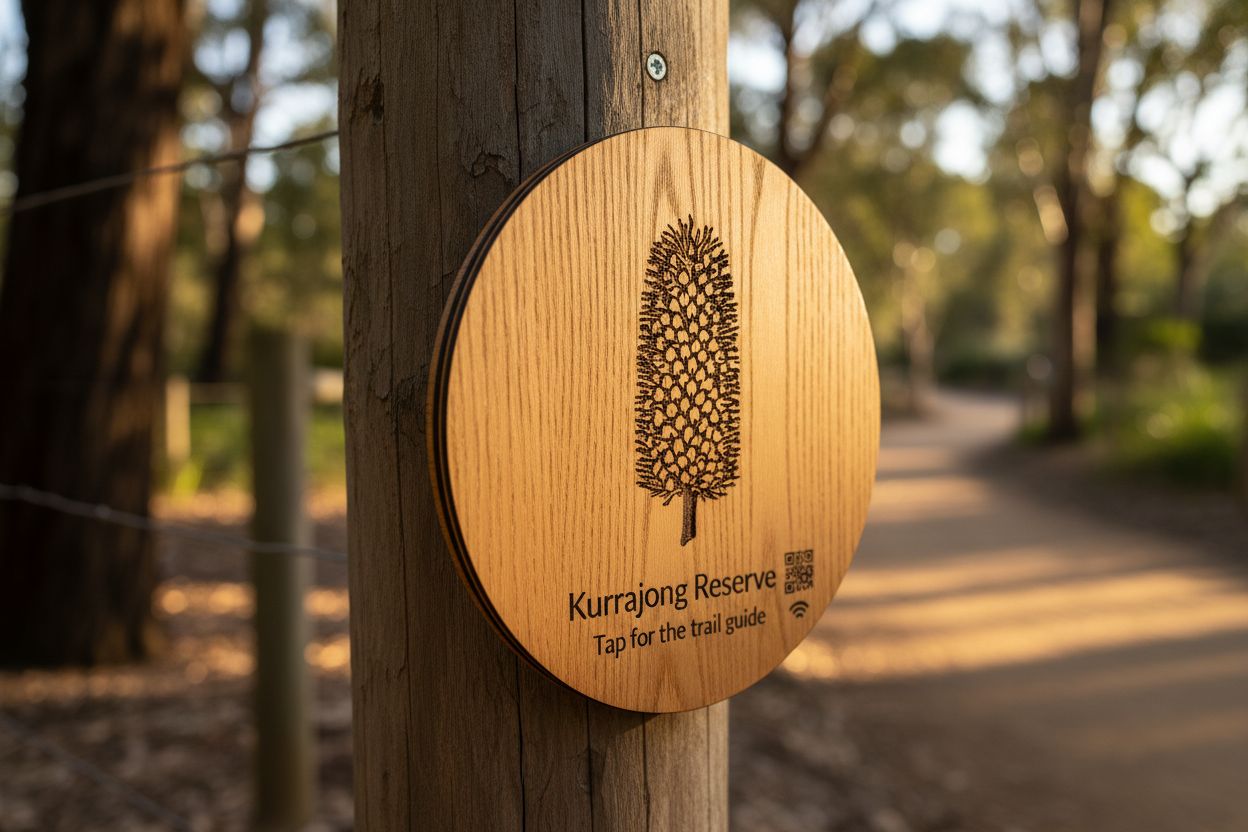
- Cast acrylic is UV-stable and weatherproof. It suits a front door, a gate, a trail post, a beer garden table or a memorial plaque exposed to the weather.
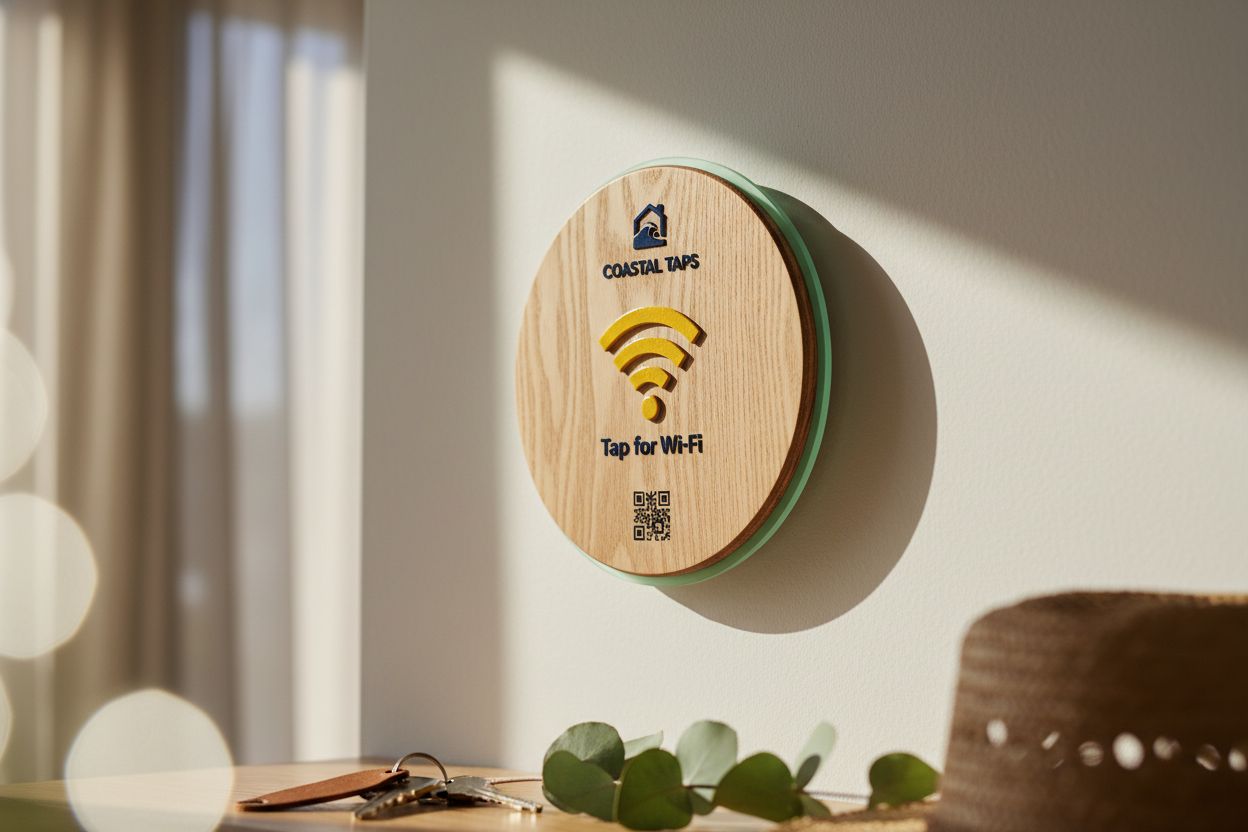
- Wood (plywood or bamboo) suits sheltered spots: indoors, under an awning, in a covered entry. Left in full sun and rain it will weather the way any timber does.
Our acrylic vs wood guide goes into how each ages.
Do NFC tags work on metal?
Not well when mounted directly on it. Metal behind a tag absorbs and reflects the phone’s field, which can shorten the read range or stop the tag reading at all. Specialised “on-metal” tags exist with a shielding layer, but a standard tag stuck flat on steel is unreliable.
Our tiles are acrylic or wood, which do not interfere. The problem is what you mount them on. If the spot is a stainless counter, a steel door, a metal post or a fridge:
- Test first. Hold the tile against the surface where it will go and tap it with a couple of different phones before you fix it.
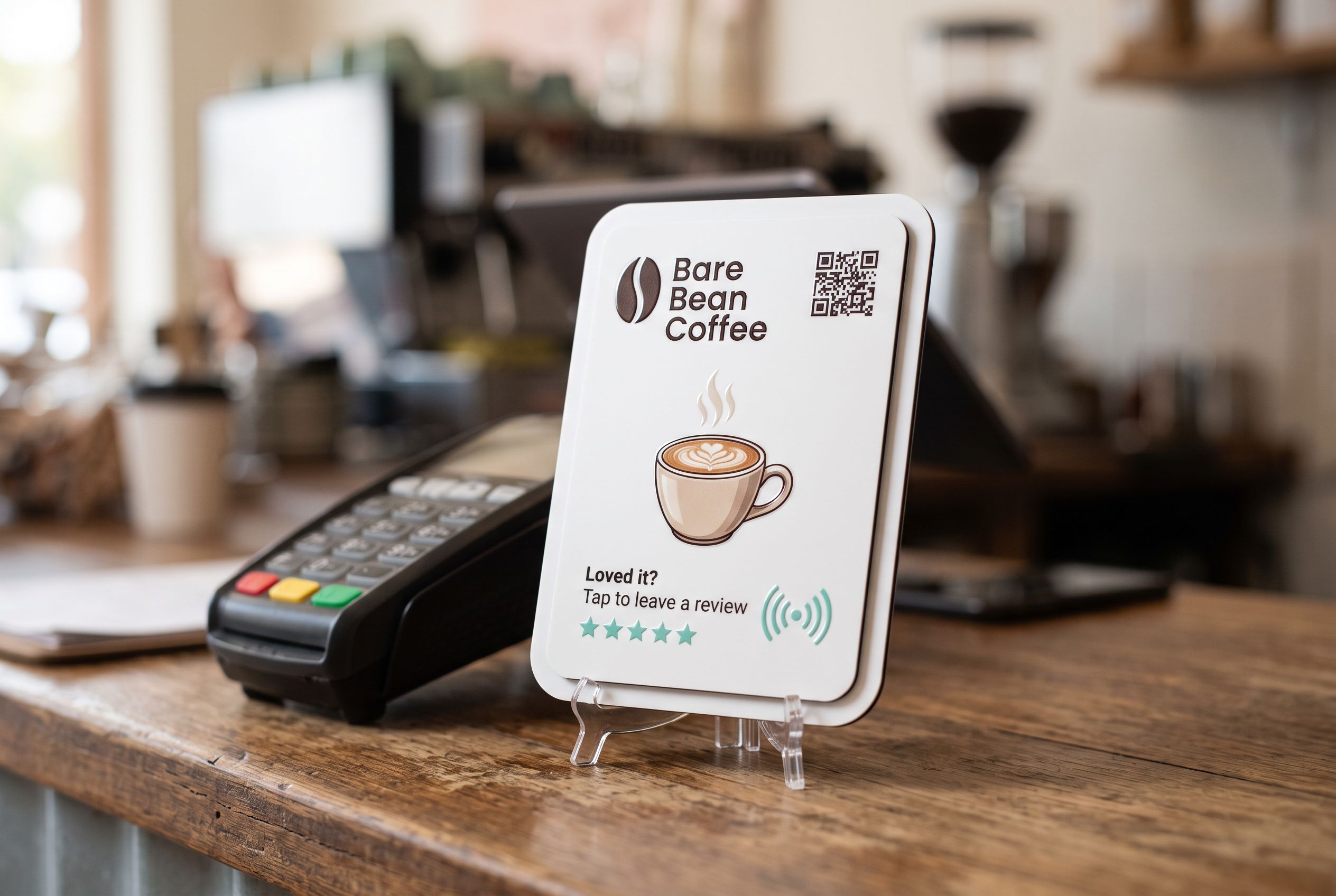
- Use a stand on the counter instead of sticking the tile flat, so there is an air gap.
- Order the backing rim, which puts material between the chip and the surface.
- On a steel post or pole, fix a small timber or acrylic board first and mount the tile on that.
A phone case with a metal plate or a magnetic wallet can also block the read on the customer’s side; taking the phone out of the wallet case solves it.
What else can stop a tag reading?
- Distance. NFC is deliberately short range. Behind a thick sheet of glass or under a heavy tablecloth, the phone may never get close enough. Standard shopfront glass is fine; a thick glass slab table top may not be.
- Heat. Leaving any electronic tag on a dashboard in a hot car for a summer, or near an oven, is asking for trouble.
- Physical force. A tile that is dropped hard enough to crack straight through can break the antenna. A scuff on the face does nothing.
How do I make a tag last as long as possible?
- Choose a sealed tag over a sticker for anything the public touches.
- Choose acrylic for outdoor or wet spots, wood for sheltered ones.
- Keep it off bare metal or give it a gap.
- Fix it with adhesive or screws so it can’t be knocked off or pocketed.
- Point it at an address you control, so a dead link never kills a working tile.
- Check the tap counts in your account every so often. A tile that suddenly stops getting taps has either been moved, been covered or needs a look.
For outdoor uses like parks and trails, see QR code trail signs; for a weatherproof tribute, the memorial tile.
Frequently asked
Will cleaning products damage the tile? The chip is sealed inside, so cleaning reaches only the surface. Wipe acrylic with a soft cloth and mild cleaner; harsh solvents can cloud acrylic, as they would any plastic.
Does sunlight fade the print? Cast acrylic is UV-stable and suited to outdoor use. For a tile in full afternoon sun, acrylic is the better pick over wood.
Do phones wear the tag out by tapping it so often? No. Reading does not wear the chip. A tile by a busy café terminal gets read the same on its thousandth tap as its first.
What if a phone won’t read it? Check the phone first with another tile or a contactless card; then check for metal behind the tile. The QR code on the face is the backup for any phone that can’t tap.