Memorial plaque QR code: wording, tribute pages and placement
A QR code or tap tile on a memorial plaque opens a tribute page with photos and stories. Wording ideas, what to put on the page, and what to check first.
By Shortfield 4 min read

A memorial plaque QR code links a physical place, such as a grave, a bench, a tree or a niche wall, to a tribute page where visitors can see photos, read the person’s story and, if the family wants, leave a message. You create the tribute page first (a memorial website, a shared photo album, a Google Doc or a PDF), then put the link on a weatherproof plaque as a QR code and, ideally, an NFC chip so phones can tap it too. Before fixing anything, check with the cemetery, memorial park or council, because most have rules on what can be attached and where.
This guide covers the wording, the tribute page and the practical checks.
What should the wording on a memorial QR plaque say?
The plaque needs very little text. The QR code does the talking. A few approaches:
- Name and dates, plus an invitation. “Margaret Ellen Hughes, 1941–2026. Scan to share her story.”
- A short line in their voice or about them. “Always in the garden. Tap to see her roses.”
- A simple instruction. “Scan or tap to remember.”
- For a bench or tree. “In memory of David, who walked here every morning. Scan for his story.”
- For a pet. “Biscuit, our best boy. Tap for his photos.”
Keep the instruction, because some visitors won’t know the code or tile does anything. “Scan” covers everyone; “tap” helps those whose phones read NFC.
What should go on the tribute page?
Whatever the family is comfortable sharing publicly, since anyone who visits can open it. Common sections:
- A photo at the top, and their full name and dates.
- A short life story: where they grew up, work, family, what they loved.
- Photo gallery from different stages of life.
- Eulogy or the order of service from the funeral.
- Video or audio, a voice recording or a favourite song.
- Messages from family and friends, or a way to leave one, if the platform allows.
- A cause they supported, with a donation link if the family wishes.
Leave out anything that shouldn’t be public: home addresses, dates of birth in full if that concerns the family, private family details.
Where should the tribute page live?
Anywhere with a stable link you control:
- A memorial website service, built for this, often with guest books and galleries. Check the terms: some charge ongoing fees, and a page that disappears when a subscription lapses leaves a plaque pointing nowhere.
- A shared photo album from your phone’s photo app or a cloud service.
- A Google Doc or PDF with photos and text, shared as view-only.
- A family website you already run.
Because a plaque can last for decades, the destination is the fragile part, not the plaque. A Shortfield memorial tile points at a Shortfield address, and you choose where that address leads from your account, free with any tile, no subscription required. If the memorial website closes or you move the photos to a new album, you change the destination and the plaque follows. Nothing is reprinted, and nothing on the plaque changes.
Do I need permission to put a QR code on a grave?
Very likely. Cemeteries and memorial parks, whether run by councils, trusts or private operators, usually have rules about:
- What can be attached to headstones, and who may attach it (often only an approved monumental mason).
- Size, material and fixing method.
- Items placed on lawn graves or niche walls.
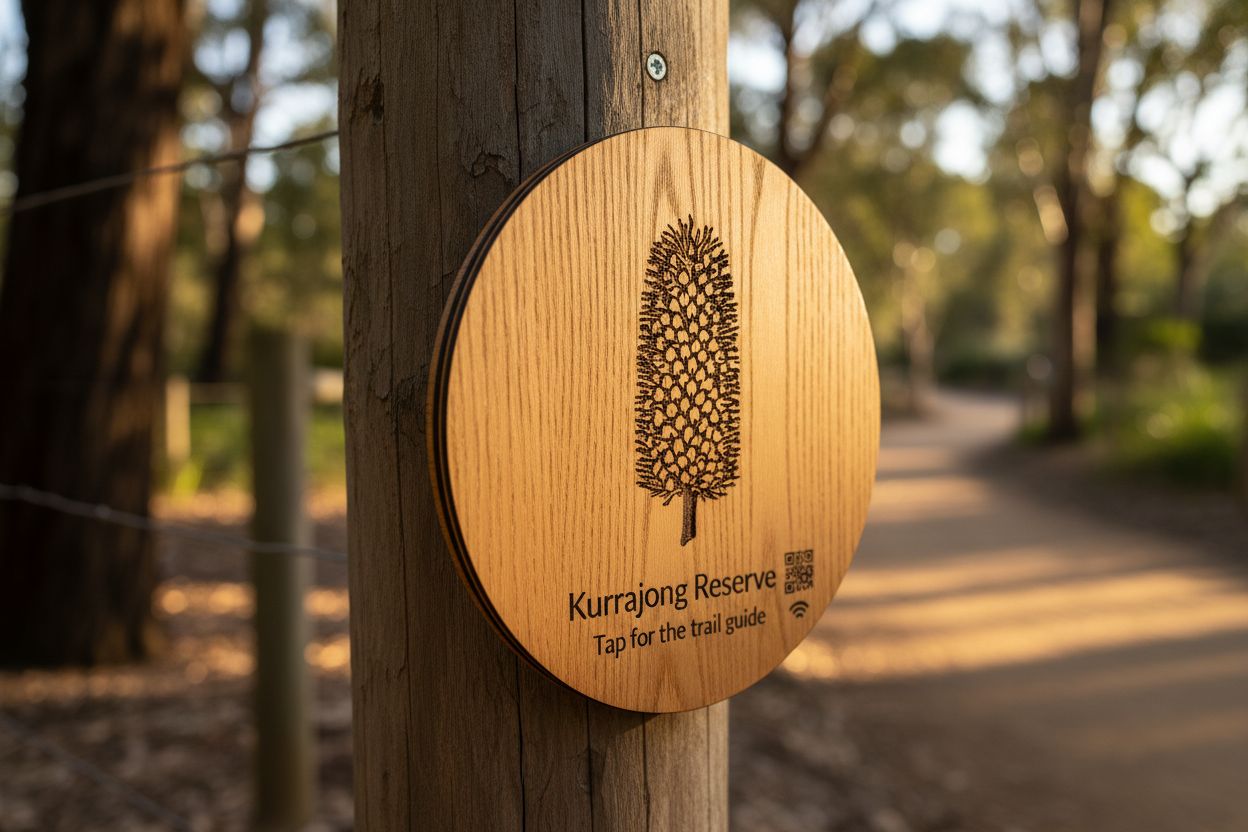
- Plaques on park benches and trees, which councils often manage through a formal memorial program.
Ask the cemetery office or council before ordering. They’ll tell you what’s allowed, and a mason may be able to fix the plaque for you. For benches and trees in public parks, the council’s memorial program usually decides wording and placement. See councils and parks.
What material lasts outdoors?
Cast acrylic is UV-stable and weatherproof, so it suits outdoor memorials exposed to sun and rain. Wood looks warm but suits sheltered spots, such as a garden wall under an eave, a memorial shelf inside or a niche indoors. The NFC chip is sealed inside the tile, and there’s no battery to fail. More in how long do NFC tags last.
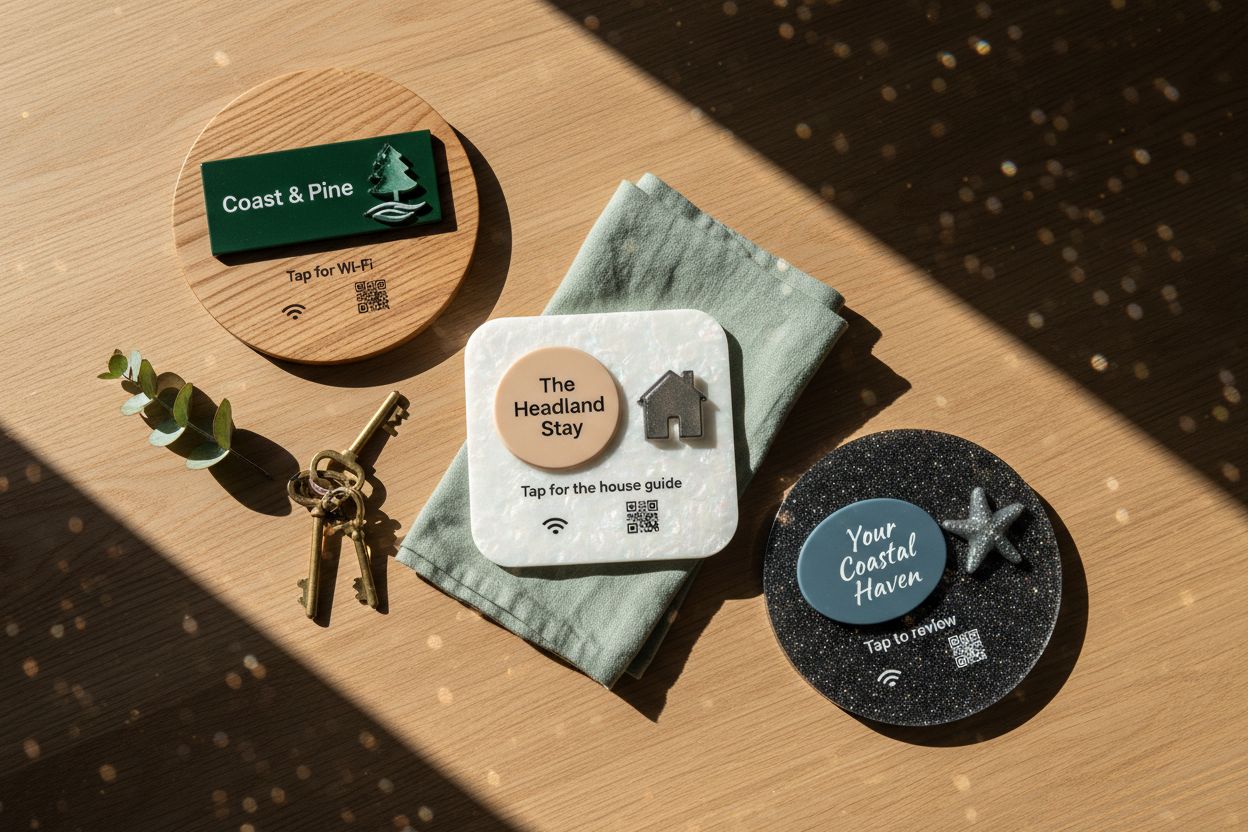
Tiles come in 106, 147, 198 and 237mm, circle or square, fixed with adhesive or screws. Any text, logo or photo can be printed on the face. You see the plaque fully rendered in the online designer before you buy, which helps when family members want to agree the wording. See the QR code memorial plaque page for examples.
Other places families use memorial tiles
- At home, on a shelf beside a photo or urn.
- At the funeral or memorial service, on a stand at the guest book, opening the tribute page or a photo upload link.
- Garden memorials, on a post beside a planted tree.
- Pet memorials in a backyard.
- Club rooms and workplaces, remembering a member or colleague.
Frequently asked
Will the QR code still work in twenty years? The printed code and sealed chip don’t expire. What matters is that the page still exists; pointing the tile at an address you can change protects against that.
Can I update the tribute page after the plaque is fixed? Yes. Add photos and stories any time; the plaque opens whatever the page currently shows.
Can visitors leave messages? Only if the page you link to allows it. Many memorial website services have a guest book; a PDF doesn’t.
Can I pause it if something goes wrong? Yes. You can pause a tile from your account, then re-point it when the page is sorted.