A QR code sign for your business that keeps up.
One sign for whatever you need customers to open: reviews, the menu, Wi-Fi, your Instagram. Scan or tap, and change what it opens from your account.
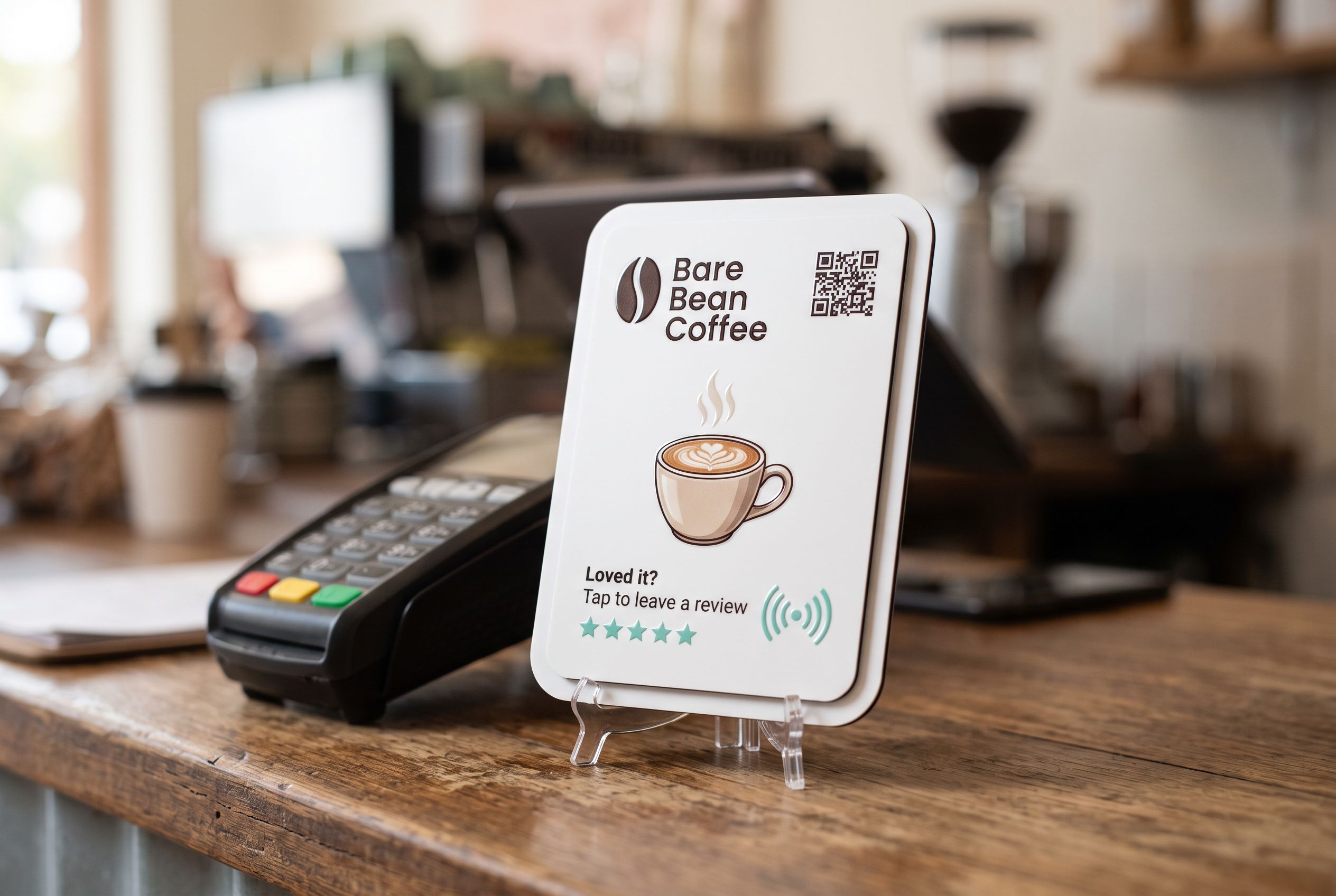
One sign, any link
Reviews today, a sale page next month. The sign stays; the destination changes.
Scan or tap
A QR code on the face for every camera, an NFC chip inside for phones that tap.
Counter, wall or window
A clear stand for the counter, adhesive or screws for walls, doors and glass.
See which signs work
The free account counts taps per sign, so you know which spot earns its place.
Most businesses end up with a drawer of QR codes. One on a laminated card for Google reviews, one taped to the wall for Wi-Fi, one on the menu, one for the Instagram competition that finished last year. Each points at a fixed link, and each one that goes out of date stays on the counter, sending customers somewhere that no longer matters.
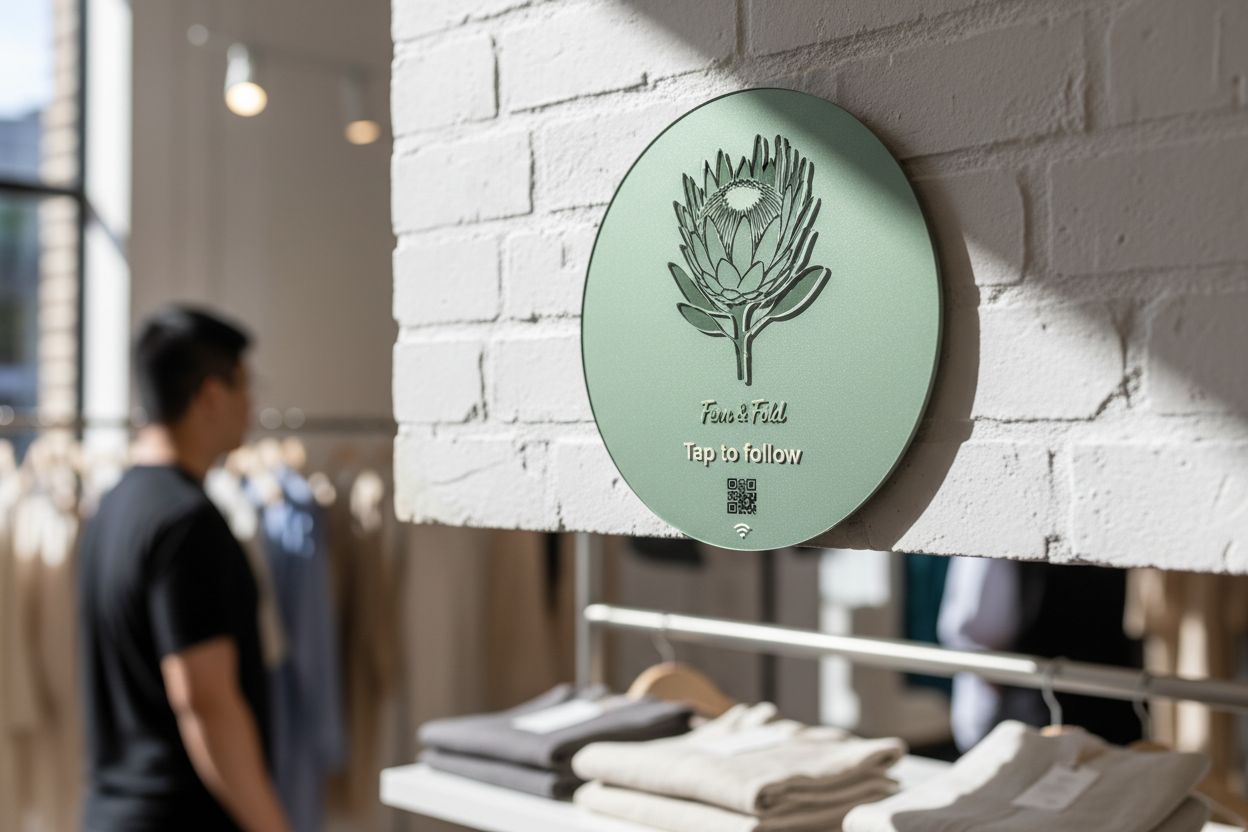
A Shortfield QR code sign replaces the drawer with one solid object per job, each pointing at a link you control. It is a laser-cut acrylic or wood tile with your logo and a QR code printed on the face and an NFC chip sealed inside. It stands on the counter in a clear stand or fixes to a wall, door or window.
What a business QR sign is for
Pick the one thing you most want a customer to do in that spot:
- At the register: leave a Google review, with a Google review tile.
- On the tables or by the menu board: open the menu, with a menu tile.
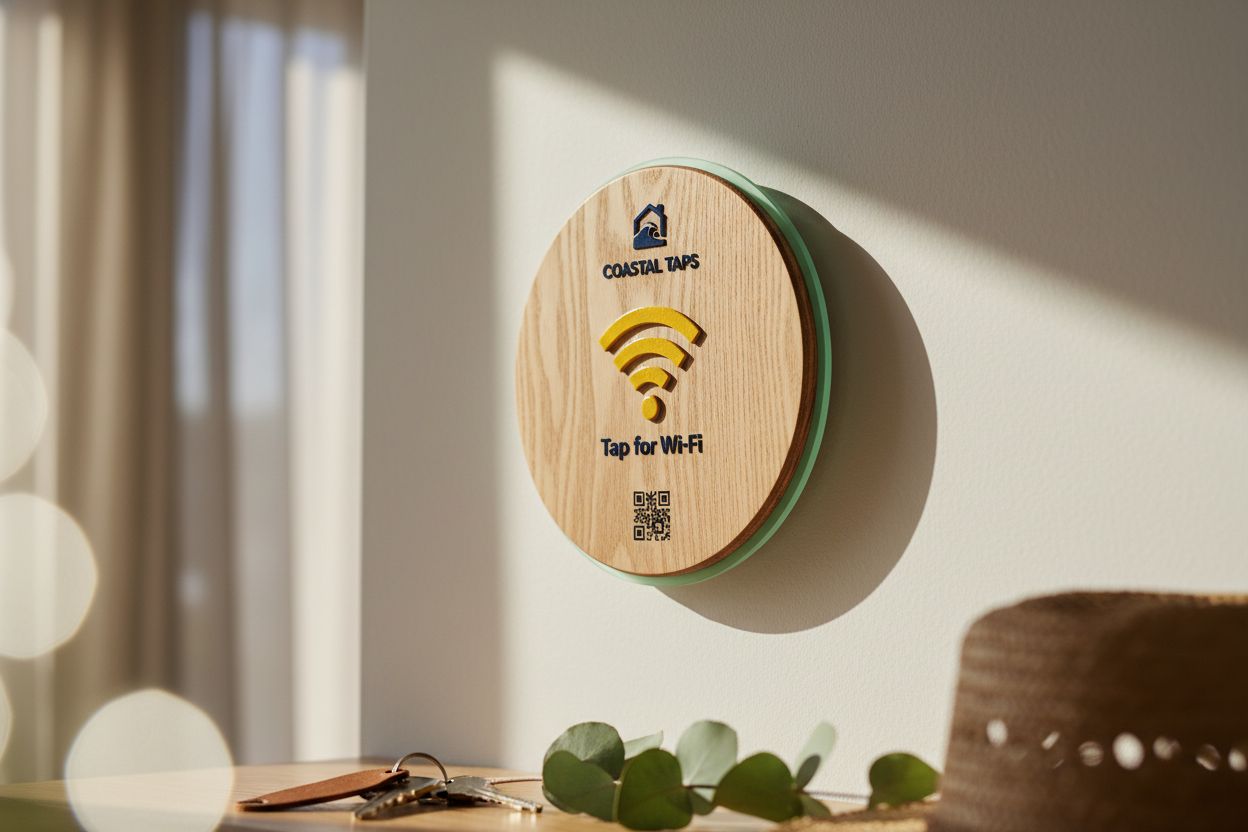
- Where people sit and wait: join the Wi-Fi, with a Wi-Fi tile.
- By the door or change rooms: follow you on Instagram or TikTok, with a social tile.
- On a trade van or a quote table: request a quote or pay a deposit.
One clear job per sign gets more scans than a sign that tries to do everything. If you do want several options in one place, the optional Starter plan at $9 a month hosts a page behind the sign with reviews, links, Wi-Fi and your menu together.
A code you can change
The QR code on every sign points at a Shortfield address, not straight at your destination. You set where that address forwards from your account. Run a winter promotion through the counter sign for a month, then point it back at reviews. Move your menu to a new ordering system, and the table signs follow. This is the difference between a dynamic code and a static one; see dynamic vs static QR codes.
The free Basic account shows how many taps each sign gets and lets you pause one. Move a sign from the counter to the window for a fortnight and see which spot works.
Scan and tap from the same sign
The NFC chip inside means phones that tap do not need to scan at all. Every iPhone XR and newer, and NFC-equipped Android phones, open the link from the lock screen. Everyone else scans the code. Both open the same page. NFC vs QR codes for venues goes into when each one is faster.
Stands for shops and counters
A counter sign should sit where hands already are: next to the card terminal, the pickup bench or the bag-packing area. The 106mm tile fits tight counters; 147mm suits a wider one. For walls and windows, the larger 198mm and 237mm sizes read from further away, and NFC works through standard shopfront glass.
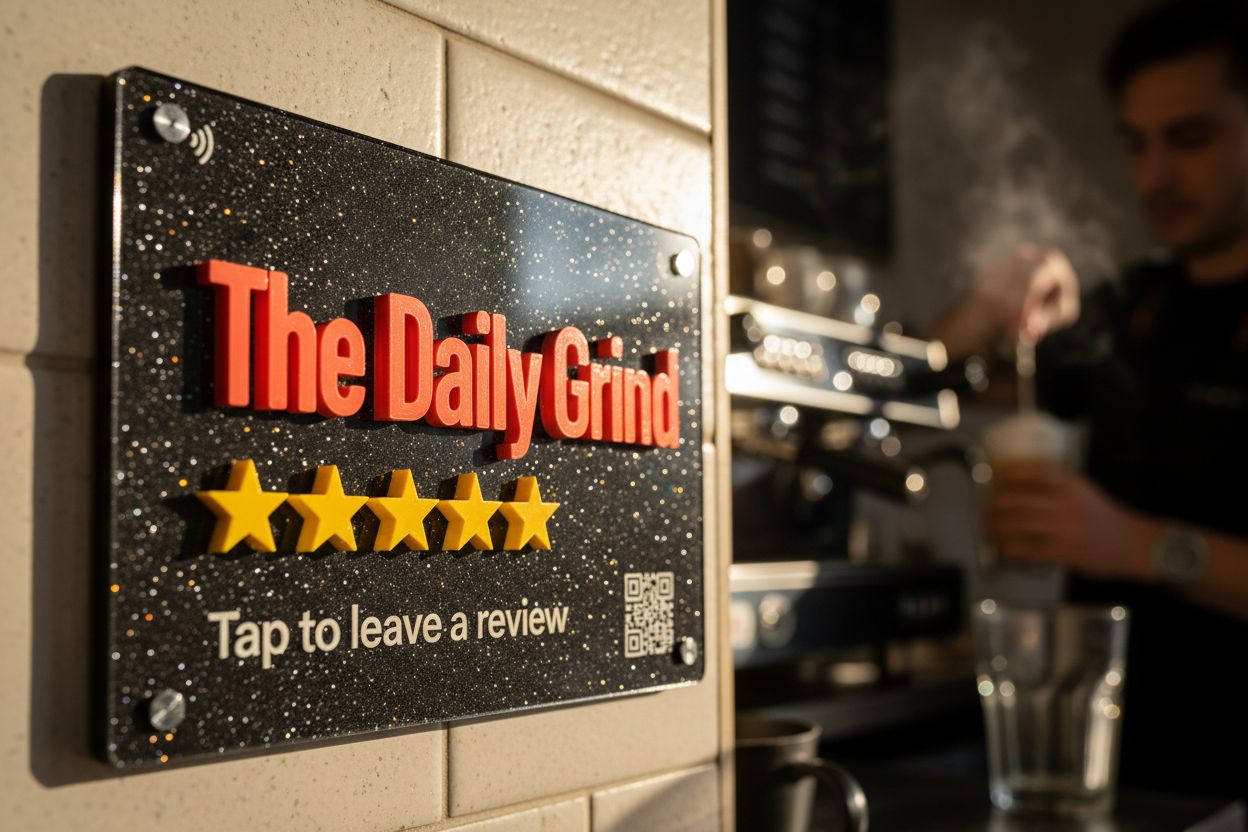
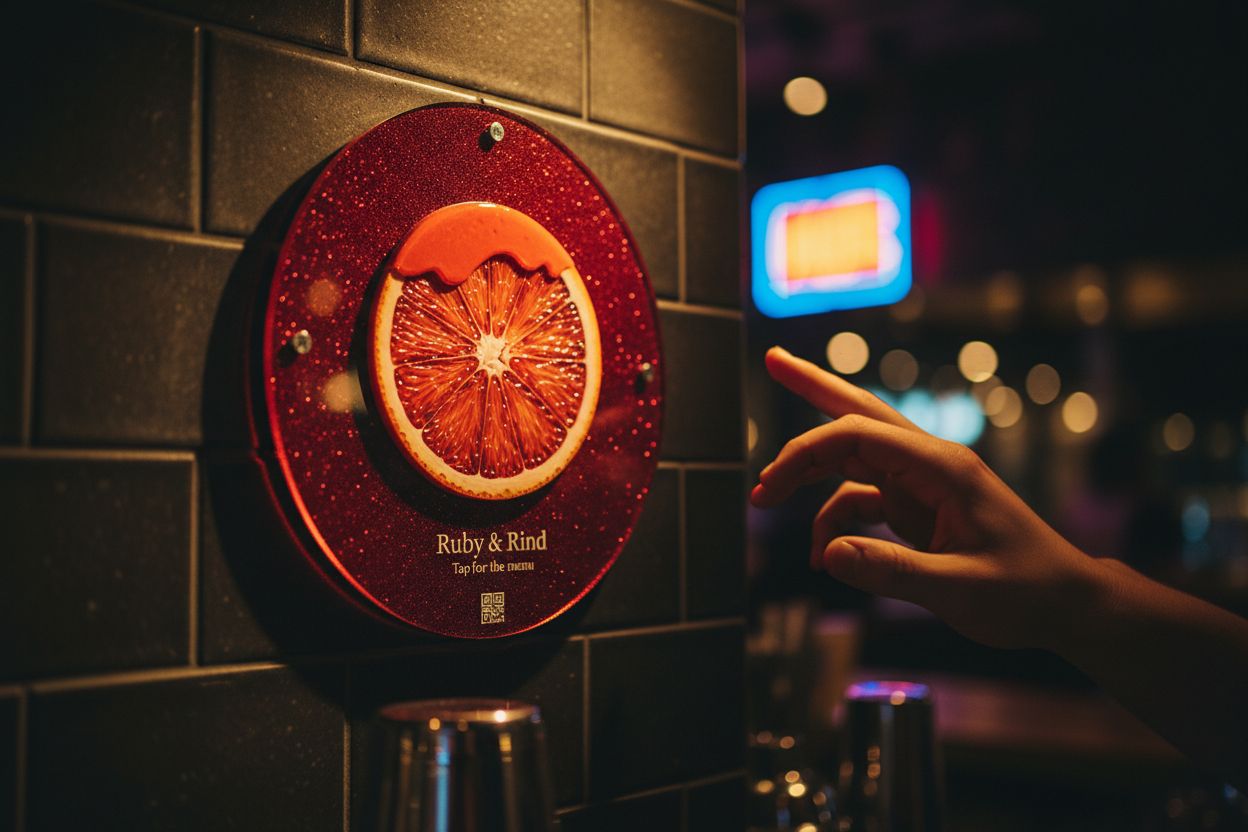
Choose acrylic in opaque, pastel, mirror, pearl, glitter or specialty finishes, or a wooden QR code sign in plywood or bamboo. Our acrylic QR code stand page covers the finishes. Tiles run from $39 to $430 each, AUD inc. GST, and you see each one fully rendered before you buy.
For shop-specific ideas, see our page for retail shops.
Questions, answered.
Whatever you most want a customer to do next: leave a Google review, see the menu, join the Wi-Fi, follow you on Instagram or book again. One clear job per sign works best.
A sign opens one link, but that link can be a page with several buttons. The optional Starter plan hosts that page for you, with reviews, links, Wi-Fi and a menu in one place.
The 106mm tile sits beside a card terminal; the 147mm tile holds its own on a wider counter. For a window or wall read from a few metres, go to 198mm or 237mm.
Yes. The free Basic account shows tap counts for each tile, and you can pause a tile when you do not want it active.
Yes. The QR code scans through glass, and the NFC chip reads through standard shopfront glass too, so people can use it from the footpath.