NFC review cards vs stands vs plaques: which one to buy
Review cards travel with staff, stands sit by the terminal, plaques go on walls. How each gets used, where each fails, and which suits your business.
By Shortfield 5 min read
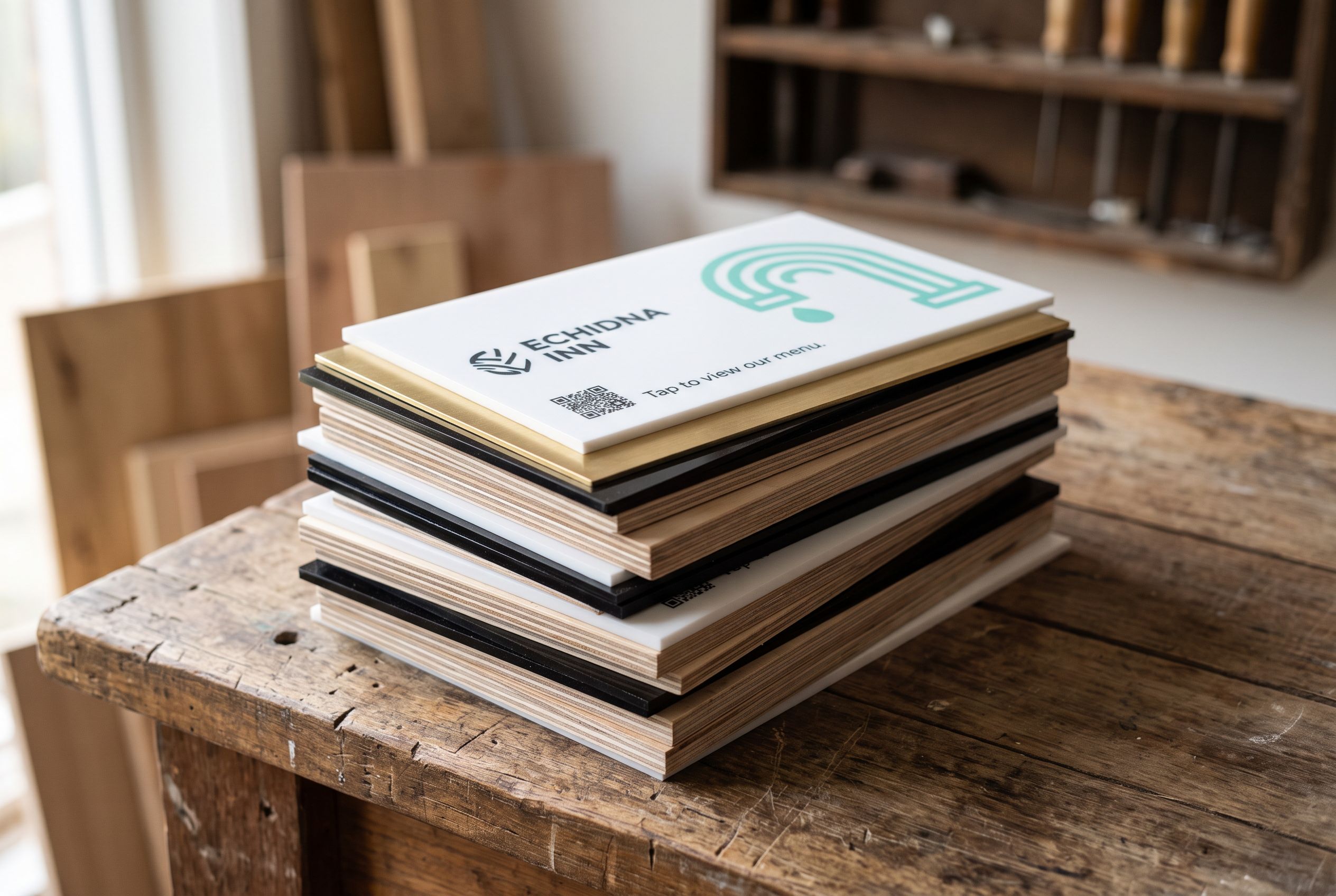
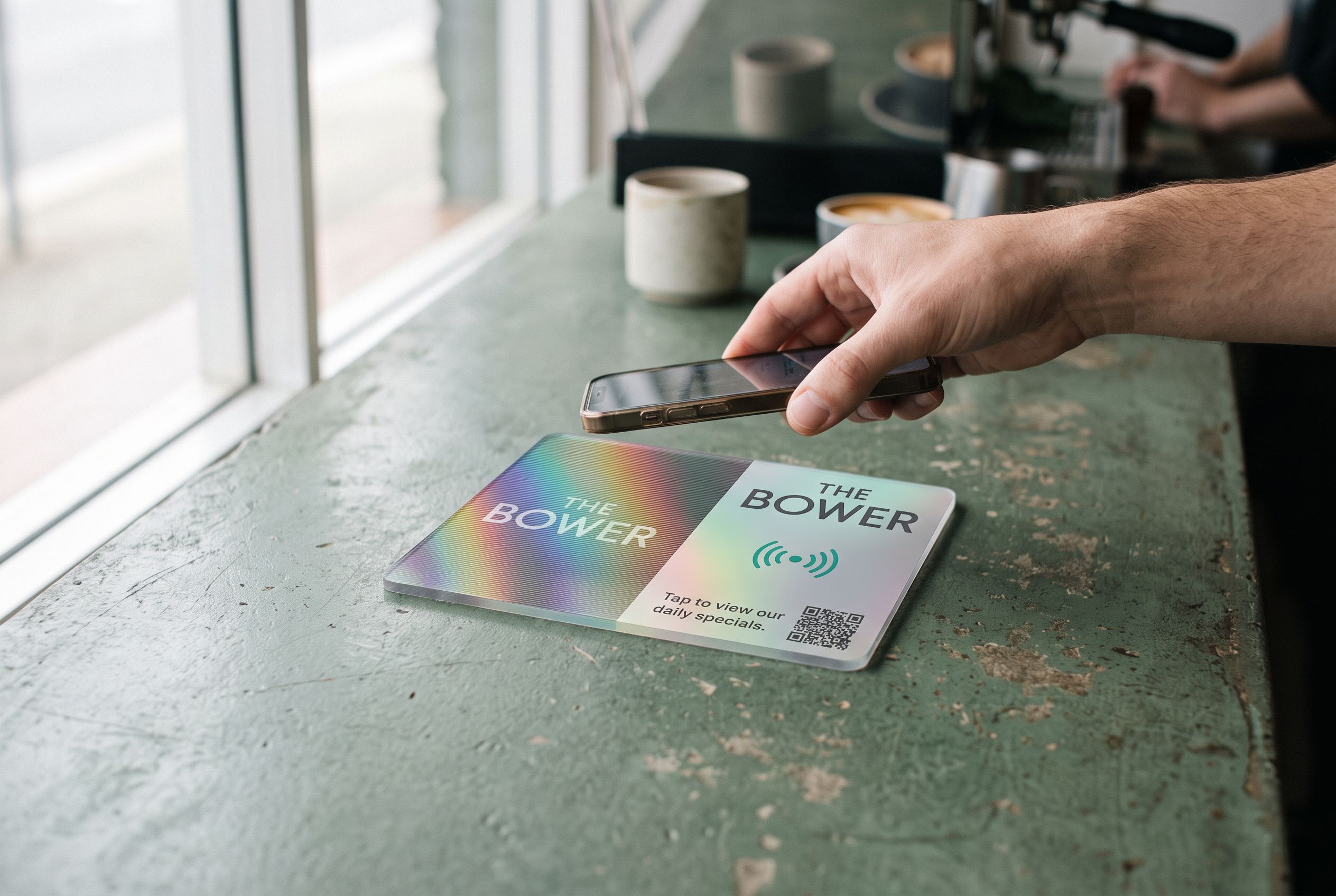
NFC review cards, stands and plaques all do the same thing: a phone taps them and your Google review form opens. The difference is where they live. A card is carried by staff and handed to the customer, so it suits businesses that finish the job away from a counter, like tradies, mobile groomers and hairdressers working the floor. A stand sits on the counter beside the card terminal, which is where most retail and hospitality customers are at the happy moment. A plaque fixes to a wall, door or table, so it suits busy venues, waiting rooms and anywhere a loose object would walk off. Most businesses with a counter get the most taps from a stand.
NFC review cards
A card is the size of a credit card, usually PVC, with the chip inside and your branding printed on it.
Where they work:
- Tradies finishing a job at the customer’s house.
- Hairdressers and barbers handing the card over at the chair.
- Event staff and roaming sales people.
- Delivery drivers and mobile services.
Where they fall down:
- They go missing, get pocketed or thrown out.
- Someone has to remember to take the card out and hand it over, every time.
- They’re easy to leave in the van.
- A card on a counter is easy to overlook.
NFC review stands
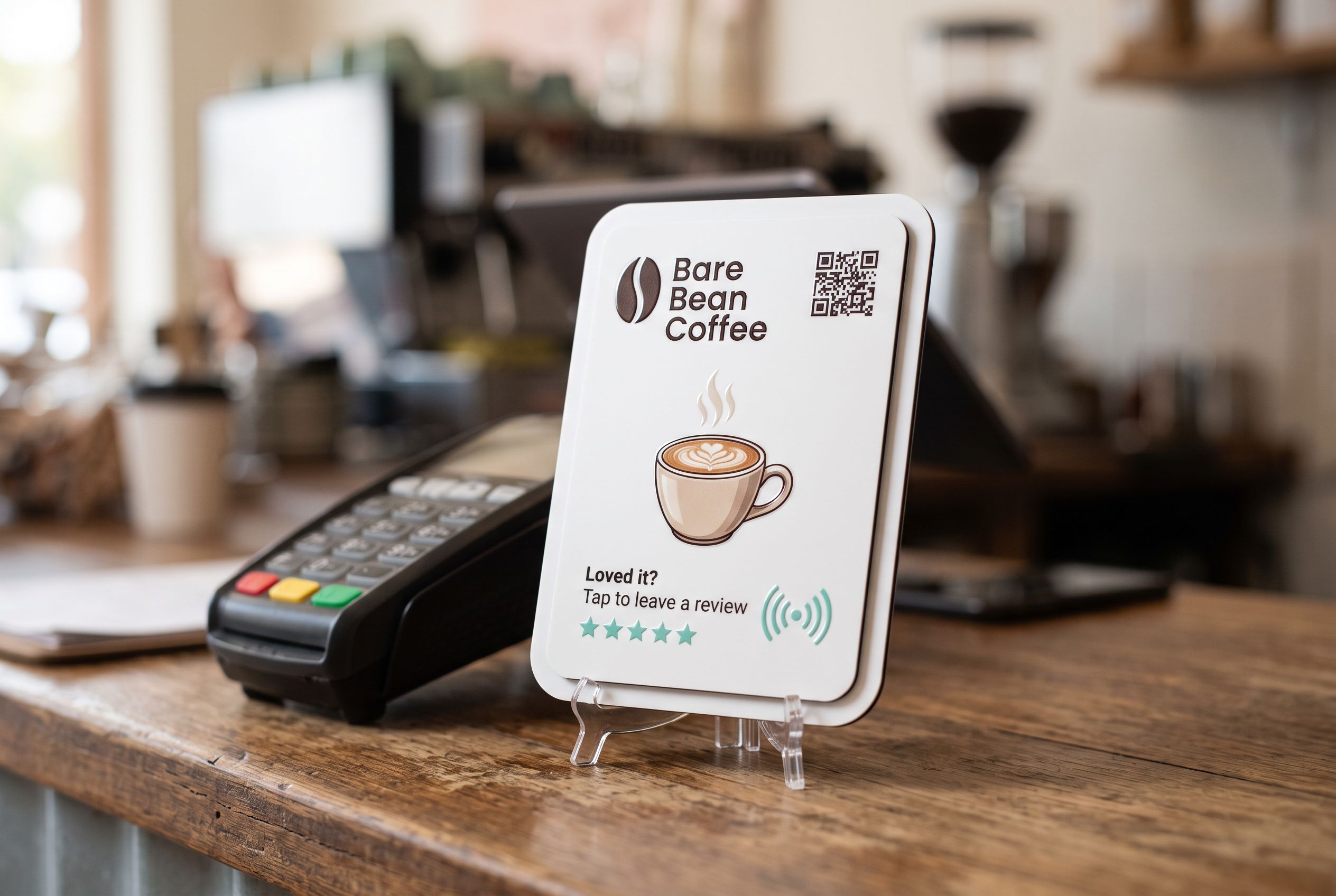
A stand holds the tile upright on a counter, usually beside the card terminal.
Where they work:
- Cafés, bakeries, restaurants with a pay counter.
- Retail shops at the register.
- Salons, clinics and gyms at reception.
- Anywhere every customer passes one spot at the end of their visit.
Where they fall down:
- Cluttered counters, where the stand gets hidden behind the tip jar.
- Businesses with no counter.
- Venues where the payment happens at the table.
A small stand beside the terminal is the easiest way to be in front of every customer at the moment they’re paying and pleased. Shortfield tiles stand in a clear stand on a counter; the 106mm size sits neatly beside an EFTPOS terminal. See the Google review stand.
NFC review plaques
A plaque fixes to a surface with adhesive or screws.
Where they work:
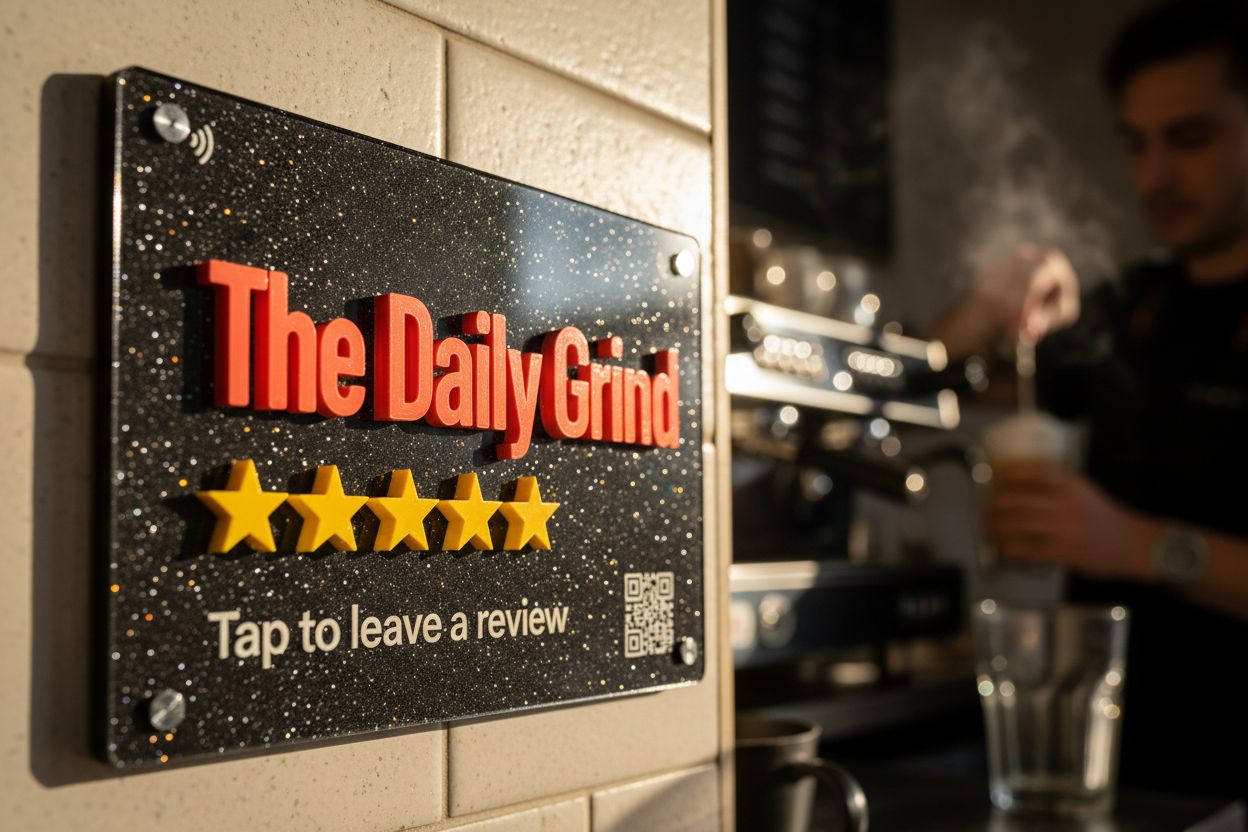
- Walls near the exit or the counter, where customers queue.
- Waiting rooms at dentists, physios and vets, where people sit for a few minutes.
- Front doors and windows. NFC reads through standard shopfront glass.
- Busy pubs and bars, where a loose stand would be knocked over or taken.
- Outdoor spots, with weatherproof cast acrylic.
Where they fall down:
- A plaque placed too high, too low or away from the flow of people gets ignored.
- It’s fixed, so moving it later means another hole or adhesive pad.
See the Google review plaque for wall versions, and NFC review plaques for small businesses for the habits that make them work.
Which is best for my business?
| Business | Best choice | Why |
|---|---|---|
| Café or bakery | Stand beside the terminal | Every customer pays there |
| Restaurant | Stand at the pay counter, or plaque by the exit | Diners pay at one spot |
| Pub or bar | Plaque on the bar wall or by the exit | Stands get knocked over |
| Hair salon or barber | Stand at reception | Clients pay there |
| Dentist, physio, vet | Plaque in the waiting room plus stand at reception | Waiting time and checkout |
| Tradie | Card, or a tile on the van | The job ends away from a counter |
| Retail shop | Stand at the register | Checkout is the moment |
| Market stall | Stand on the table | Portable, sits by the payment reader |
Many businesses end up with two: a stand at the counter and a plaque somewhere people wait.
What about materials and durability?
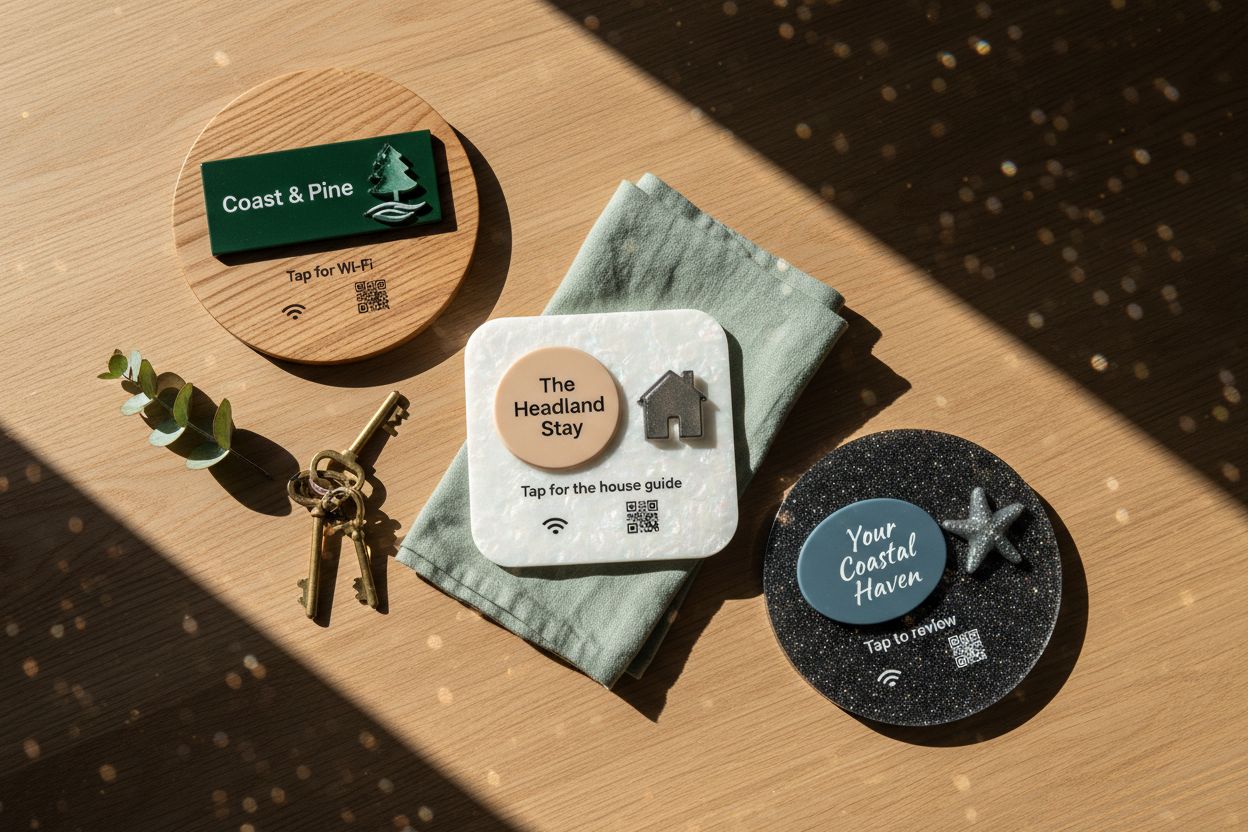
Cards are thin and flex, which is fine for a pocket and not for a counter. Tiles, whether in a stand or fixed as a plaque, are laser-cut acrylic or plywood/bamboo wood, with the chip sealed inside. Cast acrylic is UV-stable and weatherproof, so it suits outdoor plaques; wood suits sheltered spots. More in acrylic vs wood NFC tiles.
Shortfield tiles come in 106, 147, 198 and 237mm, circle or square, and a backing rim can take the footprint up to 297mm. The same tile can go in a stand now and on a wall later.
Does the link change between them?
It shouldn’t matter. Whatever the format, make sure the chip points at an address you can change. On a Shortfield tile, every tile points at a Shortfield address and you choose where it goes from your account. If your Google link changes, or you want the waiting-room plaque to open your booking page instead, change it once and the tile follows. See can NFC tags be reprogrammed.
What about adding a QR code?
Do it, on all three. Some customers’ phones can’t tap, and a QR code also tells people the object does something. Every Shortfield tile can carry a QR code on the face pointing at the same link as the chip.
Frequently asked
Can I have the same design on a stand and a plaque? Yes. Order two tiles with the same artwork, one in a stand and one fixed to the wall, and point both at the same review link.
Which gets more reviews, a card or a stand? Whichever is in front of the customer at the right moment. For counter businesses that’s the stand; for mobile businesses, whatever staff hand over.
Do plaques work behind glass? Through standard shopfront glass, yes. Test a thick glass partition before fixing anything.
Do I need a separate stand for each staff member? No. Reviews go to the business profile. One stand per point of sale is usually enough.