Google review rules in Australia: asking, incentives and gating
You can ask every customer for a Google review. You can't pay for them or ask only happy ones. Google's policies and the ACCC's view, in plain English.
By Shortfield 5 min read
It is not against Google’s policy to ask customers for reviews. Google encourages it and gives every business a link for the purpose. What is against Google’s policies is offering an incentive for a review (a discount, a freebie, an entry in a draw) and selectively asking only customers you expect to be happy, known as review gating. In Australia, the ACCC treats fake reviews, incentivised reviews and selectively solicited reviews as potentially misleading under Australian Consumer Law. The safe rule: ask everyone, the same way, and offer nothing in return.
This guide is general information, not legal advice. Google’s policies change, and the ACCC publishes its own guidance for businesses on online reviews. If you are unsure about a specific practice, read Google’s current review policies and the ACCC’s guidance directly, or get advice.
Is it against Google policy to ask for reviews?
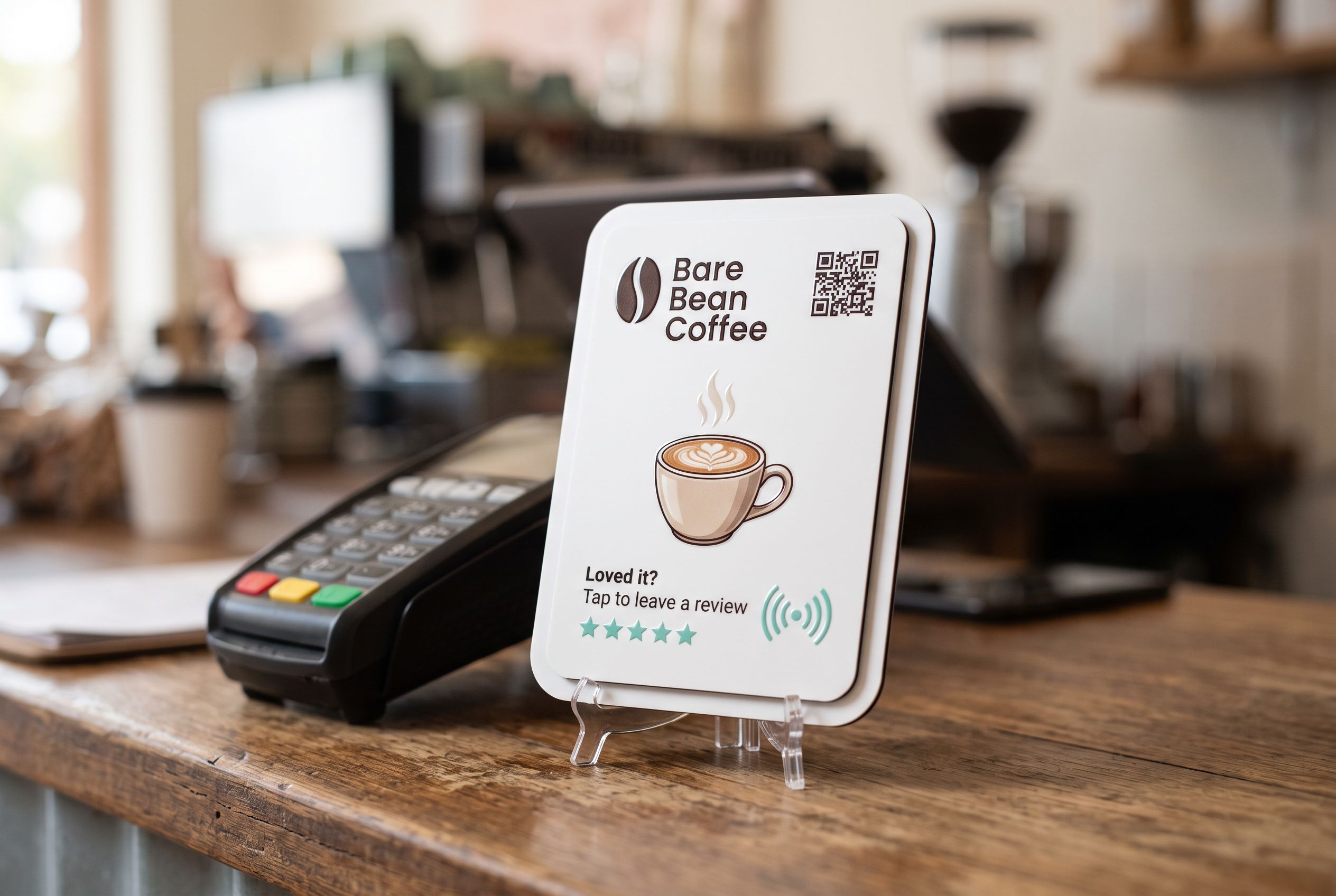
No. Google Business Profile has a built-in “Ask for reviews” or “Get more reviews” option that gives you a short link to your review form. Putting that link on a receipt, in an email, on a sign or behind a tap tile is exactly what it is for. See how to get your Google review link.
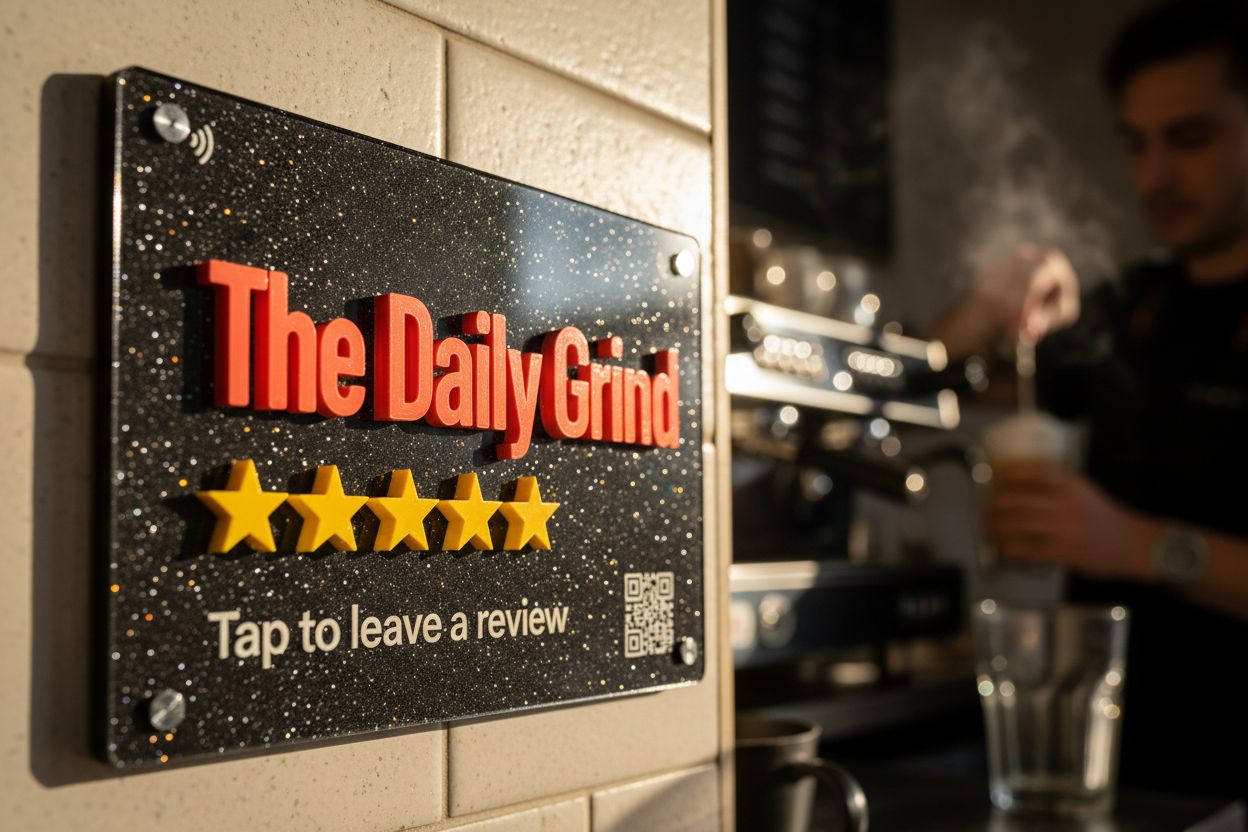
What matters is how you ask. A neutral request (“We’d love a review if you have a minute”) is fine. A request that tells people what to write, or how many stars to give, drifts toward steering. “Leave us a 5-star review” printed on a sign is best avoided; “Tap to leave a review” says the same thing without telling the customer what to think.
Can I offer an incentive for a Google review?
No. Google’s policies prohibit offering or accepting money, products, services or discounts in exchange for reviews. That covers the obvious (10% off for a review) and the less obvious:
- A free coffee for anyone who shows you their review.
- Entry into a monthly prize draw for reviewers.
- Staff bonuses tied to review counts that lead staff to offer customers something.
- Paying a service to post reviews.
It does not matter whether the review is positive or negative. The incentive is the problem. Reviews Google identifies as incentivised may be removed, and repeated problems can affect the whole profile.
A plain thank-you, in person or in a reply, is fine. A reward is not.
What is review gating, and why is it a problem?
Review gating is asking customers how they felt first, then sending only the happy ones to Google and routing the unhappy ones to a private feedback form. Some review software and some review stands do this automatically with a “How did we do?” screen.
Google’s policies prohibit selectively soliciting positive reviews. The ACCC’s view is that suppressing or filtering negative reviews can give consumers a misleading picture of a business, which is a concern under Australian Consumer Law. The same applies to only asking the regulars you know love you, or only handing review cards to customers who smiled.
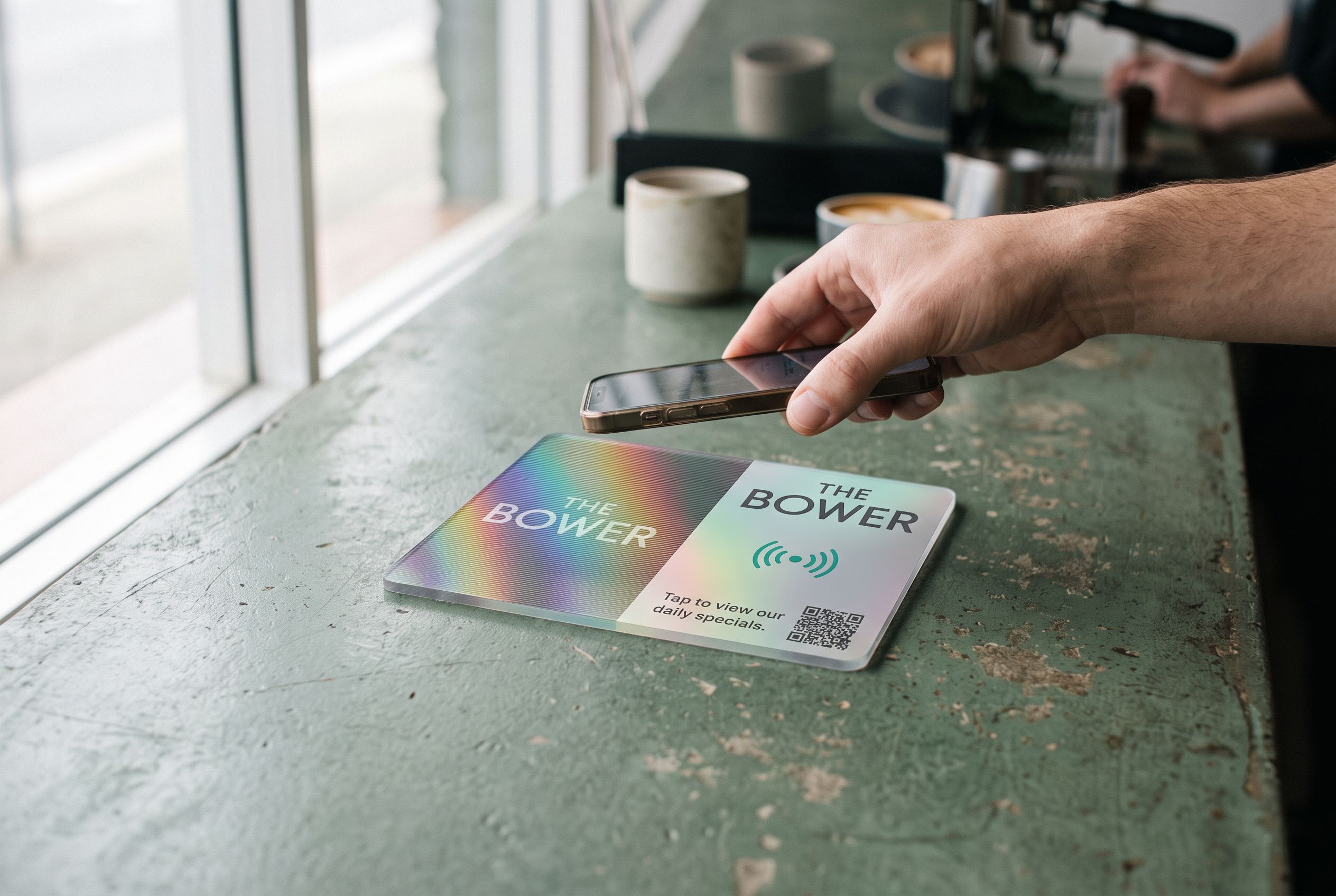
A tile that sits on the counter and opens the real review form for anyone who taps it is, by design, not gating. Everyone gets the same ask. That is how the Google review tile works: it opens your review link, with no screen in between.
Collecting private feedback is fine on its own. Just don’t use it as a filter that decides who gets asked for a public review.
Can employees, friends or family leave reviews?
Google’s policies treat reviews from people with a conflict of interest, such as owners, staff and their families reviewing their own business, as not allowed. Reviews should reflect a genuine customer experience. Staff reviewing competitors is also off-limits.
The ACCC is also clear that reviews written by the business or people connected to it, presented as independent, can mislead consumers. Tell staff plainly: ask customers, don’t write reviews yourselves.
What does the ACCC say about fake reviews?
The ACCC has taken action against businesses over fake and misleading reviews, and publishes guidance for businesses and review platforms. Broadly, it considers these practices risky under Australian Consumer Law:
- Writing or buying fake reviews.
- Offering incentives for reviews without disclosure, or in ways that skew what is published.
- Removing, hiding or selectively publishing reviews to make a business look better than it is.
- Presenting reviews from people with a connection to the business as independent.
For the current detail, read the ACCC’s guidance on online reviews for businesses on the ACCC website.
Can I get a negative review removed?
You can flag a review to Google if you believe it breaks Google’s policies, for example if it is spam, off-topic, contains hate speech, or is from someone who was never a customer. Google decides. A review being negative, unfair in your view, or bad for business is not by itself a reason for removal.
The better response to a fair negative review is a calm, public reply. Our guide on how to reply to Google reviews has templates.
A compliant way to ask for reviews
- Get your review link from Google Business Profile.
- Put it where every customer passes: beside the card terminal, at reception, on the table. See where to put a Google review stand.
- Word the sign neutrally: “Tap to leave a review” or “Tell us how we did”.
- Train staff to say one line to every customer, not just the chatty ones.
- Offer nothing in exchange.
- Reply to reviews, good and bad.
A tap-to-review sign makes step 4 easy, because the ask is on the counter for everyone.
Frequently asked
Can I run a competition and mention reviews in it? Not if leaving a review is an entry condition or earns extra entries. Keep competitions and reviews separate.
Can I ask for reviews by text or email after an appointment? Yes, as long as you send the request to all customers, not a filtered list of the happy ones.
Is putting “5 stars” artwork on my sign a problem? Star artwork on its own is decoration. Wording that tells customers to give five stars is the part to avoid.
Does the same apply to Facebook and other platforms? Each platform has its own rules, and Australian Consumer Law applies to reviews generally. Check the platform’s policy before running any review campaign.