Wi-Fi signs and room guides for hotels, at every bedside.
A tile by the bed opens the room guide. One on the desk connects the Wi-Fi. One at reception asks for a review on checkout. Change any of them from one account.
The compendium, digitised
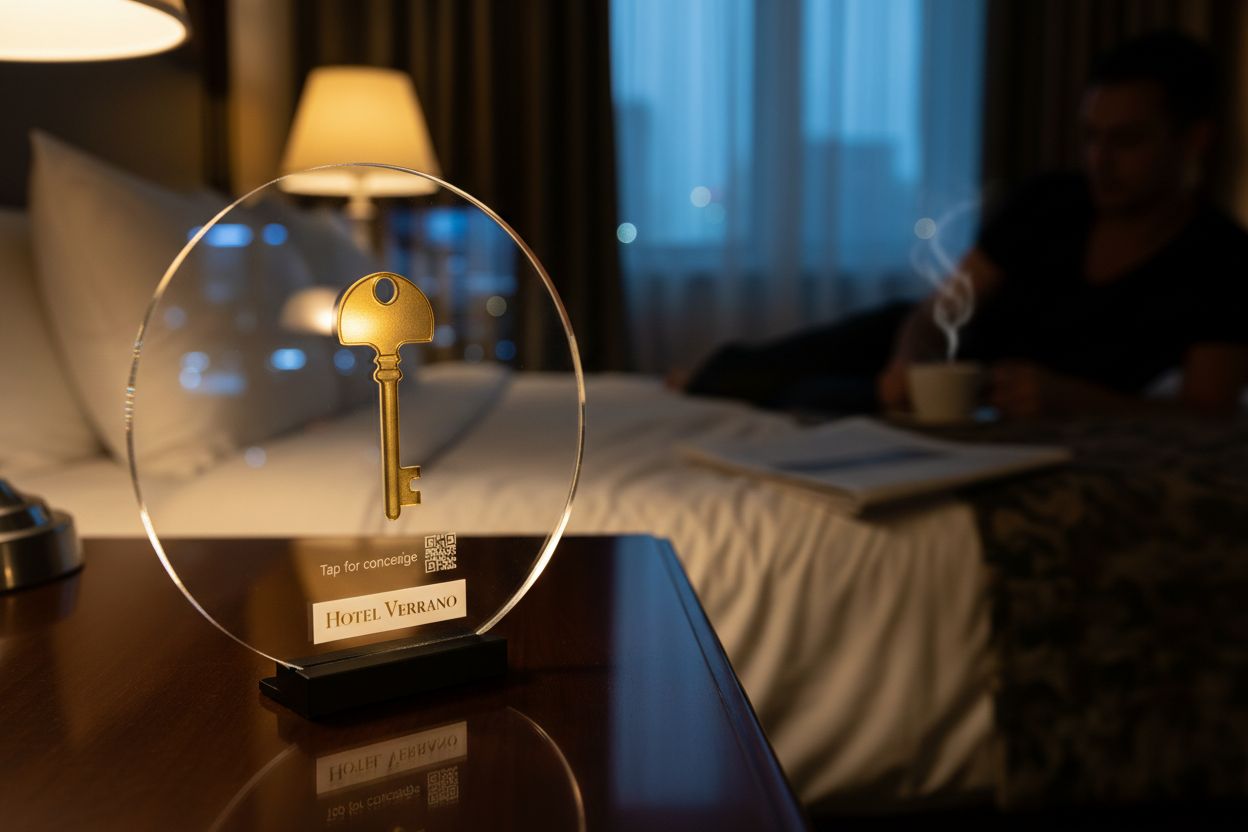
A bedside tile opens your room guide: breakfast times, room service menu, late checkout, local tips.
Wi-Fi without the card
Guests tap to see the network and password. Change it at reception and every room's tile follows.
Numbered sets
One tile per room, each encoded to its own link if you need it, with a sheet mapping tiles to rooms.
Reviews at checkout
A tile on the reception desk asks every departing guest the same way.
The printed room compendium is expensive to reprint and hardly read. The Wi-Fi card goes missing by the second guest. Reception answers the same five questions every evening. A tile in each room takes those jobs off paper and off the phone, and it outlasts the compendium binder.
Room by room
Bedside table. The guest has just lain down and wants to know when breakfast finishes. A 106mm tile, screwed or stuck to the table, opens your room guide: breakfast, checkout, parking, pool hours, room service, local restaurants. A digital menu tile is the same product under a different name. Edit the guide once and every room is current.
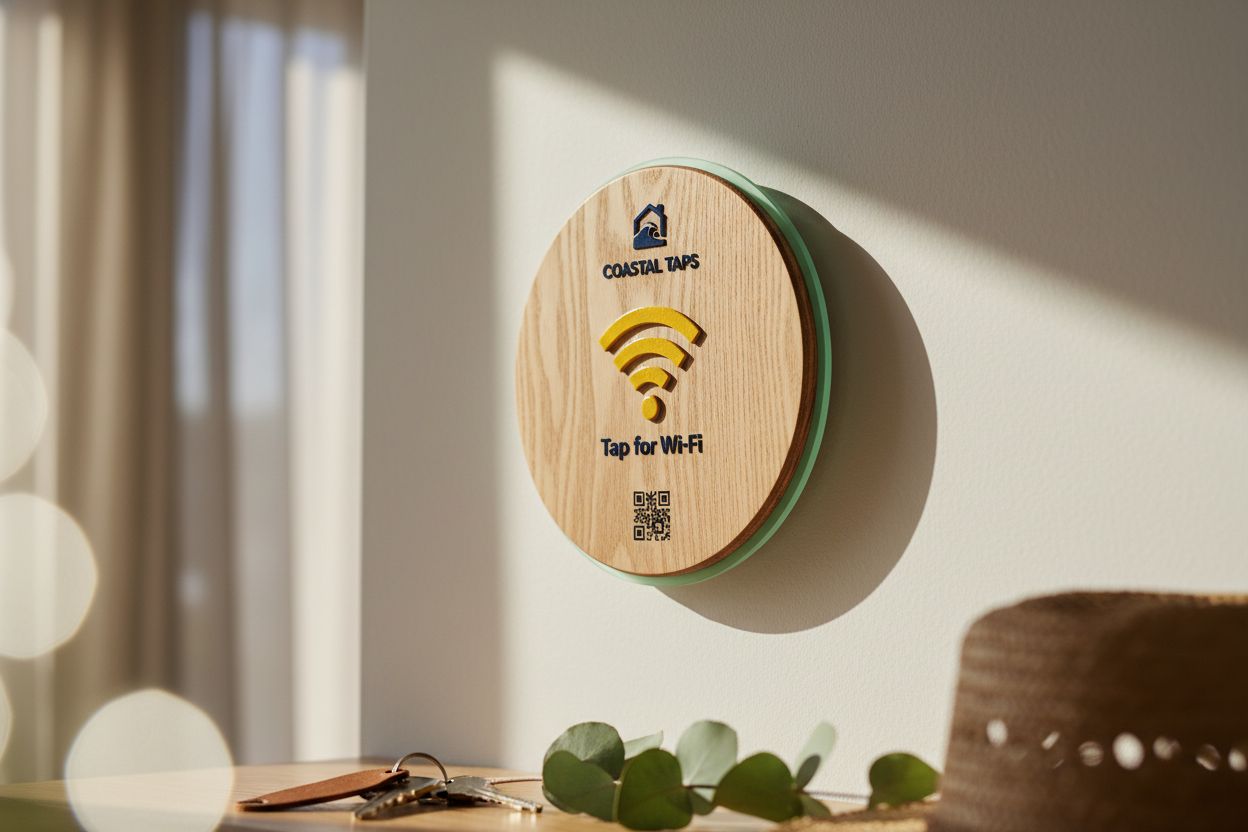
Desk or wall. A Wi-Fi tile shows the network and password with a tap to copy. When IT rotates the password, you change it in your account and every tile in the building follows.
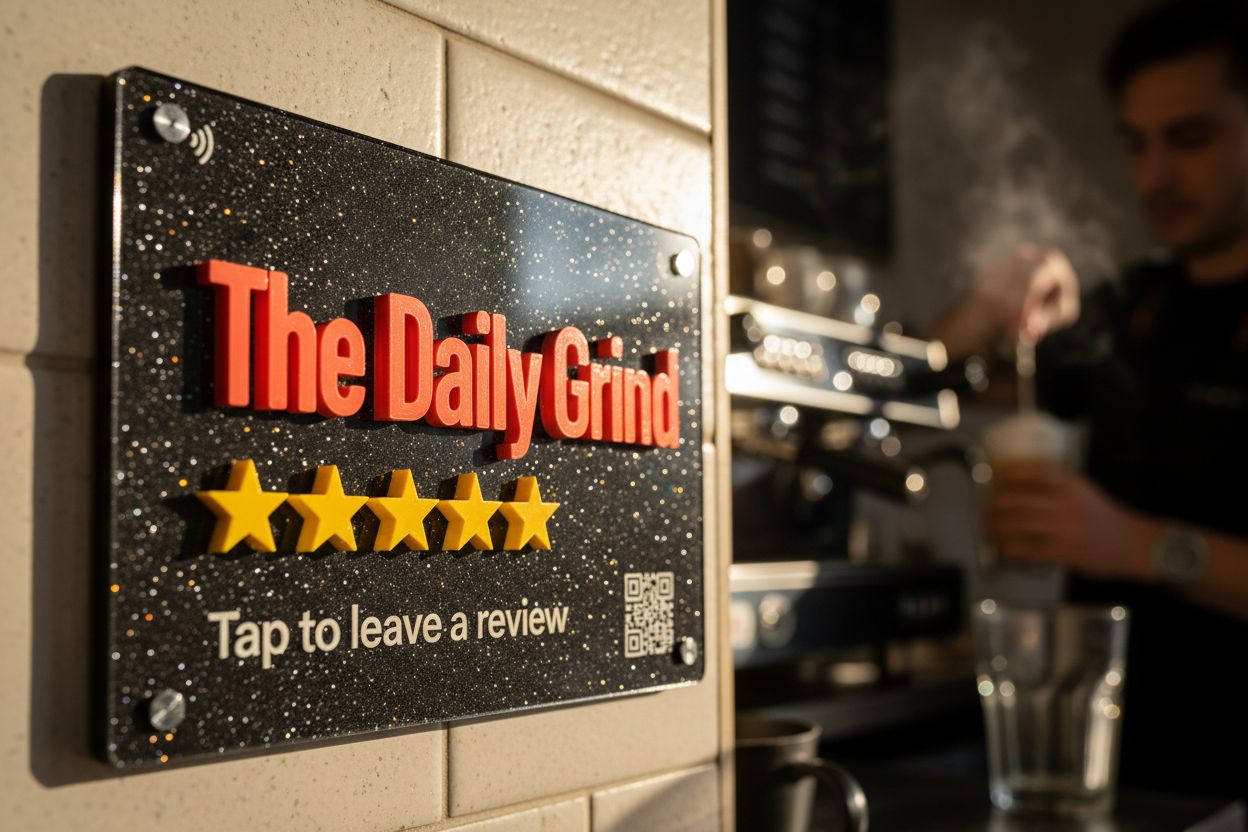
Reception. A standing tile on the desk: “Tap for concierge and late checkout”, pointing at a page with your services, or at your Google review form for departing guests. Staff say at checkout, “If you enjoyed your stay, a Google review helps us a lot, just tap there.” Say it to every guest, not only the ones who were chatty at breakfast.
Numbered sets and fit-outs
For a property with 20 or 200 rooms, order a numbered set. Each tile carries the room number and can be encoded to its own link, or all rooms can share one guide. A sheet in the box maps tiles to rooms. Bulk pricing starts at 10 tiles (5% off), rises to 10% at 50, and is quoted above 200. Runs of 30 or more include our design service, with concepts in three business days and a render before anything is cut.
Chains and management groups
Each property keeps its own links and its own Google listing, and your account shows tap counts per tile. That tells you whether guests use the bedside guide, which is useful when you are deciding whether to keep paying to print the compendium.
Durable enough for housekeeping
Acrylic takes daily cleaning with whatever housekeeping already uses. The chip is sealed inside, with no battery and nothing to charge. See how long NFC tags last for the detail. For a heritage motel or a country B&B, timber tiles look at home; keep them indoors.
Motels and B&Bs
A small motel doesn’t need a fit-out budget. A Wi-Fi tile and a room guide tile per room, plus one review tile at reception, is a modest order, and orders of 10 or more tiles already get 5% off. Tiles start at $39 each.
Guests on every phone
Every iPhone from the XR onward reads the tile from the lock screen, as do NFC-equipped Android phones. Overseas guests without NFC, or with it turned off, scan the QR printed on the face.
Questions, answered.
Yes. Every tile points at its own link, so room 12's tile can open a room-specific page or all rooms can share one guide.
We send a render of every variant within two business days, and runs up to 200 ship within two weeks of your approval.
Fix them to the bedside table or wall with adhesive or screws. A tile without a stand is harder to pocket.
Yes. Point it at a PDF, a page or your ordering system. Update the menu and the tile opens the new one.
No. Recent iPhones and NFC Android phones open the link from the lock screen, and the QR works for everyone else.