Google review stands for shops and boutiques.
A tile at the register gets the review. A tile on the shelf tells the product's story. A tile in the window works after you've locked up.
Review at the register
The customer is holding the bag and their phone. One tap opens your Google review form.
The story behind the product
A tile on the shelf opens the maker's page, a video or care instructions.
Followers from foot traffic
An Instagram tile turns browsers into followers who see the next drop.
Works through the window
NFC reads through standard shopfront glass, so a tile in the window works after hours.
Retail has a strange review gap. People browse, buy and leave happy, and hardly anyone writes a review for a shop unless something went wrong. Meanwhile shoppers choose where to go on a Saturday from Google Maps. The shops that ask, at the register, in a way that takes a second, build a profile that brings more of them in.
At the register
Put a Google review tile in a clear stand beside the payment terminal. The customer has just paid and is waiting for the bag. The line: “If you like what you found, tap there for a Google review. It really helps an independent shop.” Say it to everyone who buys. That is both the effective habit and the one Google’s rules require.
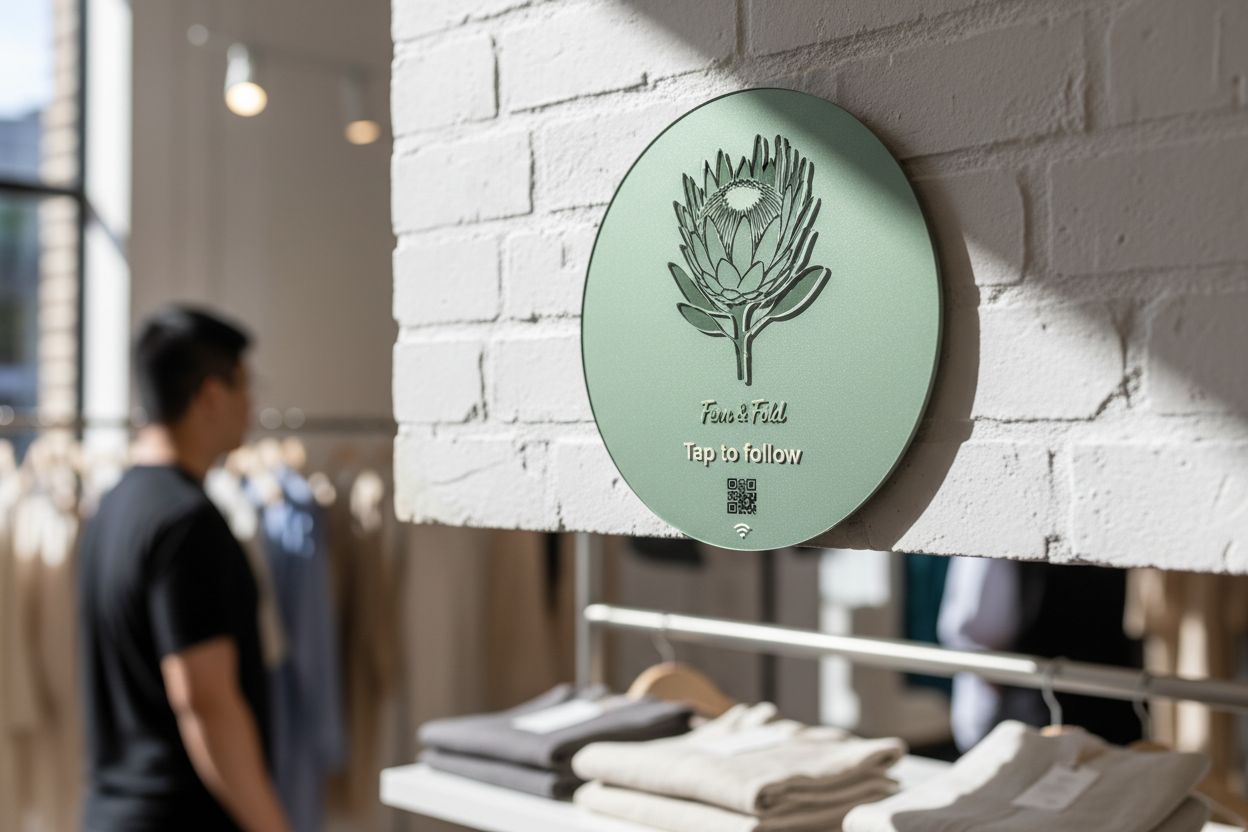
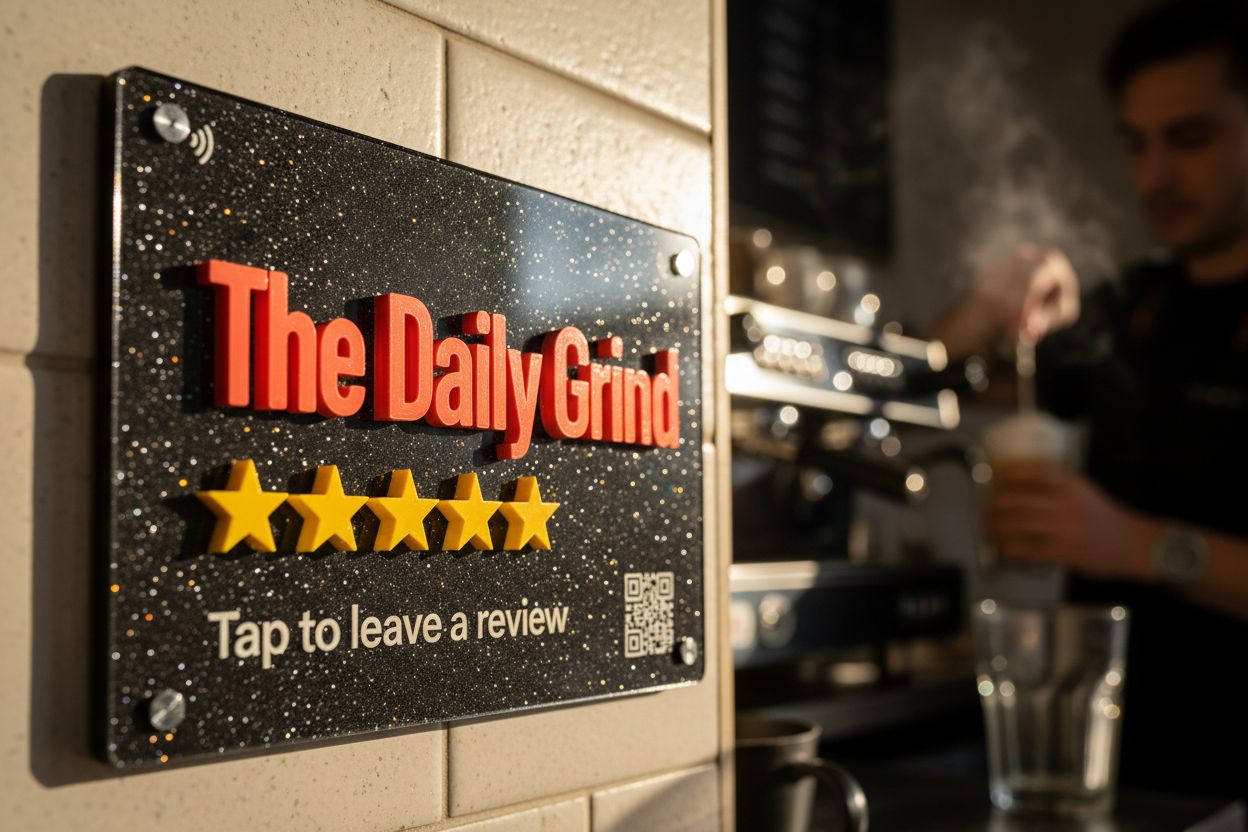
For a boutique, the tile should look like it belongs. Tiles come in pastel, pearl, glitter and stone-look acrylic, or timber, with any artwork on the face. A protea, a logo, a photo of the shopfront.
On the shelf
Independent retail often sells things with a story: a local maker, a small-batch ceramicist, a recycled fabric. A tile on the shelf, fixed flat or in a small stand, can open that story: a page, a video, the maker’s Instagram. It does the job of a shop assistant who knows everything about the piece. Change the link when the stock changes.
Instagram from the shop floor
Customers who walk in are the easiest followers you will ever get. A social tile near the fitting room or on the wall by the door opens your Instagram or TikTok. Staff can mention it: “We post new stock on Instagram first, that tile opens it.” Our guide on getting more Instagram followers in store has more on placement and wording.
In the window, after hours
NFC reads through standard shopfront glass. A tile standing inside the window can be tapped from the footpath at 9pm, opening your online shop, your opening hours or this week’s sale. A printed QR code on the same tile covers phones without NFC.
Payments at the market or pop-up
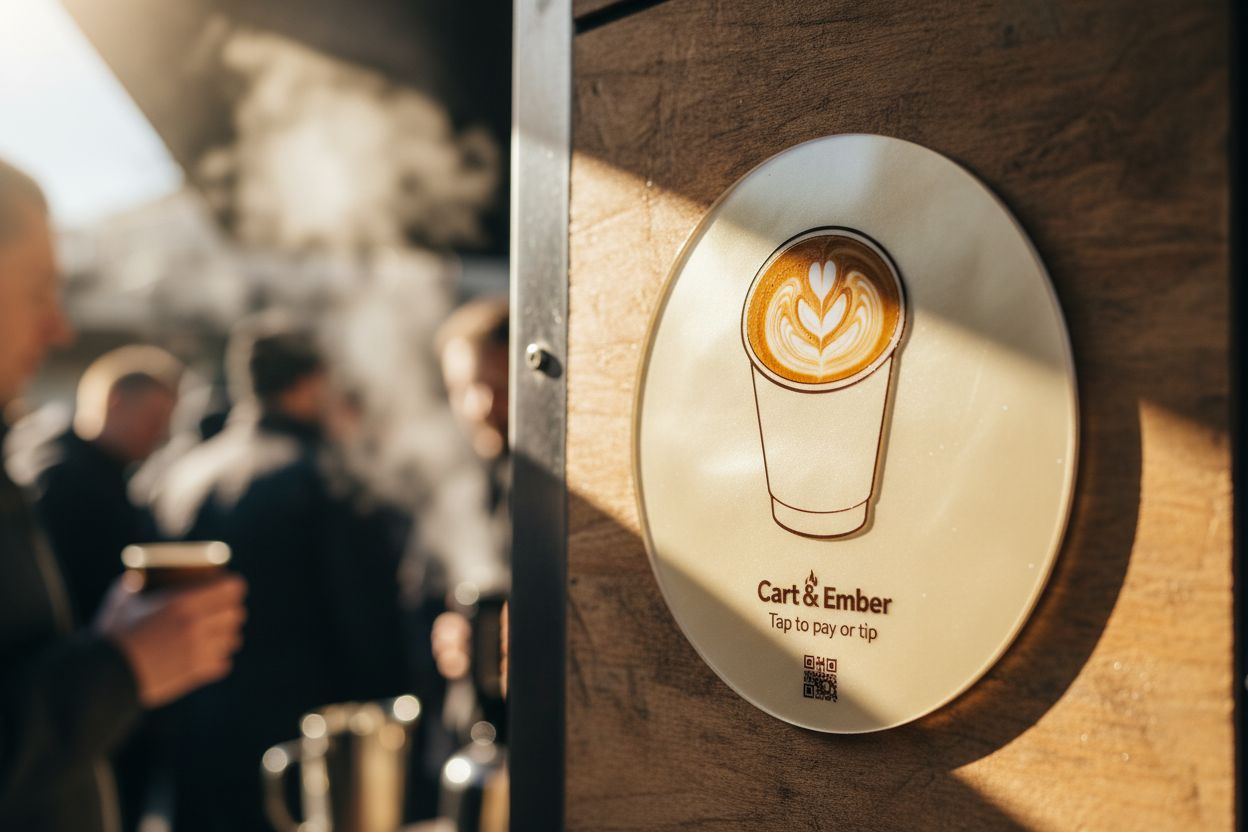
Many shops also trade at markets and pop-ups. A pay tile pointing at a PayID page or payment link gives a backup when the card reader struggles. The Managed plan adds a payment page taking Apple Pay, Google Pay and cards.
Several stores
A small chain gives each store its own review tile pointing at that store’s Google listing, and the account shows taps per store, which tells you which register is asking. Orders from 10 tiles get bulk pricing. If you move, rename or rebrand, re-point the tiles from your account. Nothing is reprinted.
Cost
Tiles start at $39 and run to $430, depending on material, finish, size and print. No subscription is required to run them.
Questions, answered.
Next to the payment terminal, facing the customer. It is the one spot every paying customer stands with their phone out.
Yes. NFC reads through standard shopfront glass, so passers-by can tap a tile displayed inside the window.
Yes. Each tile opens its own link, so one can open the maker's story and another the care guide.
Yes. Point it at the sale page for the weekend and back to your shop or Instagram on Monday.