Google review stands for vet clinics, one hand free.
Pet owners have a lead in one hand and a phone in the other. A tile on the counter lets them book, review or read the aftercare with a single tap.
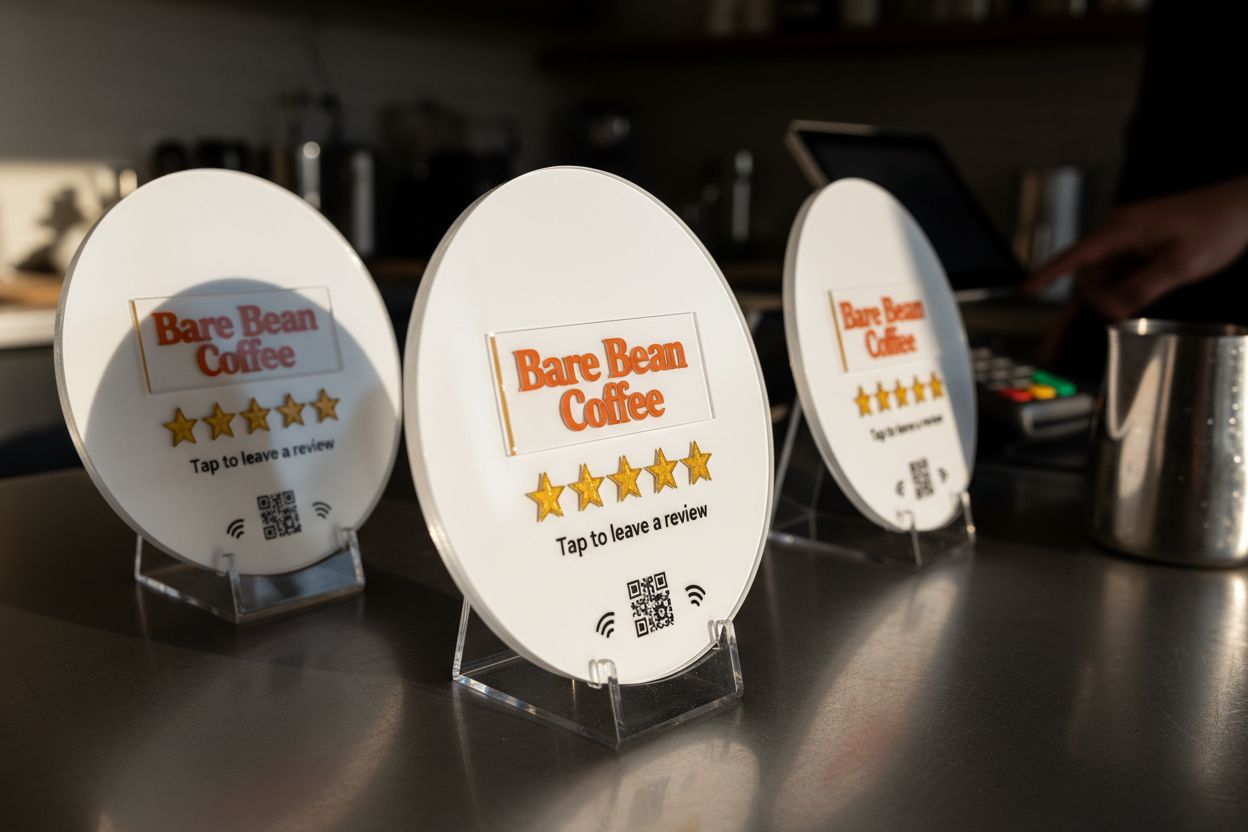
One-handed by design
Tapping takes one hand. The other is holding a lead, a cat carrier or a nervous puppy.
Vaccination reminders, booked
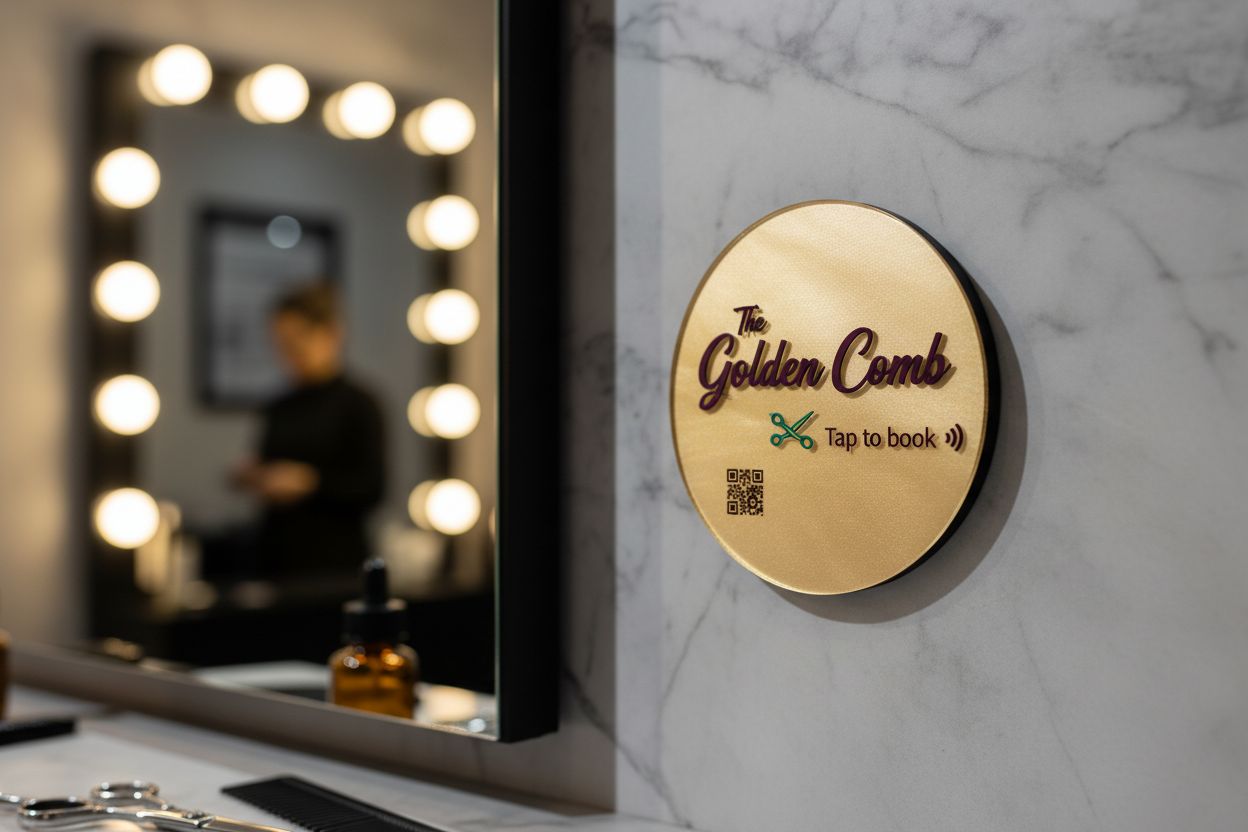
A booking tile opens your online booking so the next vaccination or dental is in the diary.
Aftercare without the paper
Point a tile at your post-surgery or new-puppy care page and update it any time.
Tough enough for the counter
Acrylic wipes clean with clinic disinfectant and stays put on a busy desk.
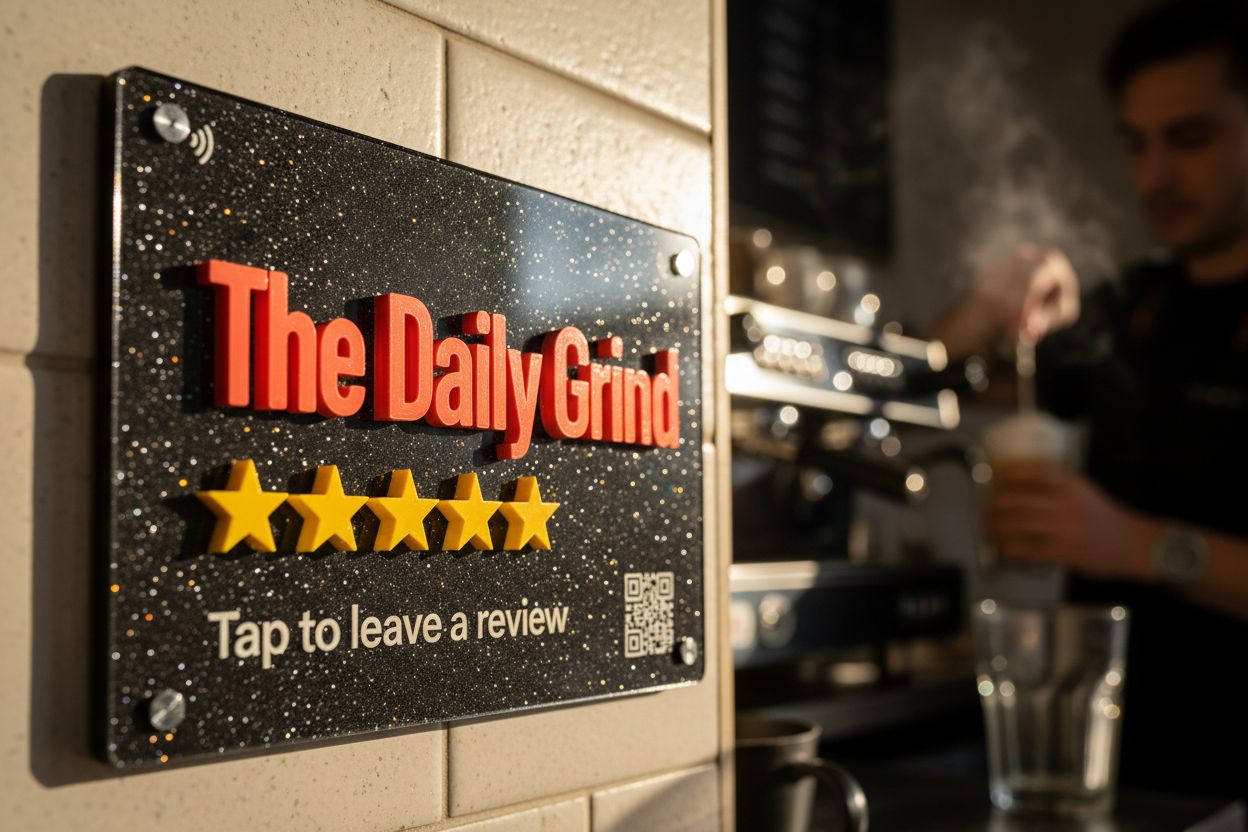
Owners choose a vet the way they choose a doctor for their kids: carefully, and increasingly from Google reviews. Most happy clients never write one. They are juggling a dog, a bill and a bag of prescription food. The ask has to take one hand and one second.
One hand, one tap
That is the case for a tap tile at a vet clinic in a sentence. A QR code needs the phone held steady and the camera open. A tap needs the phone brought to the tile. Put a 106mm Google review tile in a clear stand beside the payment terminal. Reception says, as the bill is settled, “If you’re happy with how Max went today, tap your phone there and it opens our Google reviews.”
Ask every client, not just the ones whose pet bounced out. Asking only the happy ones is review gating, and Google’s policies do not allow it.
Rules for vets are different from human health
Vets are not AHPRA-registered practitioners. They are registered with their state or territory veterinary board, which has its own rules of conduct. Google’s review policies apply as they do to any business: ask freely, offer nothing in return, do not filter. The ACCC treats incentivised or selectively solicited reviews as potentially misleading under Australian Consumer Law. If you are unsure about advertising with reviews, check with your board.
The appointments that matter
A lot of vet revenue is routine: vaccinations, dentals, desexing, flea and worm programs. A tap-to-book tile at reception opens your online booking, so the annual vaccination is booked while the owner is standing at the desk. Point a second tile in the consult room at your care pages: new puppy, new kitten, post-operative care. The vet says, “Tap that and you’ll have the aftercare on your phone.” You update the page, the tile stays on the wall.
The waiting room
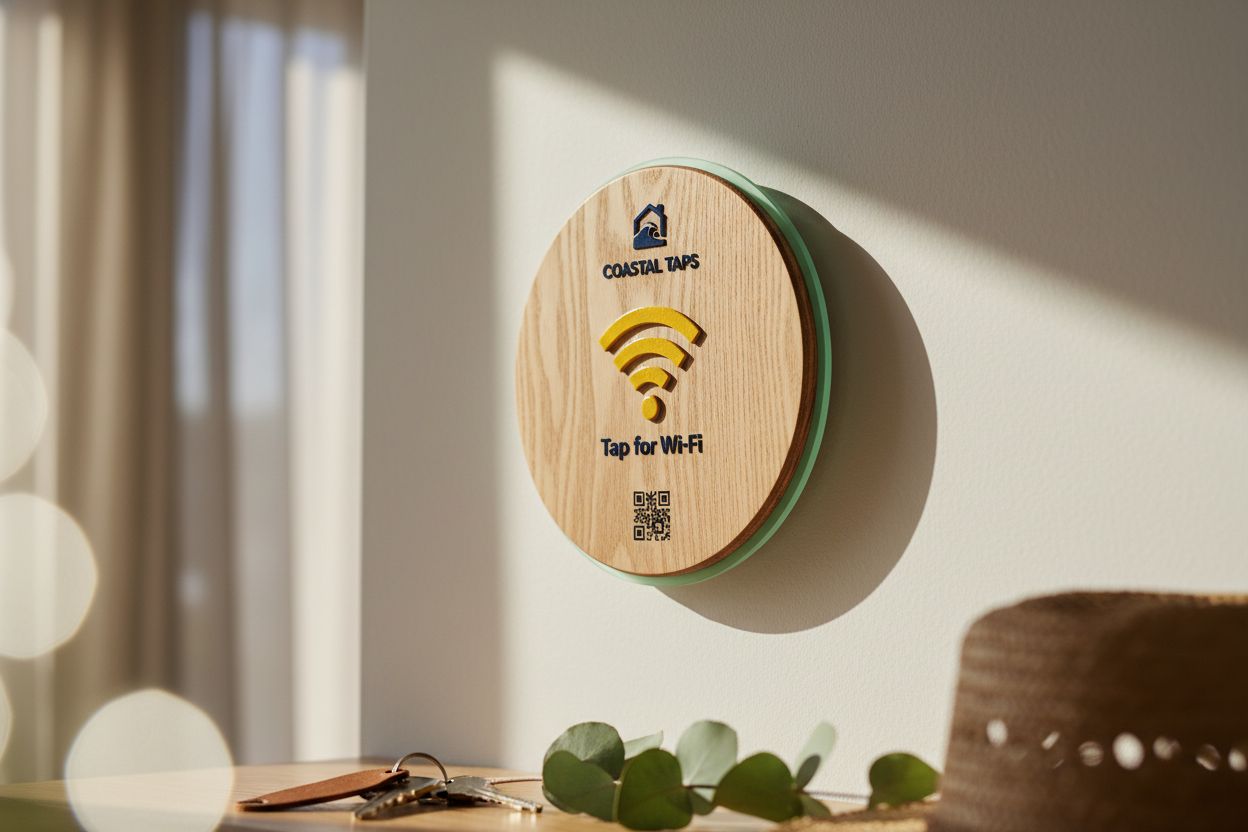
Waits at a vet can run long. A Wi-Fi tile on the wall helps. So does a tile pointing at your Instagram, where owners can see the practice’s patients of the week.
A hard moment
Not every visit ends well. Many clinics choose not to ask for a review after a euthanasia or a difficult diagnosis. The tile on the counter is passive: it is there if the owner wants it, and staff do not need to mention it. When reviews after a loss do come in, reply with care. Our guide on how to reply to Google reviews has examples.
For every owner’s phone
Every iPhone from the XR onward reads the tile from the lock screen. Most Android phones do too, once NFC is on. If an owner’s phone does not respond, turning on NFC takes a few seconds, or they scan the printed QR.
Tiles start at $39, with no subscription required. Clinic groups ordering 10 or more get bulk pricing.
Questions, answered.
No. Vets are registered with their state or territory veterinary board, not AHPRA. Google's review policies and Australian Consumer Law still apply.
On the reception counter beside the payment terminal, where owners settle the bill with the pet beside them.
Use judgement. Many clinics leave the ask for another visit. The tile on the counter lets owners choose for themselves.
Yes. Point it at any link: a page on your site, a PDF or a Google Doc. Change it whenever you update the advice.