A wooden QR code sign with a chip inside.
Laser-cut plywood or bamboo, printed with your logo and QR code, with an NFC chip sealed in the timber. Warm enough for your fit-out, smart enough to tap.
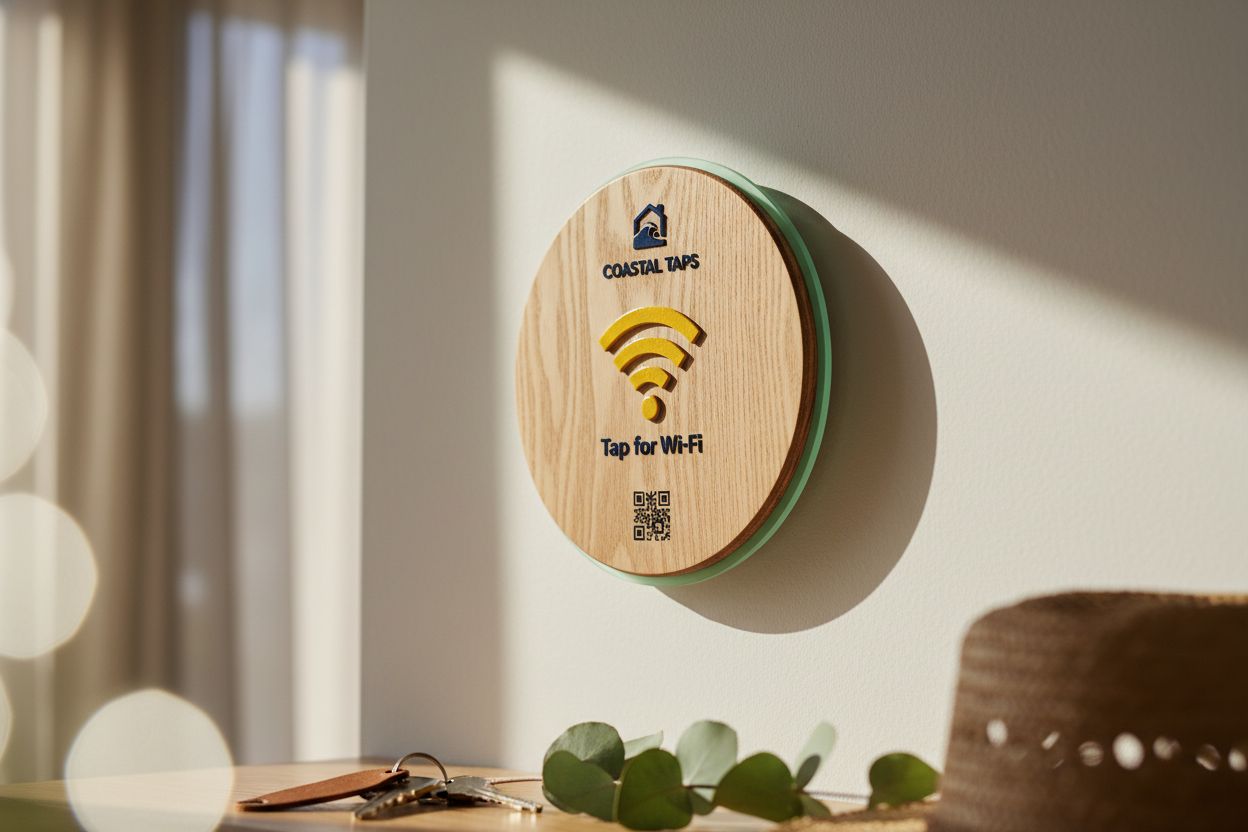
Real timber
Plywood and bamboo, each species priced off its own sheet, with the grain showing through.
Laser-cut to shape
Circle or square, 106mm to 237mm, with a backing rim up to 297mm.
Tap as well as scan
An NFC chip sealed inside the wood opens the same link as the QR code.
Change the link later
The code points at a Shortfield address, so the sign keeps working when your links change.
A wooden QR code sign suits the places where plastic looks wrong: a café with recycled timber benches, a winery cellar door, a barber with a leather-and-oak fit-out, a holiday cottage. It does the same job as any QR sign, sending people to your reviews, menu or Wi-Fi, but it looks like part of the room rather than something taped to it.
Shortfield wooden signs are laser-cut from plywood or bamboo. Your logo, text and QR code are printed directly onto the timber, and an NFC chip is sealed inside the tile. Customers can scan the code or tap a phone to the wood, and both open the same page.
Printed, laser-cut, sealed
The shape is laser-cut: a circle or square, in 106, 147, 198 or 237mm, with an optional backing rim that takes the footprint up to 297mm. Each part of the design can be printed onto the timber or laser-engraved into it, chosen element by element in the designer. For the QR code itself, print is the safer choice: an even, dark print gives the contrast a phone camera needs, where an engraving can vary with the grain. A logo or a name engraved beside it gives the sign its crafted look.
The NFC chip sits inside the tile. It has no battery and reads through the wood when a phone is brought close: the top edge of an iPhone, or the back middle of most Android phones. Every iPhone XR and newer, and NFC-equipped Android phones, read it from the lock screen.
Plywood or bamboo?
Plywood has a pale, familiar grain that suits Scandinavian-style interiors and bright cafés. Bamboo is denser, with a fine linear grain and a warmer tone. Each species is priced off its own sheet, so switch between them in the designer and the price updates. For a longer comparison of wood against acrylic, including how each takes print and wears, read acrylic vs wood NFC tiles.
Where a wooden sign belongs
Wood suits sheltered spots: indoors, under an awning, in a covered entry or on a verandah. Some places it works well:
- A Wi-Fi sign in a guest room or café: guests tap or scan for the network details. See the Wi-Fi tile.
- A review sign on a timber counter: next to the register, in a clear stand. See the Google review tile.
- A menu sign on each table in a timber dining room. See the menu tile.
- A plaque on a covered post at a cellar door or market stall.
For walls that take rain and afternoon sun, choose an acrylic QR code stand or sign instead. Cast acrylic is UV-stable and weatherproof.
A code that does not go stale
A wooden sign is meant to last, so the link behind it should too. Every Shortfield sign points at a Shortfield address, and you set where it forwards from your account. Change your Wi-Fi password, move your menu or merge review listings, and the timber sign on the wall keeps working. There is nothing to sand off or reprint.
Tiles run from $39 to $430 each, AUD inc. GST. Made to order in Australia and delivered to every state and territory.
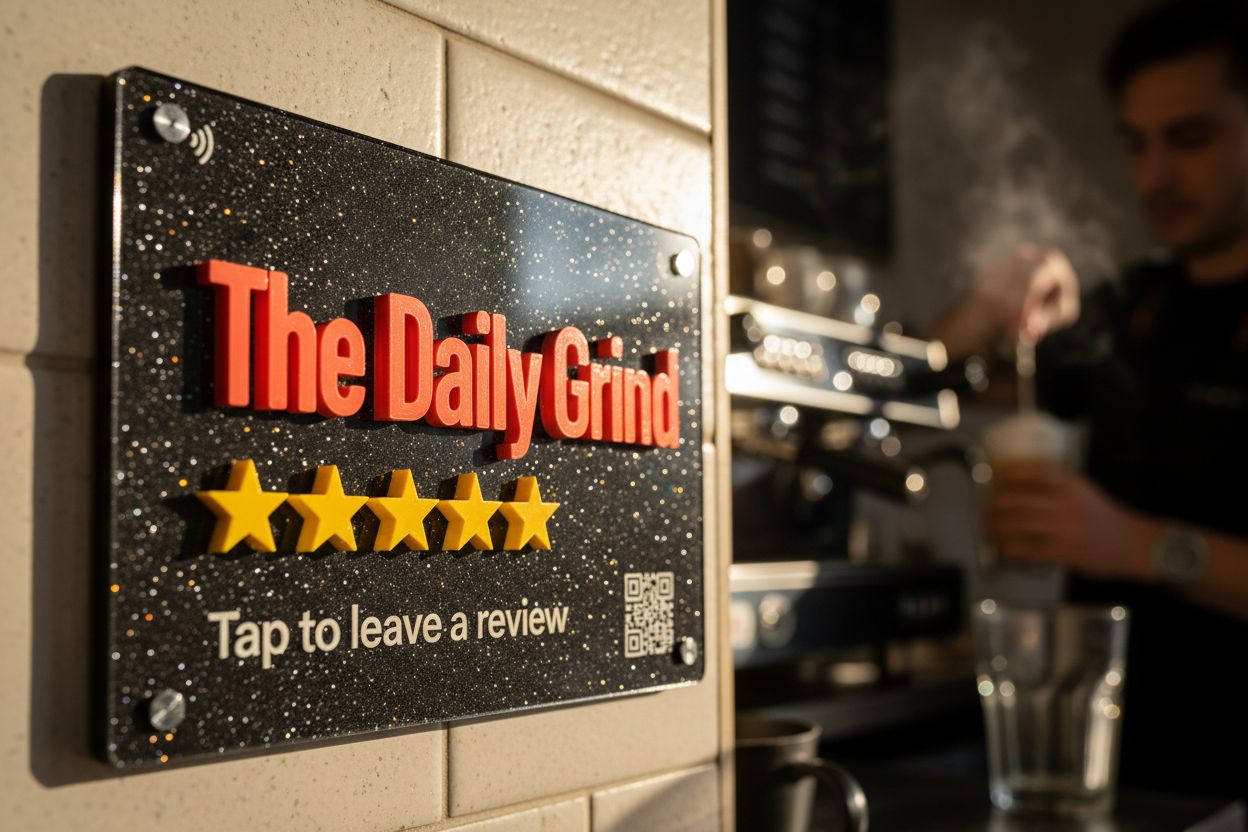
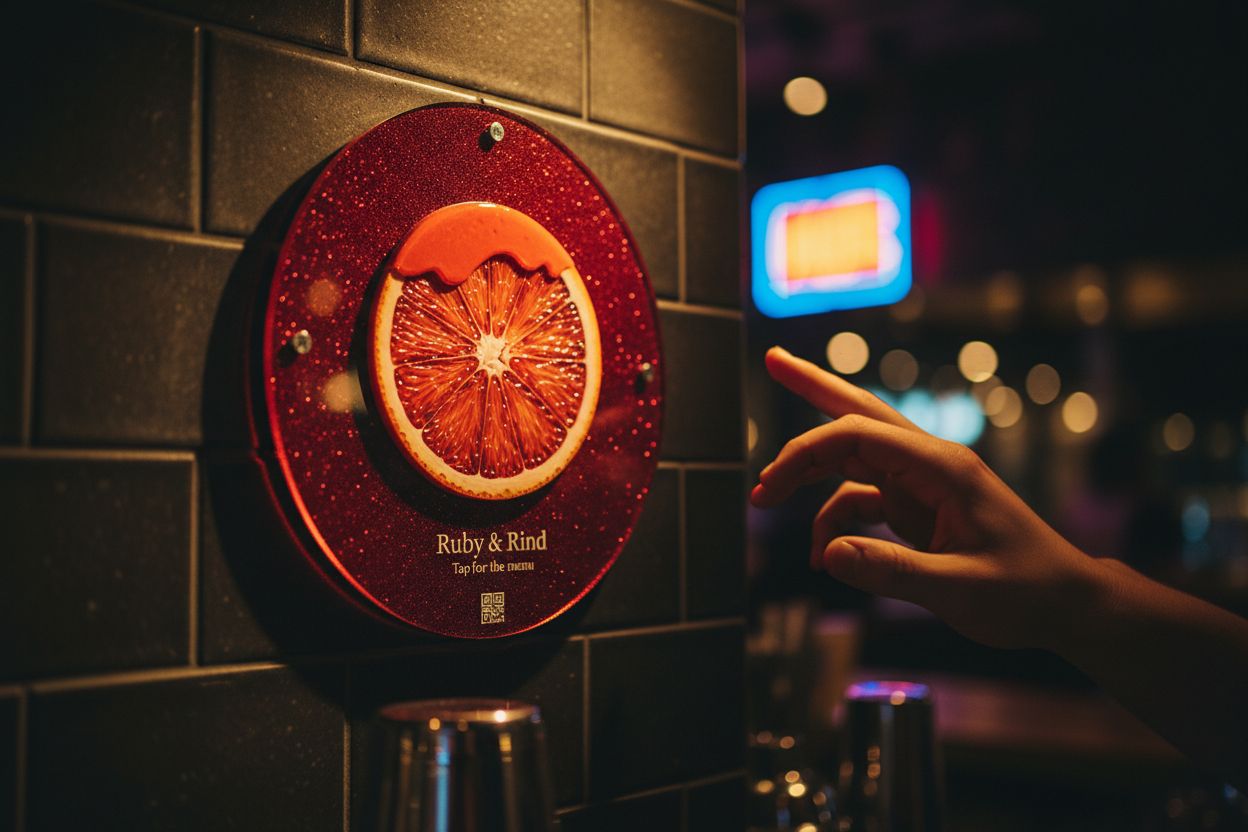
Questions, answered.
Either. On wood, any text, logo or code can be printed or laser-engraved, and you choose per element in the designer. Printing gives a QR code the dark, even contrast that scans most reliably; engraving suits a name or logo.
Wood suits sheltered spots: under an awning, in a covered entry, on a verandah. For walls exposed to rain and full sun, choose cast acrylic, which is UV-stable and weatherproof.
Plywood and bamboo. Each species is priced off its own sheet, so the price in the designer changes as you switch between them.
Yes. Any text, logo or photo prints on wood as on acrylic. You see the sign fully rendered on the timber before you buy.
The chip is sealed inside the tile and reads through the timber. Phones tap the face of the sign just as they would an acrylic one.