An NFC table stand that does the next job too.
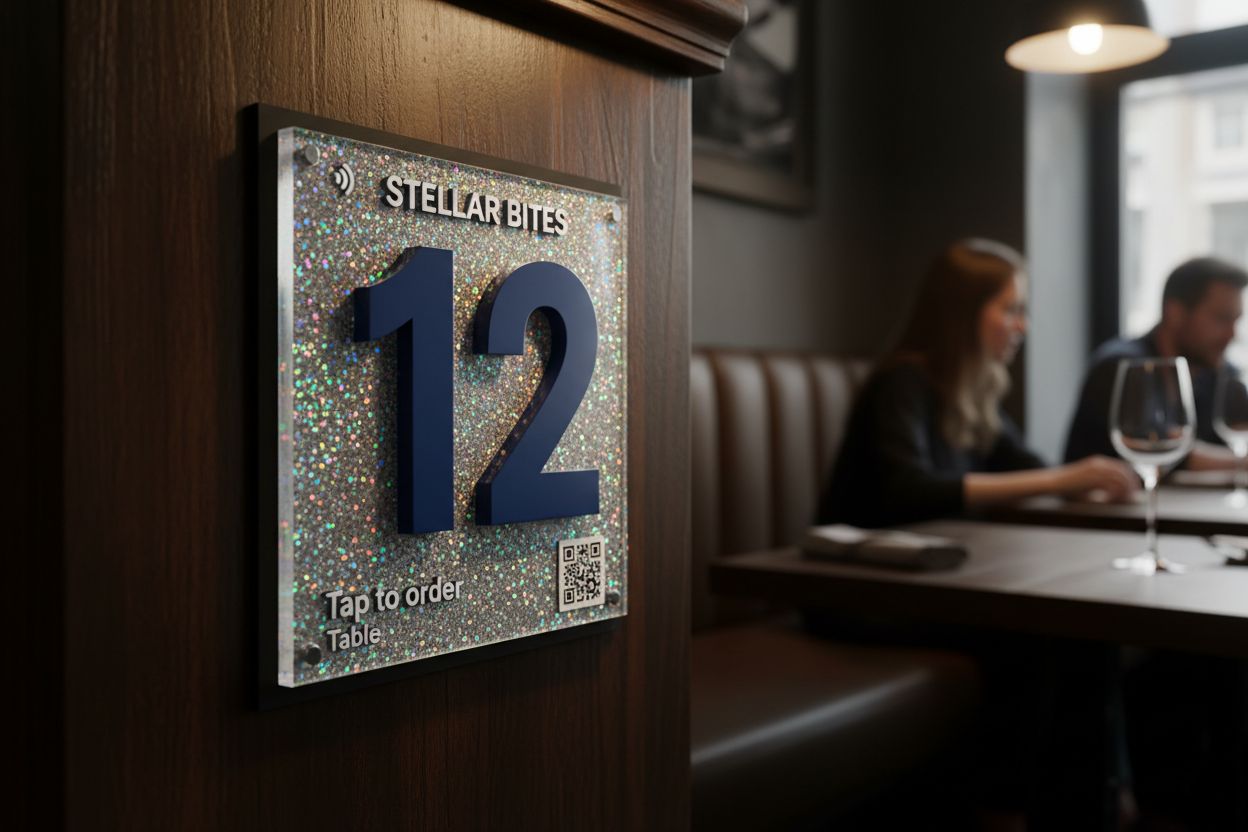
A tile on the table with a chip sealed inside. Tap to order at lunch, see the menu at dinner, leave a review at the end. You decide what the tap opens.
Tap first, scan as backup
The NFC chip is the fast path; an optional QR code covers phones that do not tap.
One tile, many jobs
Point it at ordering, a menu, a review form or a booking page, and change it whenever you like.
Sealed, not stuck on
The chip lives inside laser-cut acrylic or wood, so it survives spills, wiping and hands.
No battery, no app
Phones read it from the lock screen. The phone powers the chip for the moment of the tap.
An NFC table stand is a tile on the table that a diner taps with their phone. The tap opens a link, and what that link is depends on what you need from the table right now: ordering during service, the menu while people decide, a Google review form when the bill is settled. Where a QR code asks for a camera and a steady hand, a tap asks for nothing but a phone brought close.
Shortfield table stands are laser-cut acrylic or wood tiles with the NFC chip sealed inside. They stand upright in a clear stand or lie flat on the table, printed with your logo, a table number if you want one, and a short “Tap to order” or “Tap for the menu”. A QR code on the face is optional, for the phones that do not tap.
Why tap at the table
Tables are dim, busy and cluttered. A QR code needs the camera app, a bit of light and a moment of framing; in a candlelit booth that can take a few attempts. A tap does not care about the light. The diner brings the top of their iPhone, or the back of most Android phones, to the tile, and the page opens from the lock screen. Every iPhone XR and newer, and NFC-equipped Android phones, read it.
For how the two methods compare for venues, read NFC vs QR codes for venues. Most of our table stands carry both: tap for speed, scan as a fallback.
Sealed chips vs stick-on NFC tags
You can buy blank NFC sticker tags cheaply, but on a table they do not last. They peel at the edges, get scraped by plates and are easy to lift off. The link written to them is usually fixed, and changing it means rewriting every tag with an app, one by one.
A Shortfield stand seals the chip inside the tile. Nothing is exposed to wiping or knocks, and there is no battery to fail. See how long NFC tags last. The chip points at a Shortfield address, so changing the destination is a setting in your account, not a job at every table. More on that on our custom NFC tags page.
What the tap can open
- Ordering: point each numbered stand at its table link in me&u, Mr Yum, Square, Lightspeed or your own system. See the table ordering QR code stand for numbered sets.
- The menu: a PDF, a web page or a hosted menu page. Set it up on the menu tile.
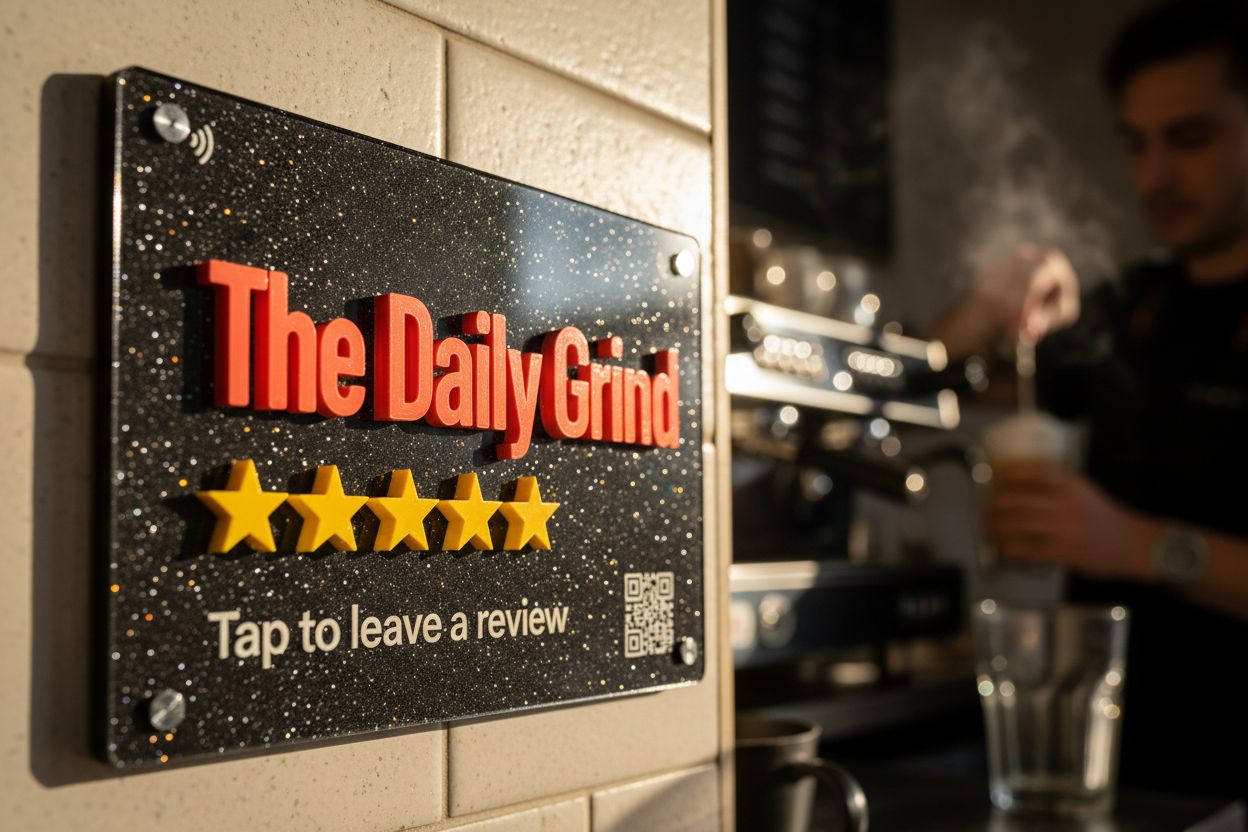
- Reviews: after the meal, the same tap can open your Google review form.
- Anything with a link: a booking page, a function enquiry form, your Instagram.
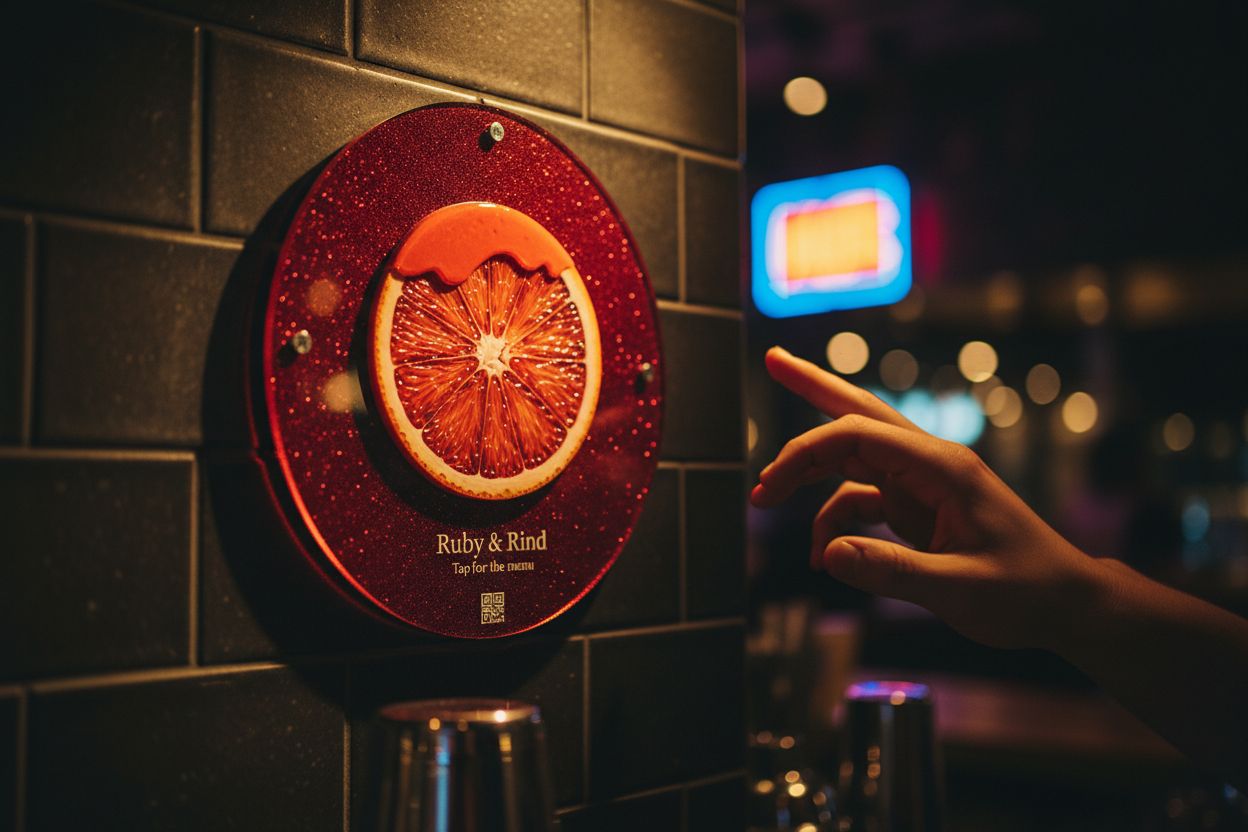
Switching between them takes a moment in your account. A winery might point its stands at tasting notes by day and a review page in the evening.
Sizes and fitting out a room
The 106mm tile suits a two-seat table. The 147mm tile is easier to spot on booths and long tables. Acrylic wipes clean and comes in opaque, pastel, mirror, pearl, glitter and specialty finishes; wood suits timber rooms and sheltered courtyards.
For a full dining room, bulk orders start at ten tiles with 5% off, 10% off from 50, and a render of every table within two business days. Start with the ordering tile, see it fully rendered, and order. Made to order in Australia and delivered anywhere in the country.
Questions, answered.
A small tile or plaque with an NFC chip inside, placed on a table. When a diner holds their phone to it, the phone opens a link: usually an ordering page, a menu or a review form.
Yes. Every stand points at a Shortfield address, and you choose where it forwards from your account. Switch from ordering to a feedback page after close, or to an event menu for a function.
Yes. NFC reads through phone cases, including thicker protective ones.
Close: a few centimetres, or touching. On an iPhone the top edge goes to the tile; on most Android phones it is the back middle.
Yes. Print the table number large on the face, and point each stand at that table's link in your ordering system.